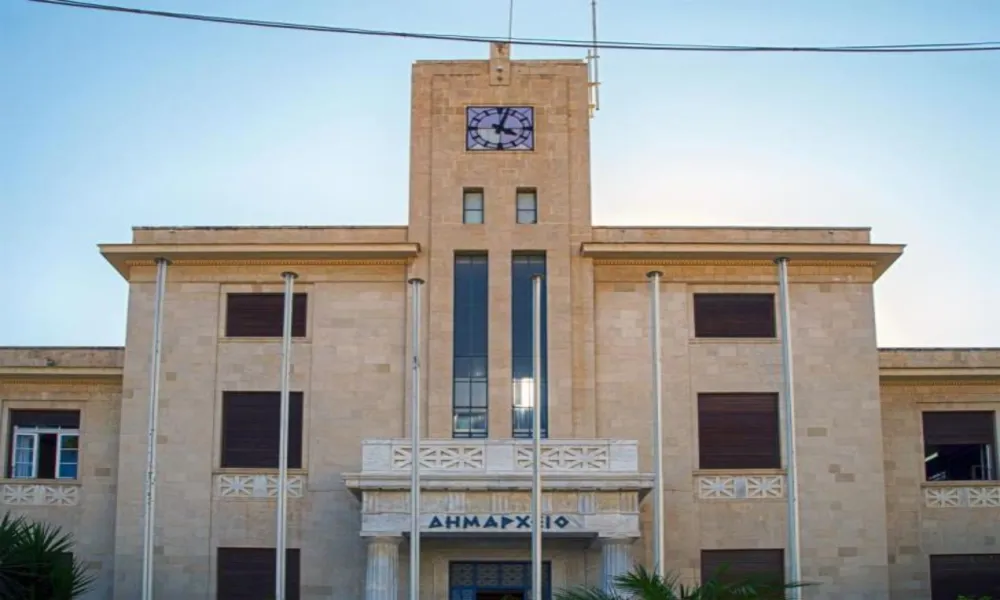

Cyprus' Audit Office has issued a highly critical report on Limassol Municipality's personnel management practices, identifying what it describes as long-standing departures from legal and regulatory requirements across multiple areas.
Covering mainly the 2017-2024 period, the report cites soaring overtime costs, unlawful staff transfers and upgrades, service-contract appointments, deficiencies in job schemes, unjustified allowances and weaknesses in internal control and accountability mechanisms.
According to the Audit Office, the findings do not reflect isolated mistakes but a persistent pattern of non-compliance with the applicable legal and regulatory framework.
The report concludes that a number of personnel-related practices failed to meet the principles of legality, good governance and accountability, exposing the municipality to administrative, financial and legal risks.
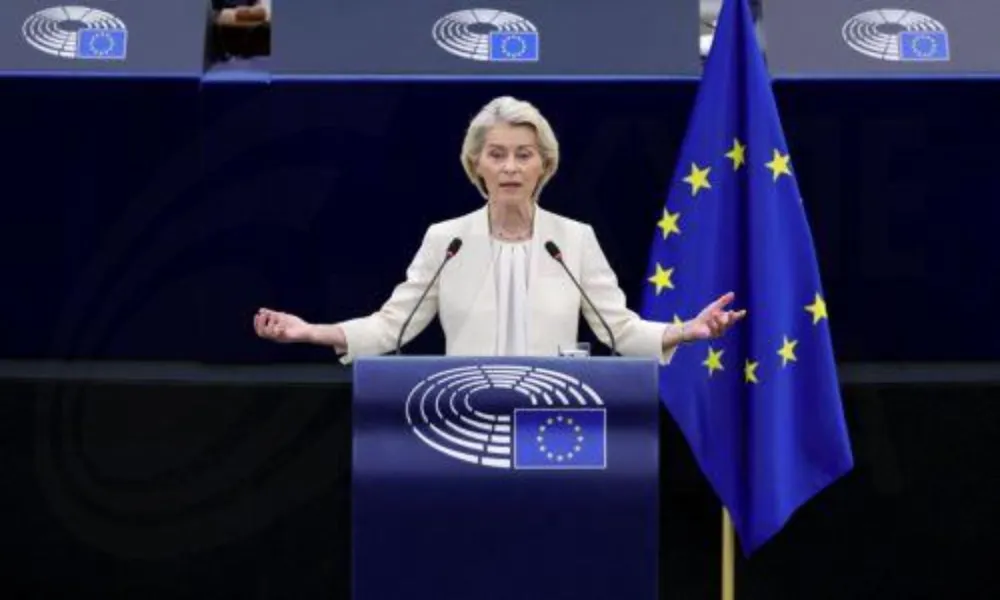
The Auditor General, Andreas Papaconstantinou, also noted that the municipality was not always able to provide supporting documentation or adequately justify certain actions during the audit process, raising concerns about transparency and oversight.
Municipal council disputes findings
The issue first emerged following correspondence from the Audit Office that was discussed during several Municipal Council meetings.
While some corrective measures have since been taken, particularly concerning personal salary scales, the majority of councillors, excluding the mayor, have reportedly maintained that previous decisions were justified despite the Audit Office's observations.
Overtime costs rose 176%
One of the most significant findings concerns overtime payments.
According to the report, overtime expenditure increased from €492,563 in 2017 to €1.36 million in 2024, representing a rise of 176%.
The Audit Office found cases of overtime that had not been approved in advance, payments lacking adequate documentation and compensation that could not be verified through electronic attendance records.
Particular attention was drawn to a senior official who received €114,784 in overtime payments between 2017 and 2023.
The Audit Office said the officer was compensated at 100% of the applicable rate instead of the 60% stipulated by a government circular for officials in the relevant salary scale, while approval was granted by the then mayor rather than the Municipal Council.
Staff transfers questioned
The report also highlights decisions taken despite contrary legal advice.
In one case, four of the municipality's 21 traffic wardens were redesignated as assistant clerical officers, while two were placed on personal salary scales of A8+4.
According to the Audit Office, legal advice obtained by the municipality concluded that such transfers were impermissible unless the entire traffic warden category was abolished.
Additional personal salary scales were granted to several other employees, including office assistants, a health and safety officer, the head of cultural services, a parks officer and a senior health inspector.
The report states that these arrangements do not align with practices in the public and wider public sector.
Service contracts used for staffing
Another key finding concerns the municipality's use of service contracts to staff various positions.
According to the report, the practice effectively bypassed established recruitment procedures and Ministry of Finance guidance.
Some contracts remained in force for more than 30 months, resulting in six individuals being recognised in 2024 as employees of indefinite duration by the Social Insurance Services.
Gaps in job schemes
The Audit Office also identified significant shortcomings in the municipality's job schemes.
During the audit, the municipality was unable to provide published job schemes for all positions. In some cases, available records did not correspond to existing salary scales.
While the report does not conclude that appointments or promotions were unlawful, it states that the available information does not allow that possibility to be fully excluded.
The municipality also failed to provide requested evidence regarding the timing of the termination of a practice under which hourly-paid staff were placed on salary scales intended for permanent employees.
Allowances and additional benefits
The report raises concerns over allowances and additional benefits provided to staff.
According to the Audit Office, collective agreements continue to provide benefits beyond those contained in the municipality's regulatory framework.
One example cited is a payment equivalent to 82.93% of basic salary before Easter, with the total cost of such benefits estimated at €1.9 million between 2022 and 2024.
Allowance expenditure increased from €112,641 in 2021 to €162,038 in 2023, an increase of 44%.
The report notes that, in several cases, neither the necessity nor the calculation method for allowances was adequately documented.
Concerns over internal audit independence
The Audit Office also found weaknesses affecting the independence of the municipality's Internal Audit Unit.
According to the report, the Internal Auditor's job description allows investigations to be assigned by the mayor or municipal secretary, a provision that the Audit Office says undermines the independence of the role and is inconsistent with municipal legislation and international auditing standards.
Audit Office recommendations
The Audit Office said the municipality's current administration should reassess its human resources strategy and establish clear principles and a transparent long-term plan.
Among its recommendations are:
- Full compliance with recruitment and overtime regulations.
- Publication of job schemes for all positions.
- Stronger internal control mechanisms.
- Proper documentation of all staff benefits.
- Alignment of employment conditions with those applied in the public sector.
The Auditor General warned that piecemeal and unstructured decisions risk fostering a culture of poor administration, increasing legal exposure and undermining the municipality's financial management.