
Makarios Drousiotis and Kyriaki Kyriakou ("Sandy") were referred on Thursday for direct trial before the Nicosia Assize Court in connection with the controversial social media post published by the author in March.
The case, which became widely known as the "Sandy" case after the nickname commonly used for the second defendant, prompted an extensive investigation in which a team from the FBI was called to Cyprus to assist authorities.
Early on Thursday morning, members of CID Headquarters attended the Nicosia courts where, following instructions from the Legal Service, the process of referring both defendants directly to trial was completed.
After the referral, police served the charge sheets on both defendants and the case was scheduled for hearing in September.
The indictment contains 101 charges, including:
- Forgery of documents.
- Circulation of forged documents.
- Publication of false information.
- Harassment.
The most serious allegations concern forgery and circulating forged documents, offences carrying prison sentences of up to seven years.
Regarding the publication of false information, the Criminal Code states that any person who publishes false news or information capable of undermining public order, confidence in the state or its institutions, causing fear or concern among the public, or disturbing public peace and order, commits a misdemeanour punishable by up to two years' imprisonment, a fine, or both. The law provides a defence if the accused can satisfy the court that the publication was made in good faith and based on facts justifying its publication.
Why the Assize Court?
The Legal Service's decision to send the case to the Assize Court sparked debate among legal circles, with some lawyers arguing that a case of this nature could also have been tried before the Nicosia District Court.
They point to the example of former Volunteerism Commissioner Yiannakis Yiannaki, who faced similar charges relating to the circulation of forged documents. Yiannaki was tried before the Nicosia District Court and, following a guilty plea, was sentenced to three years in prison.
The Legal Service has not publicly explained why Drousiotis and Kyriakou were referred directly to the Assize Court.
It is noted, however, that District Courts can impose prison terms of up to five years.
Should there have been recusal?
Another issue being debated is whether the Attorney-General and Deputy Attorney-General should have abstained from any decision-making in the Sandy case, given that their names were mentioned in Drousiotis' disputed publication.
People close to Drousiotis argue that both senior Legal Service officials should have recused themselves.
The Legal Service's position, however, is reportedly that the police investigation concluded the allegations were based on false and fabricated material, leaving no grounds for considering recusal.
Drousiotis links prosecution to Videogate
Publishing the first page of the indictment served on him, Drousiotis wrote on social media that he had been charged with knowingly and intentionally publishing fabricated messages.
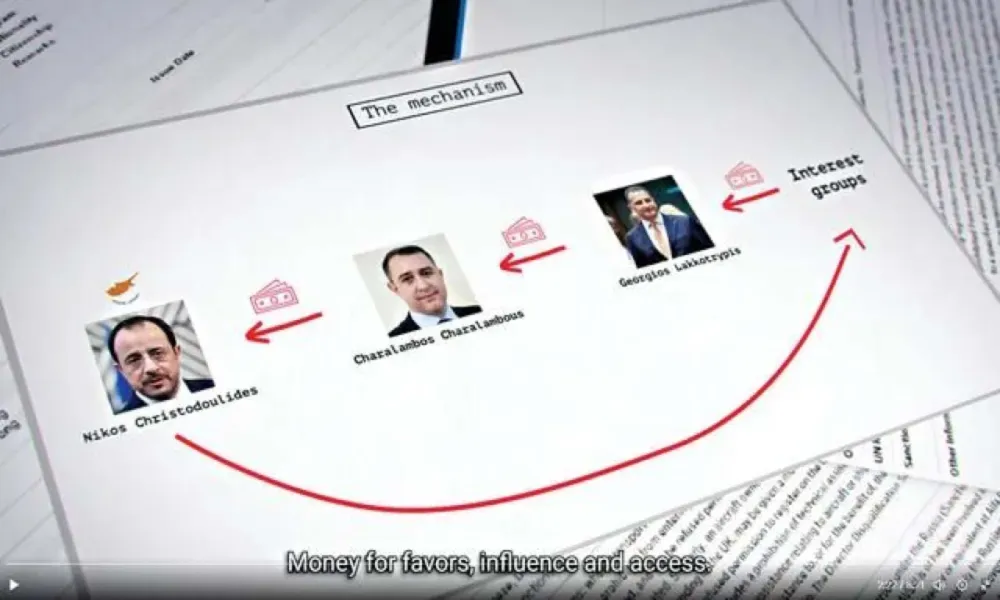
He described the prosecution as a distraction from the Videogate affair and as assistance to former president Nicos Anastasiades.
In his post, Drousiotis argued that the Legal Service grants immunity to serious offenders in other cases while making him a defendant despite his role as what he described as a key witness in investigations related to the so-called "Mafia State".
He further criticised Attorney-General George Savvides and Deputy Attorney-General Savvas Angelides, arguing that although they had recused themselves from matters relating to the "Mafia State" case and were mentioned in both his publications and Sandy's messages, they had nevertheless approved criminal proceedings against him.
Investigation findings
The decision to pursue criminal charges followed the completion of a police investigation and the presentation of its findings by Police Chief Themistos Arnaoutis in early June.
Presenting the results of the inquiry, Arnaoutis said investigators found no evidence supporting the serious allegations publicly made against the individuals named in the publications.
On the contrary, he said the investigation concluded that the contents of the disputed 14-page document, the messages, audio recordings and the wider narrative presented to the public were false and fabricated.
According to Arnaoutis, that conclusion was based on witness testimony, technical and forensic findings, independent evidence and other objective material gathered during the investigation.
Following those findings, the Legal Service instructed police to commence criminal proceedings against the individuals considered to have played a central role in the creation and circulation of the disputed messages.