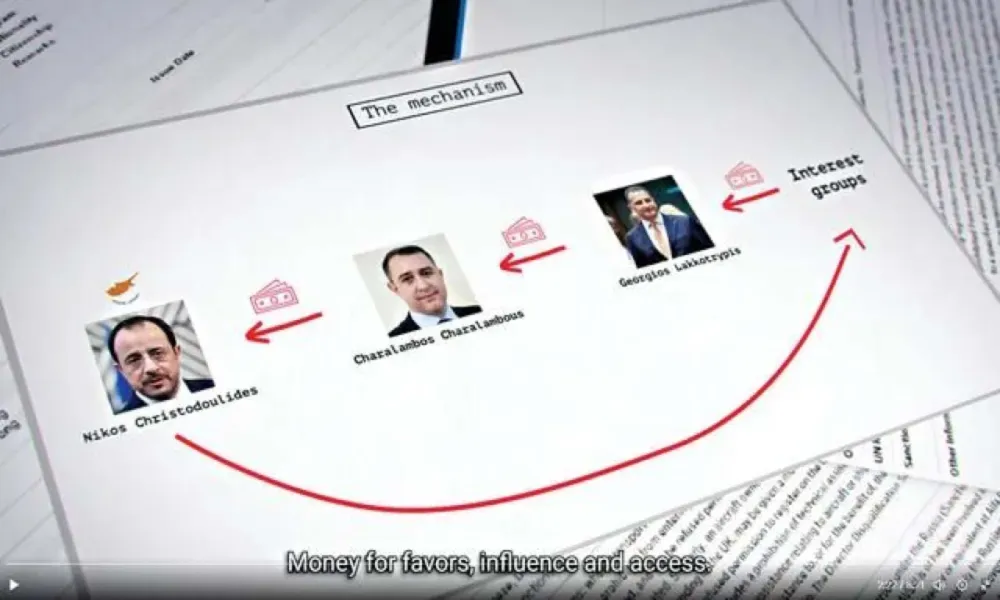

If some believe that what the criminal investigator has announced regarding his investigation into VideoGate brings the case to a close, they are probably suffering from a lack of perspective. The announcement by independent criminal investigator Andreas Paschalides is nothing if not incomplete, but it does not put a full stop to the case. In essence, it opens a new chapter, in which the investigator himself and his methodology are placed under scrutiny. His haste, after the exhausting criticism directed at him, to retreat from the outrageous content of his initial reaction is indicative. It raises various questions about his choices and ultimately leads his own investigation into discredit.
In a democratic state, an investigator's independence does not mean immunity from criticism. Nor does a finding automatically become an unquestionable truth. On the contrary, when a document attempts to strip a case with such serious political implications of any criminal dimension, it must be absolutely substantiated, strictly legal in nature and free from anything that creates suspicions of bias.
Andreas Paschalides does not appear to understand that a serious issue was created by the content of his initial reaction. The language he used, the elements of propaganda and targeted attempts to exonerate the protagonists of the case, expressions such as "babbling" and "nonsense", do not point to a cold legal assessment but to a personal disparagement of individuals. An investigator is not a commentator on current political affairs nor an opinion writer. His mission is to evaluate evidence, not to assign labels that reasonably create the impression that he is trying to shape public perceptions of those involved in the case.
Citizens saw a video that caused a political earthquake, led to the resignation of senior figures, exposed the Presidential Palace and forced the government itself to abolish an institution. If everything was so insignificant that nothing improper emerged, as seemed to be implied by the investigator's original statement, then the question naturally arises as to why all these political developments occurred. Political actions are difficult to reconcile with the image of a case without any substantial problem.
The House Institutions Committee, therefore, is not being convened at its extraordinary session on 31 July merely to be informed. It is being called upon to exercise its constitutional role in relation to a practice that is already being strongly questioned by legal experts, political forces and a significant section of public opinion. The full submission of the investigator's findings to Parliament is not a favour by the Executive Branch, nor a choice for the Legal Service. It is a necessary prerequisite for meaningful parliamentary scrutiny and accountability.