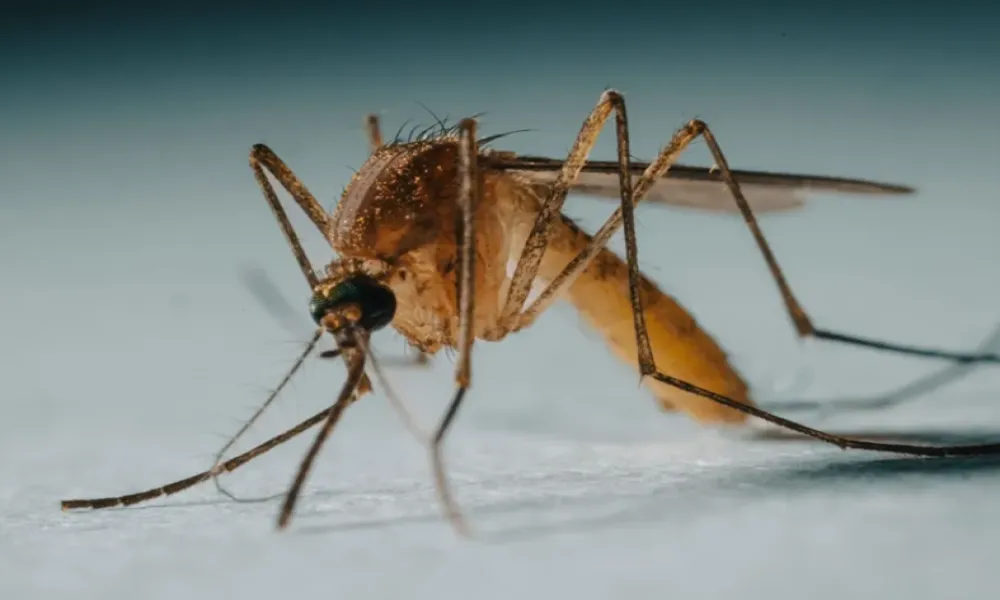

Unusual summer rainfall and occasional hailstorms in Cyprus have created favourable conditions for mosquito breeding, as stagnant water accumulates in riverbeds, puddles and other areas, microbiologist Dr Petros Karayiannis has warned.
Speaking to CNA, Karayiannis said climate change is likely to make such weather patterns increasingly frequent and intense, potentially creating more opportunities for mosquito populations to grow.
Stagnant water provides ideal conditions
Karayiannis said heavier summer rainfall means rivers are flowing at times when this was previously less common, leaving pools of stagnant water behind.
These areas provide an ideal environment for mosquitoes to reproduce.
He also noted growing concern that mosquitoes are increasingly biting during the day, rather than primarily in the early morning or evening.
Bites can cause inflammation, which in some cases may take time to subside.
How to protect against bites
Karayiannis recommended several measures to reduce exposure to mosquitoes, including:
- Using insect repellent.
- Wearing long-sleeved clothing.
- Using mosquito-repellent candles or bracelets.
- Removing containers holding stagnant water from gardens and yards.
- Using a fan at night when air conditioning is not in use, as moving air can make conditions less favourable for mosquitoes.
Mosquito-borne diseases in Cyprus
Karayiannis said West Nile virus remains the main mosquito-borne infectious disease of concern in Cyprus.
He contrasted the situation with southern European countries such as Italy, France and Spain, where cases of chikungunya and mosquitoes capable of transmitting diseases including dengue and yellow fever have been reported.
For Cyprus, he described the prospect of such diseases becoming established as remote at present, although imported cases could occur.
He also referred to malaria, noting that the disease could re-emerge in some countries if mosquito populations capable of transmitting it shift geographically.
Tiger mosquito has reached Cyprus
The Asian tiger mosquito has already been detected in Cyprus and is capable of transmitting diseases.
Karayiannis expressed hope that a colder winter could help reduce its population.
He said continued surveillance by the European Union and European Centre for Disease Prevention and Control (ECDC) is essential, alongside scientific work on diagnostics, rapid testing and the potential development of vaccines or antiviral treatments.
Karayiannis warned that mosquito-borne diseases could become a greater challenge in the future as a consequence of the climate crisis.
Focus spraying on residential areas
Local authorities are carrying out spraying programmes, Karayiannis said, although some remote mountainous areas are difficult to access.
He suggested concentrating efforts particularly on residential areas where stagnant water is known to accumulate, citing locations near Nicosia’s Linear Park as an example.
Removing standing water around homes remains one of the simplest ways residents can limit breeding sites and reduce mosquito numbers.
Source: CNA