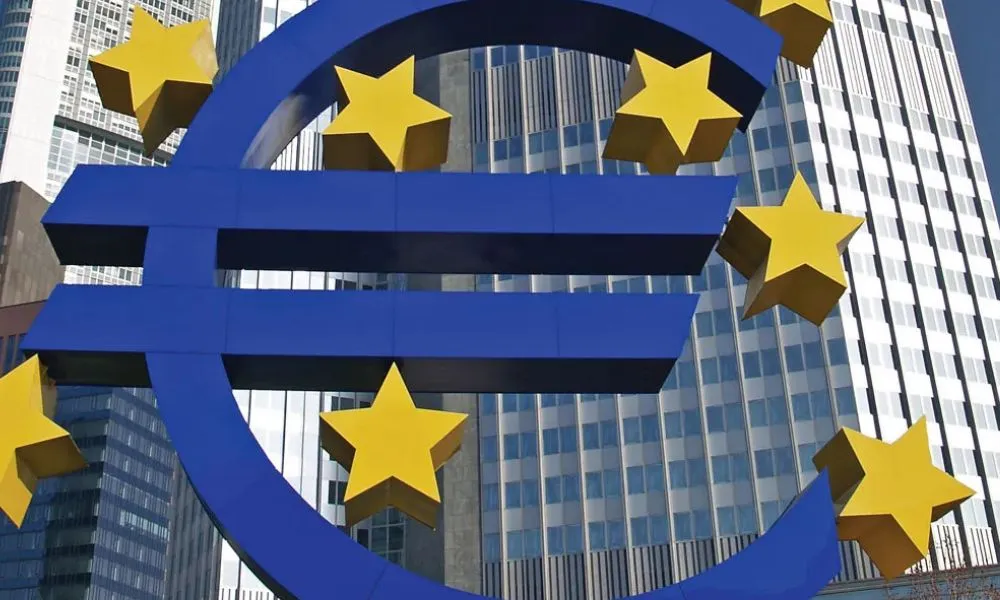

The European Central Bank is expected to raise interest rates this week for the first time in two and a half years, as the economic fallout from the war in Iran fuels renewed inflationary pressure.
The ECB has kept borrowing costs steady for some time, with price increases across the eurozone largely under control.
However, the US-Israel war against Iran and the near-total closure of the Strait of Hormuz have sharply increased global energy costs, feeding into higher inflation.
Consumer prices in the 21 countries that use the euro rose by 3.2% in May, above the ECB’s 2% target.
Analysts expect the central bank’s Governing Council to raise its key deposit rate by a quarter of a percentage point, from 2.00% to 2.25%, at its meeting on Thursday.
“Anything other than a rate hike at the ECB meeting would be a major surprise,” ING economist Carsten Brzeski said.
Higher borrowing costs tend to dampen demand, helping to bring inflation down.
Other major central banks, including the US Federal Reserve and the Bank of England, have so far kept rates unchanged as they continue to assess the impact of the conflict.
A move by the ECB on Thursday would mark its first rate increase since September 2023, when it was responding to a historic surge in inflation triggered by Russia’s invasion of Ukraine.
The bank later cut rates several times as inflation eased and has kept them unchanged since June 2025.
Setting the Ground
Several ECB officials have prepared the ground for an increase in borrowing costs through public remarks.
ECB chief economist Philip Lane signalled in late May that a rate increase was likely, saying he expected the bank’s inflation forecasts to be revised upwards again at Thursday’s meeting.
“There are various factors related to the war in Iran that indicate the macroeconomic outlook has deteriorated,” he told Japanese financial newspaper Nikkei.
However, some economists have criticised the expected move, warning that it could further weigh on the eurozone’s sluggish economy by making borrowing more expensive for households and businesses.
The European Union last month lowered its 2026 growth forecast for the eurozone to 0.9%, down from a previous estimate of 1.2%.
Revised figures published on Friday showed that the eurozone economy contracted by 0.2% in the first quarter.
Source: CNA