



Cyprus’ property market maintained strong momentum during the first six months of 2026, despite geopolitical tensions, economic uncertainty and persistently high prices. The first half of the year was the strongest recorded since 2007.
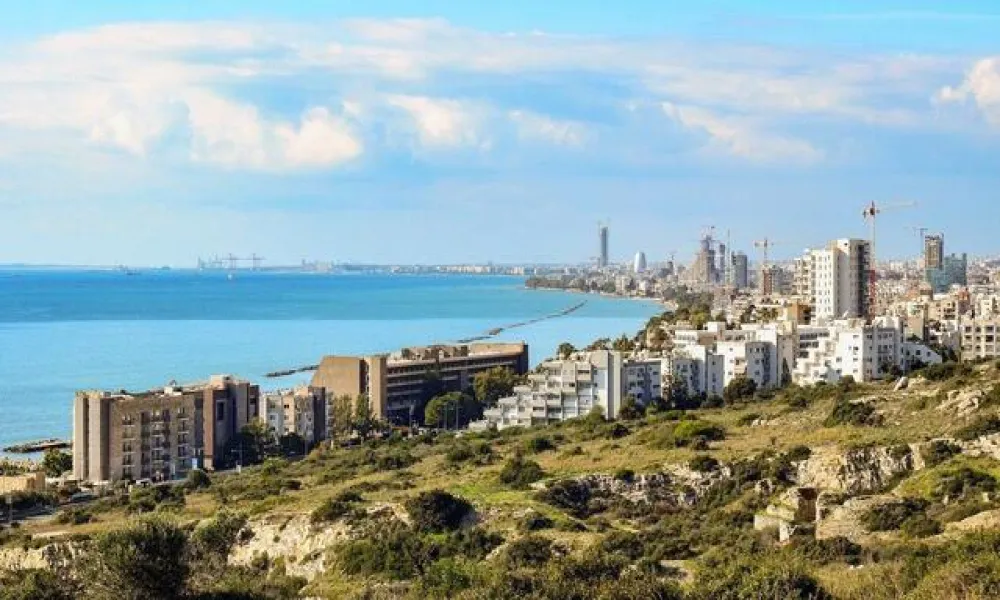
Limassol is leading the upturn. Data from the Department of Lands and Surveys show that rising property prices in the city have not dampened demand, with most sales still being made to Cypriot buyers.
Property sales to foreign purchasers (both EU and non-EU nationals) in Limassol reached 247 in June, out of a total of 727 transactions, meaning roughly one in every three sales involved a foreign buyer. Of these, 168, or 68%, were made to third-country nationals.
Cypriots accounted for 66% of buyers. It should be noted that the Department of Lands and Surveys does not record whether a Cypriot buyer acquired citizenship through naturalisation. Even if some of those counted as Cypriots are foreign nationals who later obtained Cypriot passports, domestic demand remains the main driver of the market.
Strong momentum
The figures show that 1,964 sale contracts were deposited at district land registry offices in June 2026, compared with 1,544 in June 2025 – an increase of 27%.
The June increase was the largest recorded this year.
Property sales in Limassol surged by 64%, rising to 727 units from 444 in June last year. By comparison, annual growth in May stood at just 2%.
In Paphos, annual sales growth reached 28%, up from 24% in May, with the number of sale contracts rising to 361 from 282 a year earlier.
Sales to foreign buyers in Paphos totalled 257 in June, of which 62.3% involved third-country nationals. The figures show that the share of foreign buyers in Paphos remains significantly higher than in Limassol.
In Nicosia, property sales increased by 10% in June, reaching 392 units from 355 in June 2025. In May, sales had fallen by 12%.
Property sales in Larnaca rose by 6%, compared with annual growth of 14% in May. Sales to foreign buyers reached 214, with 70.6% involving third-country nationals.
In Famagusta, sales fell by 1%, following an 8% decline in May.
Between January and June 2026, total property sales increased by 15% to 10,007 units, compared with 8,729 during the same period in 2025.
Sales to foreign buyers reached 816 in June 2026, up from 576 in June 2025. They represented 41.5% of all transactions, compared with 37.3% a year earlier.
Sales to Cypriot buyers rose to 1,148 in June this year, from 968 in June 2025.
For the first half of 2026, sales to foreign buyers totalled 4,151, compared with 3,388 during the corresponding period last year.
What the experts say
“The property market continues to record an upward trend. Property sales have continued to increase in all cities for a fifth consecutive year,” Cyprus Association of Property Valuers President Polys Kourousides told Politis.
He stressed that more than 50% of sales involve Cypriot buyers, a figure that is now approaching 60%.
“Despite geopolitical developments, confidence in the sector remains strong, reflecting the healthy performance of the economy,” he said.
Commenting on Limassol’s sharp increase in June, Kourousides said some transactions from previous months may have been delayed because of geopolitical developments before being completed in June.
“Despite high prices in Limassol, buyer interest remains strong,” he added, noting that sales in the city were up 20% over the six-month period.
Ask Wire chief executive Pavlos Loizou offered a more cautious assessment.
“My reading is that the market is not necessarily accelerating to the extent suggested by the June figures. Sales contract data may be influenced by the timing of registrations, bulk filings and specific transactions or projects, particularly in Limassol,” he said.
“The safest conclusion is that the first half of 2026 remains strong on paper, but June appears to be an exceptional month and should not be interpreted as a clear sign of accelerating demand.”
Andreas Christoforides, chief executive of the Landbank Group, said the market continued to demonstrate remarkable resilience.
“The Cyprus property market continues to exhibit notable resilience and growth momentum despite broader macroeconomic and geopolitical challenges. The latest statistics confirm what we experience daily in practice – the real estate sector remains one of the strongest pillars of the Cypriot economy and continues to follow a steady upward trajectory,” he told Politis.
According to the latest Eurostat figures, property prices in Cyprus rose by 3.8%.
“This increased activity stems from strong domestic demand, which is also being supported by continuing interest from foreign investors, confirming confidence in Cypriot property as a safe and profitable investment,” he said.
However, Christoforides argued that a complete picture of the market also requires an examination of the supply side, namely the construction sector.
Data from the Statistical Service for the first quarter of 2026 show increases both in construction output and producer prices, with the relevant index rising by 3%, following a 4.1% increase in 2025.
“The combination of these two factors – rising housing demand on the one hand and higher construction costs on the other – is shaping today’s pricing environment. Increases in construction producer prices are inevitably passed on to final property prices, helping to explain the continued rise in residential values.”
Pressure on prices
The continuing rise in property sales is helping to keep prices at elevated levels.
Kourousides warned that sustained growth in transactions is placing pressure on parts of the population that can no longer afford to purchase property.
“Property prices are expected to continue rising, worsening the problem,” he said.
“The challenge for our sector now, beyond maintaining growth, is ensuring that it is managed sustainably,” Christoforides said.
“It is critical to ensure that property supply is aligned with the real needs of the market, offering high-quality and modern housing options that correspond to buyers’ financial capabilities despite pressure from construction costs. Adaptability and strategic planning are the keys to the future of the property sector in our country.”
Strong demand in the real estate sector was also reflected in the latest Central Bank survey on the residential property price index.
Stricter rules under discussion
Parliament is advancing stricter regulations and legislative amendments governing property purchases by foreign nationals.
The aim of the proposed package is to address the uncontrolled acquisition of property by third-country nationals and strengthen transparency in indirect transactions conducted through companies.
House Interior Committee chairman Aristos Damianou told Politis that discussion of the legislation is expected to resume during the first week of September.
“Before the elections, we had arrived at an almost agreed text, with near-unanimous support. However, because there was still the outstanding issue of companies, we decided to revisit it,” Damianou said.
Regarding the proposed changes, he said third-country nationals would still be permitted to purchase property, but under stricter criteria.
Restrictions would apply to purchases of agricultural land, controlled areas such as Natura-protected zones, and locations near critical infrastructure, including ports and airports.