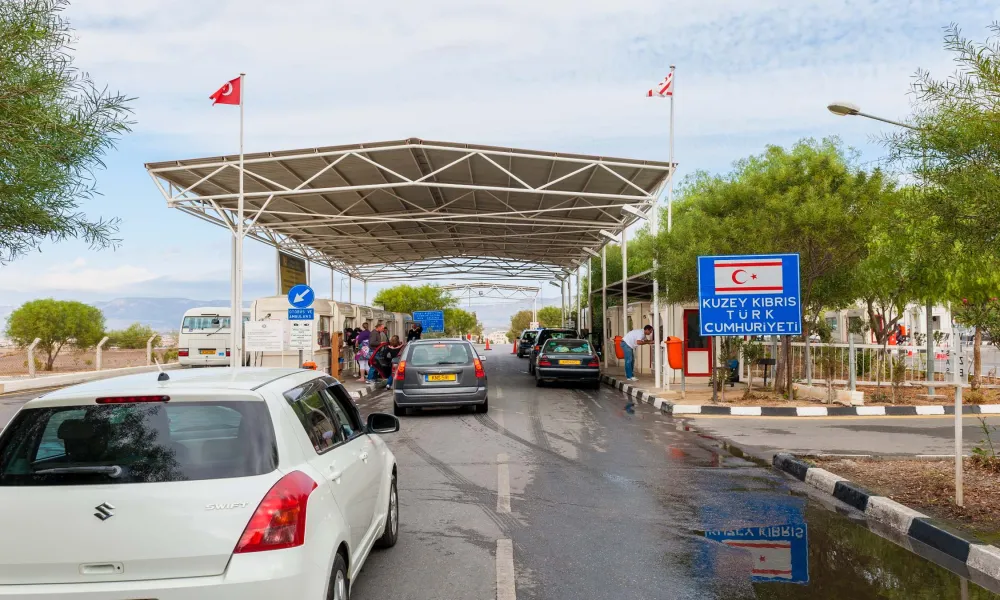

The European Commission has recorded a decline in trade between Cyprus’ two communities in its 22nd annual report on the implementation of the Green Line Regulation.
Despite an overall increase in cross-border movement, as reflected in crossing figures, commercial activity remained limited due to a range of administrative, banking and technical obstacles.
The total value of goods crossing the Green Line fell by 5.3%, from €15.23 million in 2024 to €14.43 million in 2025.
Figures from the Turkish Cypriot Chamber of Commerce point to an even steeper decline. The value of goods accompanied by the required documentation dropped by 12.9%, from €18.22 million to €15.87 million.
Building and construction materials remained the largest category of traded goods, followed by furniture, plastics, scrap metal and waste materials.
Trade in fruit and vegetables declined significantly, while no potato trade was recorded across the Green Line during 2025.
By contrast, trade flowing from the government-controlled areas to the north increased by around 13.5%, reaching €1.49 million. However, it still represented only 10.3% of the value of trade moving in the opposite direction.
Persistent barriers
The European Commission notes that trade between the two communities continues to face a series of practical and administrative challenges.
These include difficulties in transferring funds between banks operating in the government-controlled areas and the north, as well as problems encountered by Turkish Cypriots seeking to open bank accounts.
Although the Central Bank of Cyprus clarified in 2023 that Turkish Cypriots holding a Cypriot passport or identity card are entitled to open a basic payment account, the report states that only a very limited number have been able to do so.
At the same time, Turkish Cypriot businesses remain unable to open bank accounts in the government-controlled areas.
Another unresolved issue concerns Turkish Cypriot commercial vehicles weighing more than 7.5 tonnes. Such vehicles may enter the government-controlled areas only if they carry documentation that is fully compliant with the EU acquis.
The Commission believes resolving this issue would significantly facilitate the movement of goods and help strengthen trust and economic relations between the two communities.
It also argues that Green Line trade has considerable potential for growth, provided the remaining obstacles to commercial activity are addressed.
The report welcomes ongoing cooperation between the Cyprus Chamber of Commerce and Industry and the Turkish Cypriot Chamber of Commerce, expressing hope that their efforts will foster closer business ties and stronger economic links.
Crossings continue to rise
According to Cyprus Police figures, 1,453,135 crossings by Greek Cypriots from the government-controlled areas to the north were recorded during 2025, compared with 1,346,121 in 2024 – an increase of 7%.
A further 833,786 crossings were made by Greek Cypriot vehicles.
In the opposite direction, 1,983,610 crossings by Turkish Cypriots were recorded, up from 1,814,647 in 2024, representing an increase of 8.5%.
Turkish Cypriot vehicles crossed 748,061 times during the year.
Crossings by non-Cypriot EU citizens and third-country nationals also increased. A total of 2,053,958 crossings in both directions were recorded, compared with 1,777,946 in 2024.
The figures do not include crossings through the Pergamos and Strovilia checkpoints, which fall under the authority of the British Bases.
The report notes that high prices and inflation in the north appear to have reduced shopping trips by Greek Cypriots. Conversely, they encouraged more Turkish Cypriots to cross into the government-controlled areas.
Meanwhile, long queues at the Ayios Dometios crossing point remained a significant issue throughout 2025.