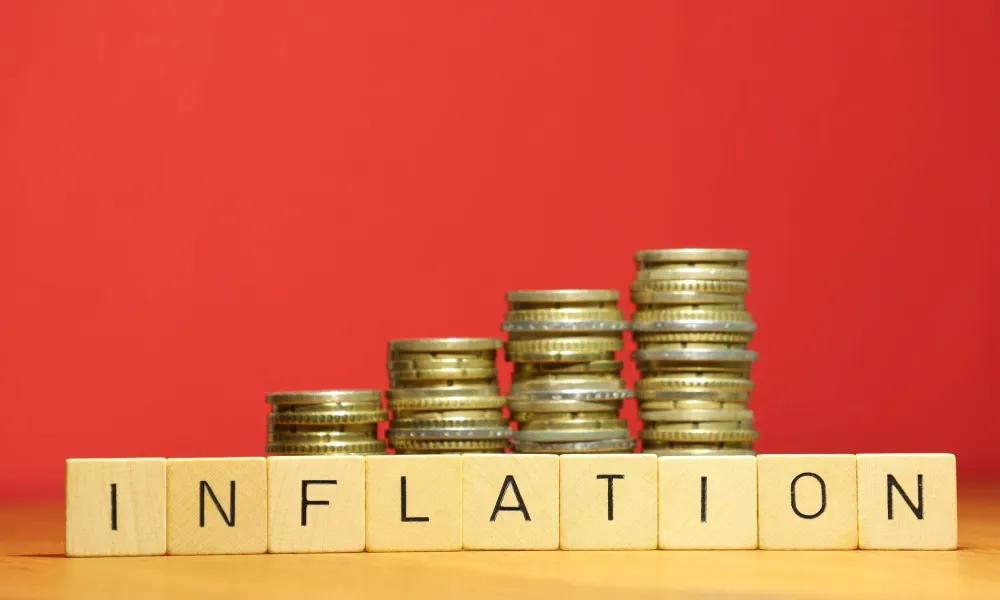

Inflation in Cyprus is expected to climb to 4% in 2026, Finance Minister Makis Keravnos said, as the government seeks to contain growing price pressures despite the country's solid economic performance.
Presenting the Finance Ministry's semi-annual fiscal policy report to Cabinet, Keravnos said the Cypriot economy remains resilient and continues to grow despite geopolitical uncertainty and the ongoing energy crisis.
According to the report, inflation rose from 0.5% in January to 3.1% in June and is expected to reach 4% by the end of the year. For the first half of 2026, inflation stood at 1.7%.
The 2027-2029 Fiscal Policy Strategy Framework forecasts that the Harmonised Index of Consumer Prices (HICP) will increase significantly to 4.5% in 2026, up from 0.8% in 2025, mainly because of higher international oil prices.
Economy remains resilient
According to the report, the Cypriot economy continues to expand at a satisfactory pace despite heightened geopolitical uncertainty and rising energy costs.
"Our economy is demonstrating resilience and, despite our forecasts being somewhat conservative because of prevailing conditions, the economy grew by 3.3% during the first half of the year, which is three times the average growth rate of European countries," Keravnos said.
He added that maintaining those growth rates remains a key government objective.
Finance Ministry projections included in the fiscal framework indicate that economic growth is expected to slow to 2.7% in 2026, from 3.8% in 2025.
Labour market remains strong
Keravnos said the labour market continues to demonstrate resilience and is operating under conditions of near full employment.
The ministry forecasts that unemployment will increase only slightly in 2026 to 4.5% of the labour force, compared with 4.4% the previous year.
Fiscal surplus provides buffer
On public finances, the minister said Cyprus recorded a fiscal surplus equivalent to 1.1% of GDP during the first half of 2026.
For the full year, the fiscal surplus is projected to reach €900 million.
Keravnos said the surplus helps fund the government's social policies, which exceed €1 billion and account for nearly 33% of the state budget, while also helping to offset inflationary pressures and rising living costs.
Asked about the expected decline in the surplus, he said the government was not concerned.
"The objective is not to create surpluses simply for the sake of having them. Surpluses exist to serve our needs and, above all, to repay the €1 billion of debt we pay down each year," he said.
EU calls for targeted support
Asked whether the reduced fuel-tax measure could be extended, Keravnos said support measures are being continuously assessed according to developments and decisions will be taken when required.
However, he noted that European Commission guidance is that such measures should be targeted and temporary.
"We are not complacent"
The minister also stressed the importance of maintaining prudent fiscal policy.
"We are not complacent because challenges remain, crises continue and wars continue, with unpredictable developments. We will therefore continue to pursue this careful economic policy," he said.