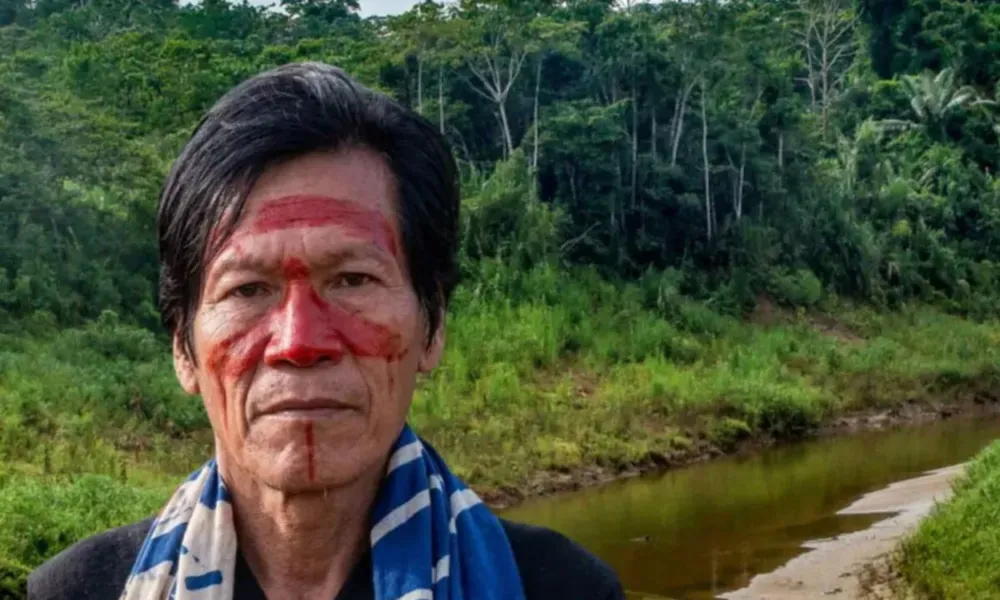

An Indigenous leader and environmental defender was shot dead while patrolling land belonging to his community in the Peruvian Amazon, Peru's government announced on Tuesday.
The killing took place on Sunday in the eastern Ucayali region near the border with Brazil, an area where other deadly attacks against Indigenous communities have previously been recorded.
Peru's Ministry of Culture condemned the killing of Ashéninka leader Americo Pascual Tomisa, saying he was murdered while carrying out activities to protect his community's territory.
According to ORAU, an umbrella organisation representing around 20 Indigenous groups in Ucayali, the 57-year-old suffered gunshot wounds during an incident involving third parties who had entered community land to collect copaiba, an oily resin extracted from Amazonian trees that is used in traditional medicine and varnish production.
ORAU said Pascual had repeatedly reported the presence of intruders on his community's land since 2020.
"This cowardly murder must not go unpunished," ORAU vice-president Erlyn Odicio said during a press conference.
Peru's Public Prosecutor's Office said it had opened a homicide investigation and dispatched officials to the remote Yurua district, where the killing occurred.
Environmental defenders under threat
Threats against Indigenous leaders and activists who report deforestation and the exploitation of forest resources have become increasingly common in parts of Peru's Amazon region.
On Monday, a Peruvian court convicted four people over the 2023 killing of Quinto Inuma, a leader of the Kichwa people in the San Martin region of the Peruvian Amazon.
According to environmental watchdog Global Witness, at least 62 environmental defenders were killed in Peru between 2012 and 2024, with 35 of them belonging to Indigenous communities.
Source: CNA