
The production of plastic products has increased dramatically over the past 15-20 years. Every year, around 8 million tonnes of plastic waste enter the sea from land.
According to European studies, 80-85% of marine litter found on beaches is plastic, material that takes more than 350 years to decompose.
The issue has resurfaced in recent days due to large quantities of microplastics along the coast of Paphos district, from Polis Chrysochous and the Akamas area to Peyia, Paphos town and Geroskipou.
According to the AKTI Centre for Studies and Research, the Mediterranean seabed has the highest level of plastic pollution globally. In this instance, strong wave action in the eastern Mediterranean caused movement and accumulation of microplastics on beaches, bringing to light a problem that has existed for around 20 years.
Harmonisation with EU law
An important legislative package currently before the House environment committee concerns new regulations on the management of waste from fishing gear containing plastic. Following examination and discussion, it is expected to be brought before the plenary for approval.
The implementation of this legislation, submitted to parliament by the environment ministry last March, is necessary as it aligns Cyprus with an EU directive. Failure to comply would lead to consequences.
Among the objectives is to provide sufficient incentives for fishers, aquaculture operators, distributors and other users of such materials to return them to land for collection and processing.
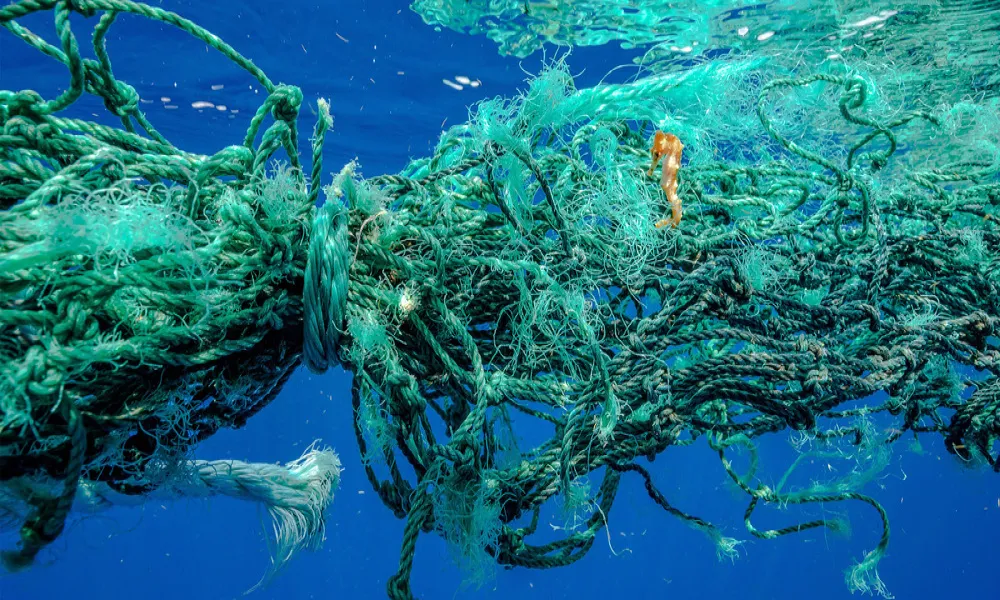
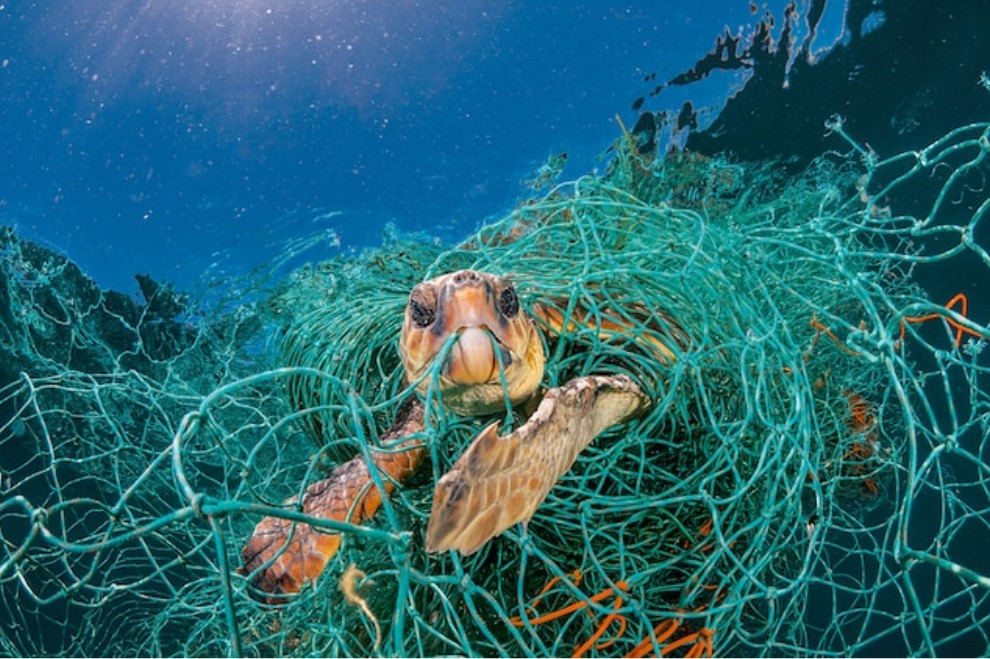
These refer to so-called fishing gear waste — such as nets, lines and traps — that are either abandoned or lost at sea. Scientists note that such materials are a source of microplastics and hazardous chemical substances.
Risks for fishers
Ghost fishing gear accumulates on the seabed, gradually turning parts of the Mediterranean into a ‘graveyard of equipment’ that is dangerous even for those working at sea.
Fishing nets can create serious safety risks for vessels, as fishers themselves can attest.
At the same time, European initiatives are already being implemented in the Atlantic and the Mediterranean to tackle the issue, such as the NETTAG+ project. This initiative brings together scientists, engineers and fishers to prevent and recover lost gear, mitigating the harmful effects of such waste.
The project is EU-funded and operates in Portugal, Spain, Croatia and Malta.
Key provisions of the new rules
The main provisions of the proposed regulations include definitions of fishing gear and related waste, the scope of application, and the obligation for producers of plastic-containing fishing gear to register with a management body for this waste stream and to establish a collective management system.
They also provide for the collection of such waste, prevention measures and cooperation between the management body and other natural or legal persons.
Additional provisions regulate the operation and licensing of the collective system and the submission of annual reports on its implementation.
The placing of fishing gear products containing plastic on the market, the obligations of distributors, the producer registry, offences and penalties, as well as quantitative targets for waste management systems, are also included in the new legislation.
Disposal infrastructure
Under the proposed legislation, the management body responsible for setting up a collective system must, in cooperation with the Department of Fisheries and Marine Research, the Cyprus Ports Authority and local authorities, ensure the creation, availability and accessibility of appropriate collection facilities for the disposal of such waste.
These facilities must, at a minimum, be located in fishing shelters, port installations, retail outlets for fishing gear containing plastic and other locations that facilitate disposal by fishers, aquaculture operators, producers, users and holders of such waste.
50% by 2030
Regarding the quantitative targets of the system:
- By 2030, at least 50% of all fishing gear containing plastic in Cyprus must be separately collected and transported to licensed facilities for further treatment.
- By 2035, this proportion must reach at least 70%.
High recycling potential
The impact assessment prepared by the environment department outlines key aspects of the proposed legislation.
“Uncontrolled disposal and large quantities of plastic materials from discarded, abandoned or lost fishing gear pollute the marine environment and have negative impacts on human health. These impacts created the need for a specific legal framework for the effective management of such waste.
The aim is to prevent and reduce the environmental and health impacts of plastic-containing fishing gear waste, conserve natural resources and support the transition to a circular economy with innovative and sustainable business models, products and materials, thereby contributing to the efficient functioning of the internal market, given that the plastic components of fishing gear have high recycling potential,” the report states.
Return incentives
The assessment further highlights key conclusions at EU level under the relevant directive.
It notes that the high proportion of plastic from discarded and abandoned fishing gear in marine litter shows that existing legal requirements — under Regulation (EC) 1224/2009 and Directives 200/59/EC and 2008/98/EC — do not provide sufficient incentives for returning such gear to land for collection and treatment.
However, the indirect fee system introduced by Directive (EU) 2019/883 needs to be complemented with additional financial incentives for fishers.
Given the high recycling potential of this waste, EU member states are required to introduce extended producer responsibility schemes for fishing gear containing plastic to ensure separate collection.
New green jobs
Beyond environmental benefits for marine ecosystems, soil and human health, positive social impacts are also expected. These include:
- Creation of new green jobs through the use of waste as a resource to produce innovative products within the framework of the circular economy.
- Reduction in waste disposal — particularly in the marine environment — improving quality of life.
- Strengthening environmental awareness and education on sustainable consumption, circular economy principles and waste management, as well as increased public awareness to reduce improper disposal.
Sources of pollution and mini cruises
Commenting on the bill, AKTI Centre head and coastal engineer Xenia Loizidou told Politis that it is a step in the right direction, as fishing gear waste containing plastic is a major problem both in Cyprus and across the Mediterranean seabed.
At the same time, she stressed that implementation must not become entangled in excessive bureaucracy, which could once again lead to failure. She also noted the need for a practical solution for recycling such waste without placing additional financial burden on fishers.
According to Loizidou, microplastics mainly arrive via the sea from illegal coastal dumps in neighbouring non-EU countries and river outflows carrying large volumes of plastic.
Regarding Cyprus’s responsibilities, beyond implementing the proposed law, she highlighted several key actions:
- Ensure stormwater drains from cities do not discharge into the sea — something she confirmed still happens, with runoff being a significant source of microplastics.
- Regulate mini-cruises, which she described as a source of waste and pollution in coastal areas.
- Find solutions for managing plastic ground coverings and greenhouse plastics in agriculture.
- Suspend hard coastal engineering works such as breakwaters, which she said contribute to microplastic accumulation and disrupt coastal dynamics.
She noted that the problem has existed for years, with AKTI monitoring microplastics at 10 locations across Cyprus four times a year since 2022. According to its database, some beaches have recorded up to 4,000 microplastic particles per square metre in a single year.