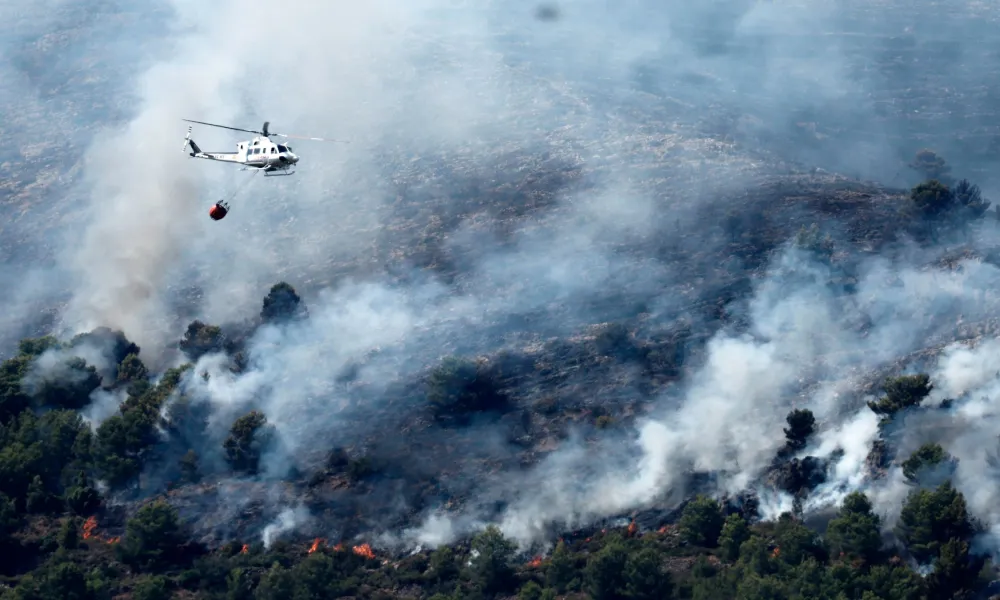

Europe is facing a fresh wave of devastating wildfires, with France and Spain battling major blazes as high temperatures, drought conditions and strong winds hamper firefighting efforts.
More than 300,000 people have been forced to leave their homes in the two countries as fires continue to burn for days, threatening residential areas, forests and important ecosystems.
In south-western France, the situation remains particularly critical. Firefighters are continuing efforts to contain a major wildfire in the Gironde and Landes regions, although authorities acknowledge that the blaze remains out of control.
Strong winds are pushing flames into new areas, while intense heat is creating extremely dangerous conditions for firefighting operations. Officials describe the fire front as highly challenging and unpredictable.
Nicolas Braz, head of the French Fire Service, described the wildfire as "unstable and uncontrollable", explaining that wind conditions are so intense that the blaze has generated its own local weather phenomena.
"The fire is creating its own winds," he said, describing conditions as exceptionally dangerous for crews operating in the area.
Mass evacuations in France
France has launched one of its largest evacuation operations in recent years.
Approximately 250,000 people across south-western France have been ordered to leave their homes for safety reasons.
Smoke from the fires has reached the Bordeaux area, with residents and visitors reporting a strong smell of burning in the air.
Tourists evacuated from areas near the fire fronts described dramatic scenes as flames spread rapidly due to strong winds.
The French government has mobilised all available resources and activated the European Union Civil Protection Mechanism to receive assistance from other member states.
Firefighters, military personnel, water-bombing aircraft and specialist teams creating firebreaks have all been deployed in an effort to limit the spread of the fires.
French President Emmanuel Macron said the country would stand by affected communities "for as long as necessary", promising support for regions that have suffered damage.
Emergency declared in Spain
The situation also remains serious in Spain, where a state of emergency has been declared because of extensive wildfires.
Although changing weather conditions have helped firefighters on some fronts, authorities warn that the situation remains fragile.
In areas around Madrid and Ávila, thousands of people have been evacuated, while several communities remain on alert.
According to Spain's Interior Ministry, around 60,000 people have already been removed from high-risk areas, while more than 28,000 others remain confined to their homes because of the threat posed by the fires.
Prime Minister Pedro Sánchez acknowledged that the country is facing "difficult times" and said firefighting crews continue to operate under extremely challenging conditions.
In the Valencia region, the first fatality linked to the fires was recorded. A man believed to be in his 70s was found dead inside his vehicle while firefighters were tackling a blaze in Manises.
Interior Minister Fernando Grande-Marlaska described the situation as "complex" and warned that forecast winds could further hinder efforts to contain the fires.
Growing concern over the scale of destruction
The scale of the damage in Spain has raised significant concern.
According to Sánchez, around 130,000 hectares of land have already burned since the beginning of the year, exceeding the average recorded over the previous decade.
Experts warn that the increasing frequency and intensity of wildfires is linked to the effects of climate change, with longer drought periods and rising temperatures creating conditions that favour major fire outbreaks.
Fires also hit Italy and Scotland
The crisis is not limited to France and Spain.
In Italy, more than 350 wildfires have broken out in Sicily, forcing evacuations and causing extensive damage.
Authorities said at least ten of those fires are considered particularly severe, while continued high temperatures are increasing the risk of new outbreaks.
In Scotland, emergency services are continuing efforts to combat a major wildfire in the Cairngorms National Park, which has remained active for several days.
Europe-wide alert
The European Union has warned that 2026 could become another record year for land destroyed by wildfires.
EU Commissioner for Crisis Management Hadja Lahbib said the wildfire season had started earlier than usual and warned that total damage could surpass previous records.
She also cautioned that forecasts of new heatwaves later this summer increase the likelihood of further major fire outbreaks.
The EU has already activated its joint crisis response mechanism, deploying aircraft and helicopters to assist firefighting efforts in France and Spain.
This year's fires have once again highlighted the climate crisis and the need for stronger prevention measures, as European countries face longer droughts, higher temperatures and increasingly difficult-to-control wildfires.