
In the second part of the Noverna survey conducted for Politis from 30 May to 10 June, aiming to assess the parliamentary elections of 24 May, Cypriot citizens do not believe that President Christodoulides emerged weakened from the elections. At the same time, however, they believe that he intervened in the elections in favour of certain parties or candidates.
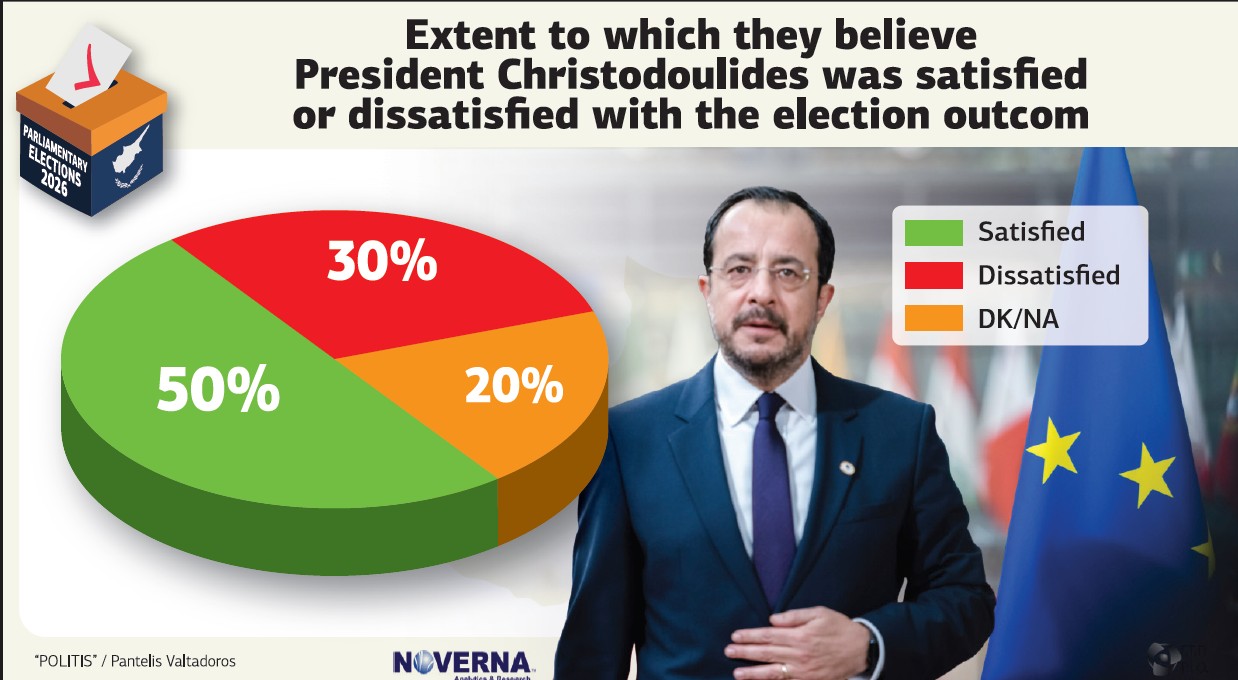
The first finding is indicative. Fifty per cent of citizens believe that President Christodoulides was generally satisfied with the outcome of the parliamentary elections, while only 30% believe he was dissatisfied. Regardless of the accuracy of this assessment, it reflects a clear political reading of the result by society. Despite the fact that DIPA and EDEK remained outside parliament and that no unified “presidential bloc” emerged, citizens seem to believe that the overall outcome of the elections did not harm the President, possibly because they consider DIKO remained strong and ELAM doubled its share, thus leaving him room for political manoeuvring under the new parliamentary balance. Of particular interest is that even 44% of DISY voters believe that Christodoulides was satisfied with the result, despite the known political tension between the Presidential Palace and Pindarou.
Intervened in the elections
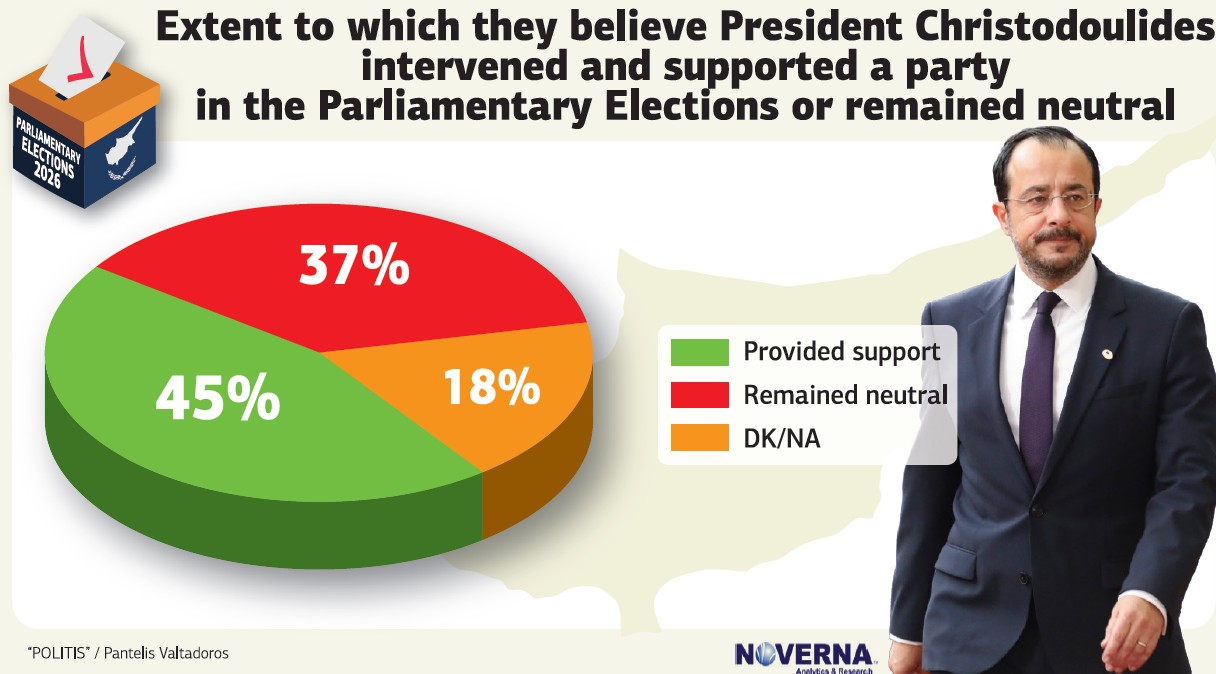
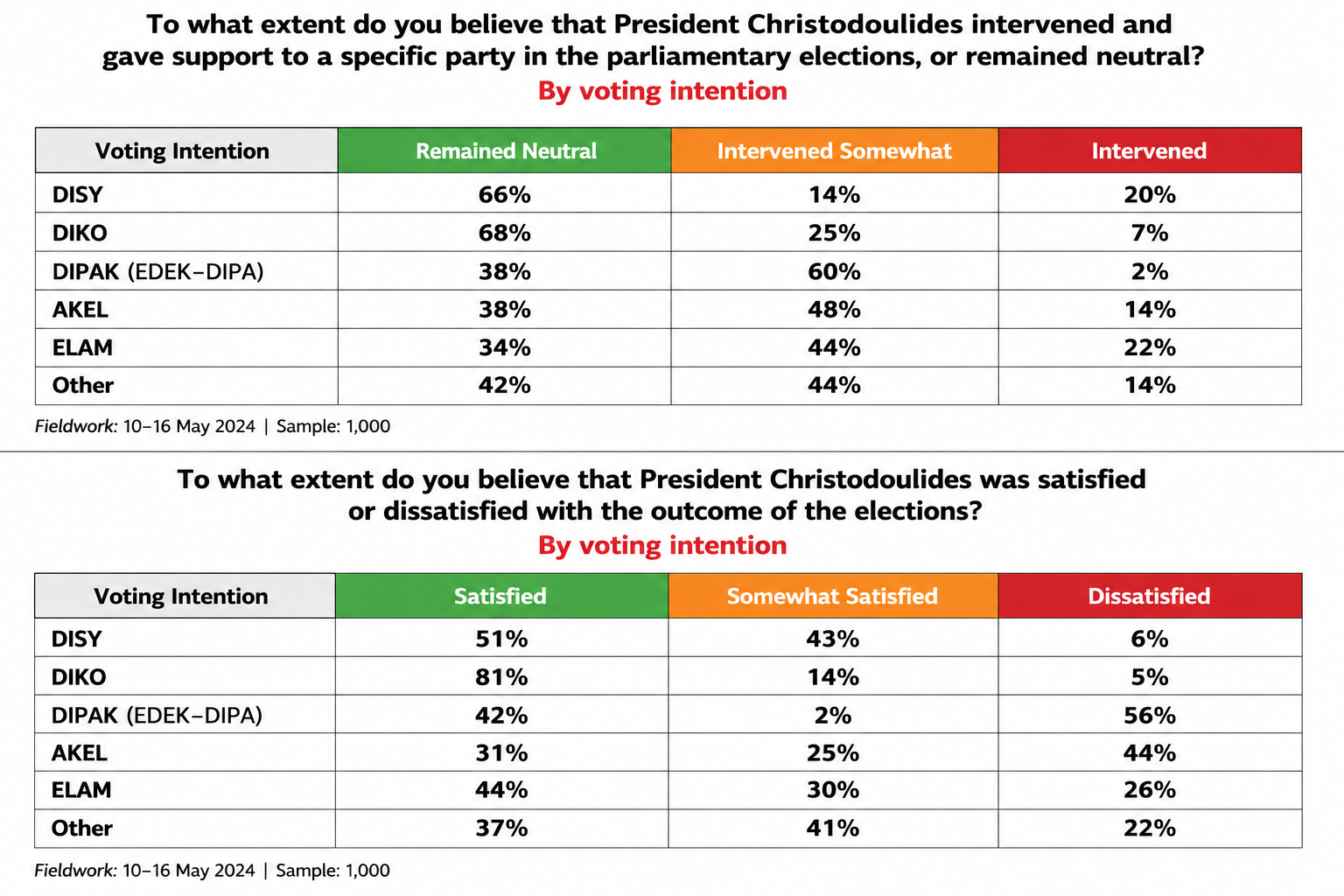
Respondents in the survey, despite statements to the contrary from the Presidential Palace, believe that Christodoulides intervened in the elections. This second finding is perhaps the most revealing. Forty-five per cent of citizens believe that President Christodoulides intervened or provided support to a party during the pre-election period. Only 37% believe that he remained neutral.
This means that nearly half of citizens perceive the President either as an active political player and certainly not as a detached institutional figure, or as a politician who uses his position, interferes in the internal affairs of political formations and, by extension, politicises the office of the President. This dual perception, whether positive or negative, is shared by both his political opponents and his allies in government.
Specifically:
- 66% of AKEL voters believe he supported certain candidates.
- 68% of ALMA voters share the same view.
- 38% of DIKO voters believe he intervened.
- Among DISY voters, 34% believe he supported parties.
The picture that emerges is that society did not fully accept the narrative of Presidential neutrality during the pre-election campaign; on the contrary, it believes that there was active involvement in an effort to shape favourable outcomes ahead of the 2028 presidential elections.
Survey Identity
Conducted by: NOVERNA Analytics & Research, member of SEDOAC and ESOMAR, on behalf of the newspaper Politis
Sample and methodology: 805 interviews with a representative sample of the population in the government-controlled areas, using random sampling
Interview method: Structured questionnaire with telephone interviews via CATI (Computer Assisted Telephone Interviewing)
Weighting: The sample was weighted based on the demographic profile of the electorate
Maximum margin of error: ±2.9% at a 95% confidence level
Fieldwork dates: 30 May – 10 June 2026