Behind every elderly person who remains at home, every child with a disability who needs daily support, every patient who cannot care for themselves, there is usually a person providing care. Often without pay, without fixed hours, without recognition and, many times, without even identifying themselves as a “carer.”
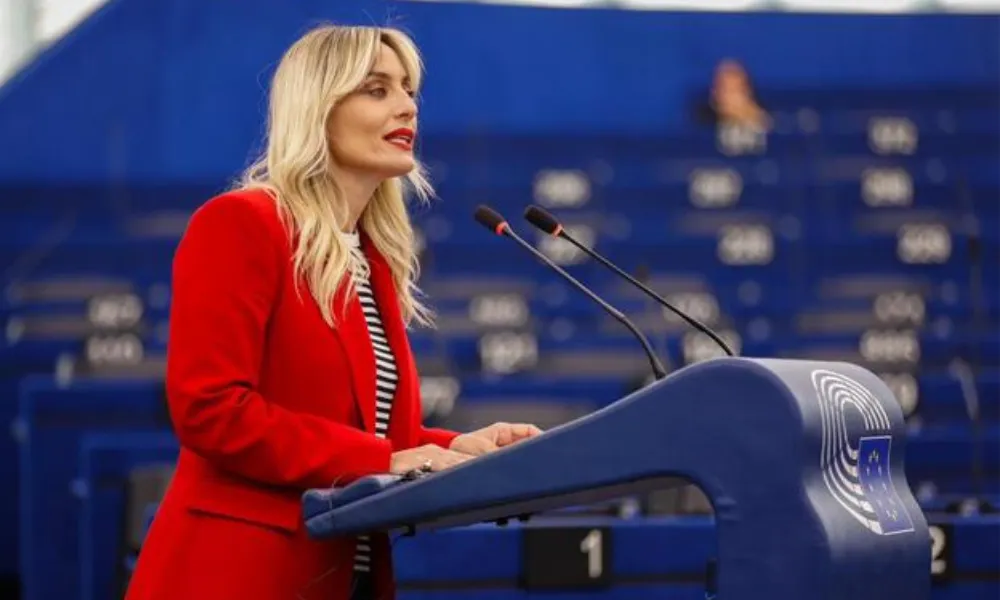
This invisible reality is what the report on the transition towards a care society and addressing the gender gap in care seeks to bring to the forefront. The report was approved by the plenary of the European Parliament, with EPP MEP Eleonora Meleti as rapporteur. The discussion does not concern only social services or workers in the sector. It concerns employment, pensions, equality, demographic ageing and the daily lives of millions of families. In other words, it concerns how European societies perceive care, as a private burden confined within the home or as a public issue requiring policy, resources and institutional recognition.
In her interview with Politis, Ms Meleti speaks about informal and professional carers, the disproportionate burden carried by women, child carers, funding and the need for the report’s proposals to have real impact on the daily lives of those who provide and those who receive care.
Care as a political issue
Professional and informal care supports millions of families, but is often not institutionally or financially recognised. What makes it today a central political issue for Europe?
What makes care a central political issue today are the major demographic and social changes. The population is ageing and the need for long-term care is increasing.
For many years, care was considered “invisible” work. Today, however, we recognise that without these people, health and social welfare systems could not function. Care is not only a social issue; it is an issue of equality and dignity.
The report calls for greater institutional recognition, better working conditions for professional carers and meaningful support for informal carers, who often provide invaluable work at significant personal and financial cost.
The burden on women
Care continues to fall disproportionately on women, affecting employment, income and pensions. How can the report help ensure this cost is no longer treated as a “private matter”?
For decades, care was treated as a private family responsibility. In practice, the burden falls disproportionately on women, with consequences for their careers, wages and pensions. Many are forced to reduce working hours, interrupt their careers or temporarily leave the labour market to care for children, elderly parents or other dependants.
As long as care remains invisible and unpaid work, inequalities between men and women are perpetuated. Its recognition and support is a prerequisite for a fairer society and a more equal labour market.
Supporting working carers
Many workers struggle to balance employment with caring responsibilities. Is there a need to strengthen or extend carers’ leave at European level?
Undoubtedly yes. Care is not an occasional obligation, but often a long-term responsibility that coexists with professional life. When a worker must care for an elderly parent, a relative with a disability or someone with serious health issues, they should not face the dilemma of “work or family.”
European legislation has already made important progress, but there is a need to strengthen carers’ rights through greater flexibility in work, adequate leave and social protection. Supporting carers is not only a matter of social sensitivity, but an investment in social cohesion, equality and quality of life.
Child carers
The report also refers to child carers. How can a state identify a child quietly caring for a relative without stigmatising them or burdening the family?
First of all, we must recognise that child carers are one of the most “invisible” groups of carers. Because this care is informal and provided within the family, it is often difficult to identify. Families themselves often do not seek help, either out of habit or fear.
The objective should not be to monitor families but to create safe channels of information and support. Schools, social services and health professionals can play a decisive role in early identification.
The key is to build a culture of trust. When a family knows it will find support rather than criticism, it is far more likely to seek help. The care these children provide deserves recognition, but their childhood must be protected.
Working conditions in care
In the professional care sector, low wages, staff shortages and mental strain are evident. How can Europe make these professions more attractive?
It is not enough to say that carers provide valuable work. The goal is to improve their working conditions in practice. Today, many professional carers face low pay, heavy workloads and significant psychological pressure, resulting in staff shortages across Europe.
To make these professions more attractive, better working conditions, more opportunities for training and career development, and greater support for workers are needed.
Funding
The changes proposed in the report require resources. Is there a European funding path, or will the burden fall mainly on national budgets?
It is true that many of the proposals require funding and long-term planning. The main responsibility for organising and financing care services lies with member states, so a significant part of the burden will remain with national budgets.
However, this does not mean the EU has no role. There are already European funding tools for investing in care services, staff training and the development of community and home care structures. The ESF+ can support programmes for professional carers, skills development and services for informal carers, while EU4Health and the European Regional Development Fund can also be utilised.
Next steps
After the report’s approval by the European Parliament, what are the next steps?
The next objective is for the proposals and recommendations to be taken into account by the European Commission, member states and stakeholders in designing care policies.
At European level, discussion is expected to intensify on supporting carers, upgrading care services and making use of available funding tools. We welcome the Commission’s announcement that it will present a European “care deal” in 2027. However, real change will be determined at national level.
For countries like Greece and Cyprus, which face strong demographic pressures, it is important to examine policies that strengthen home and community care services, support informal carers and improve working conditions in the sector.
If there is one message from this report, it is that care can no longer be considered invisible. Those who provide care and those who need it deserve policies that have a real impact on their daily lives.