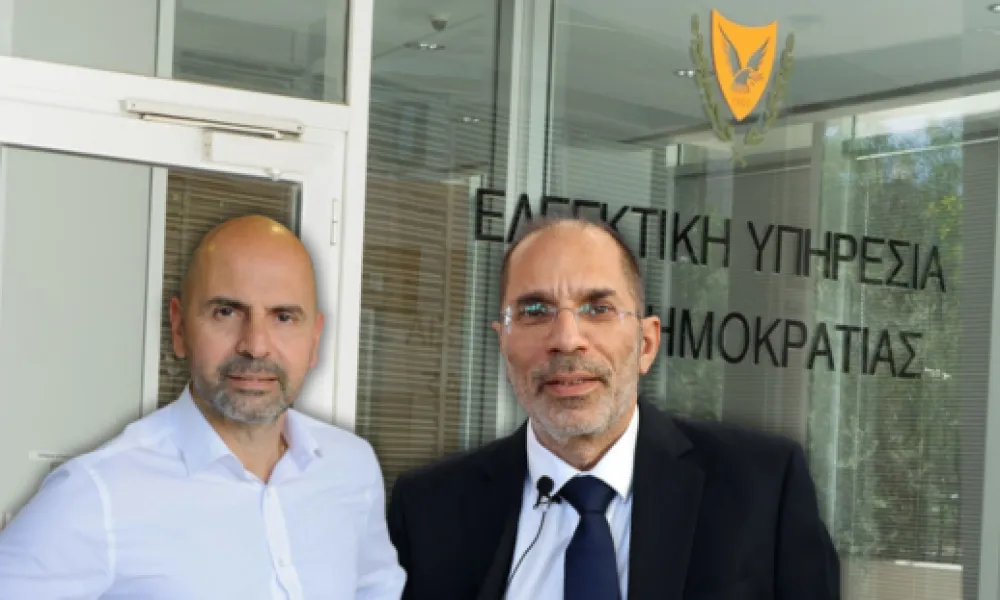

Auditor General Andreas Papaconstantinou has strongly rejected suggestions that Parliament should exercise oversight over the Audit Office, warning that he will not allow any interference with the independence of the institution.
Speaking to Politis radio, Papaconstantinou responded to positions expressed by former Auditor General and current MP Odysseas Michaelides, after a meeting of the new parliamentary Audit Committee. He said the independence of the Audit Office must be protected from both the executive and the legislature.
“I am usually conciliatory on many issues, but on this one I will be absolute,” he said, adding that as long as he heads the Audit Office he will defend its constitutional role.
The dispute arose after Michaelides requested the minutes of the Audit Office’s management team during the committee’s first meeting. Papaconstantinou said his answer was immediate and clear: the minutes would not be handed over.
“They simply will not be given,” he said, describing any attempt at parliamentary control over the Audit Office as unconstitutional.
Papaconstantinou also criticised what he described as a shift in Michaelides’ position, noting that he had led the institution for a decade. “Mr Michaelides used to strongly defend the independence of the Audit Office. Now the narrative is changing,” he said.
He argued that allowing Parliament to oversee the Audit Office, or to influence its audit programme, could paralyse the institution through repeated requests and interventions.
Papaconstantinou said he was also disappointed that AKEL MP Christos Christofides had expressed a similar view during the meeting.
The Auditor General said the first session of the new Audit Committee should have focused on strengthening scrutiny of the executive branch, rather than turning its attention to the Audit Office itself. He noted that the office issues around 55 reports each year, which Parliament could use to highlight findings more systematically or to conduct its own checks in other areas of public administration.
Asked whether a legal opinion could be sought from the Law Office, Papaconstantinou said he was confident in the constitutional basis of his position, while adding that the final arbiter would be the Supreme Constitutional Court.
“If anyone believes I am not serving the Constitution properly, I challenge them, and I urge them, to take the matter there,” he said.
Papaconstantinou also said the Audit Office will publish around ten new reports in the coming period. These will include reports on hotel licensing by the Deputy Ministry of Tourism, the safety of electrical installations in school buildings, and citizens’ experience of bus services, including a comparison between the cost of using public transport and private cars.