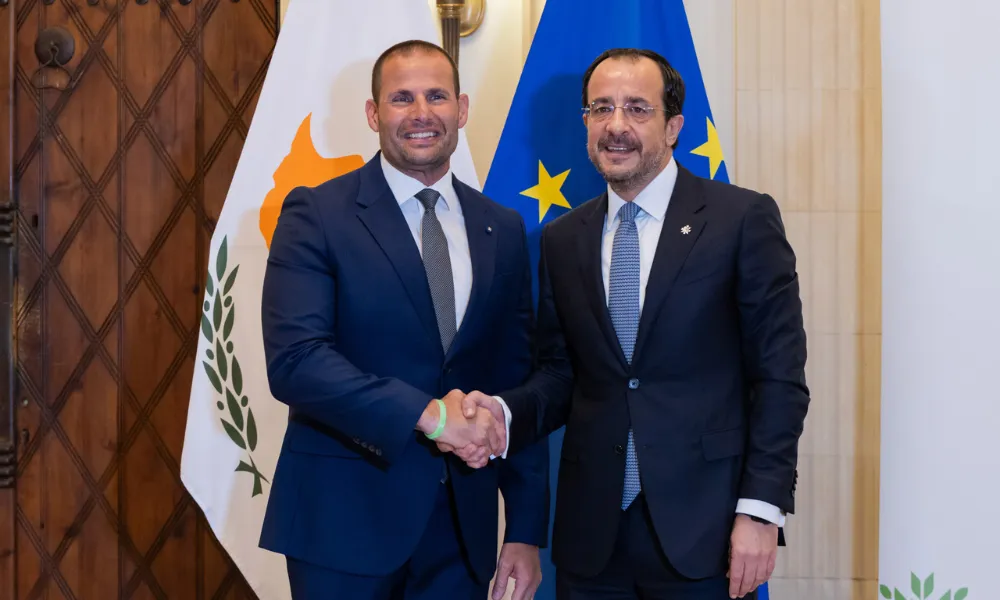
Malta’s Prime Minister Robert Abela has urged the European Union to ensure that island communities are not left carrying the weight of European ambitions with fewer tools than mainland regions.
Addressing the High-Level Conference “Strengthening EU Islands and Coastal Communities” in Paphos on Friday, Abela said geography would always shape island life, but should never restrict opportunity, fairness or the ability of young people to build their future at home.
“Geography should never become a ceiling on people’s ambition, on economic opportunity, or on Europe’s commitment to fairness,” he said, framing the conference as a rare moment in which islands were placed at the centre of Europe’s political debate rather than treated as a peripheral concern.
Abela said islands across Europe differ greatly in size, location and economic profile, but often face the same underlying pressures: distance from markets, higher costs, vulnerability to external shocks and dependence on strong transport and supply links.
For island member states, he said, these are not temporary difficulties but structural realities. Unlike mainland regions, islands have no land-based fallback when disruption hits. Transport, trade, access to services and the movement of people are all shaped by geography, with shocks in energy, tourism or supply chains often reaching island communities faster and more directly.
Connectivity, he stressed, should therefore be treated as essential infrastructure rather than a luxury. Weak connections make everything more expensive and less reliable, from supply chains and market access to daily life for families and businesses.
The Maltese Prime Minister also pointed to the clean transition as an example of why EU policy must take different starting points into account. Islands, he said, often face higher transition costs, heavier dependence on imported fuels and fewer technological options available at scale.
These constraints, he argued, affect not only what can be achieved, but how quickly and at what cost. In smaller economies, the need to attract workers from abroad can also create pressure on housing, infrastructure and limited space, raising broader questions about the long-term viability of communities and the ability of young people to remain on their islands.
At the same time, Abela warned against describing islands only through the language of limitation. Islands, he said, are also places of resilience, innovation and strategic value, particularly in energy, maritime policy, digital development and tourism.
He said island communities understand interdependence because they rely on routes, neighbours, markets and partners, making European cooperation a practical necessity rather than an abstract political concept.
Abela said equal treatment within the EU should not always mean identical treatment. Where regions face structurally different circumstances, he argued, European rules, funding and policy design must reflect that from the outset, rather than attempting to correct problems after decisions have already been taken.
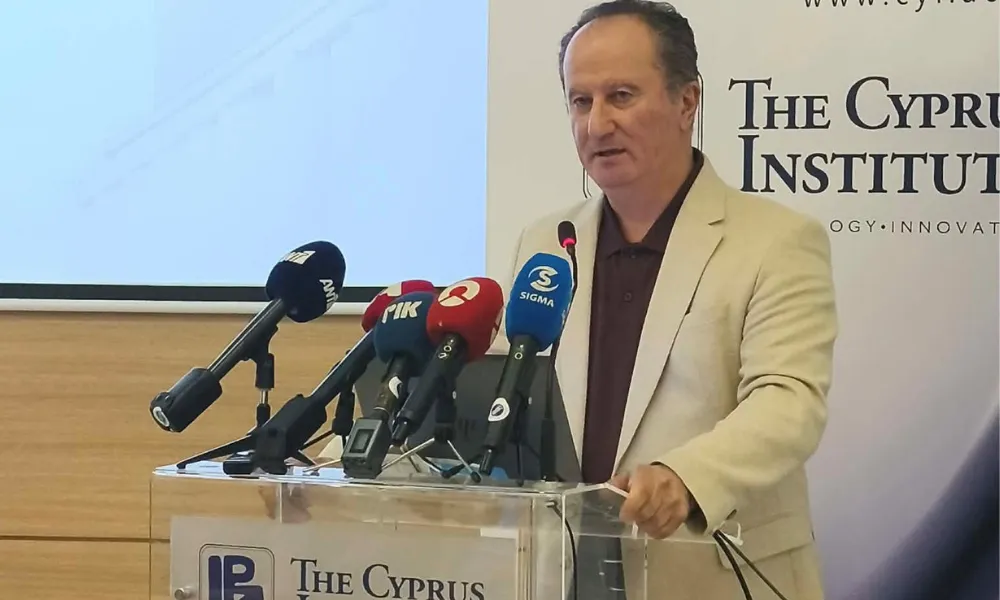
The conference also heard from European Parliament Vice-President Younous Omarjee, who described the moment as historic, pointing to the adoption of the Strategy for Islands and the Strategy for Coastal Communities.
Speaking in French through an interpreter, Omarjee said the strategy for islands was the result of a long political process, rooted in a European Parliament resolution that called on the European Commission to develop a dedicated approach for island territories.
For too long, he said, Europe’s islands had been “forgotten territories” of the European project. The new strategy, he added, represents formal recognition that insularity requires coherent, ambitious and comprehensive responses.
Omarjee called for Europe to be understood as an archipelago, noting that the continent is itself a peninsula surrounded by seas and oceans, from the Mediterranean and the Baltic to the Atlantic, the Arctic and the Black Sea.
He said islands are located in areas with major opportunities, particularly in the blue economy, but also face specific challenges linked to climate change, energy costs, mobility, access to public services and housing.
These realities, he said, are fundamentally different from those faced by continental Europe and require tailored solutions. He also called on the EU to assess the “cost of insularity” in the coming years, so that it can be better reflected in future policymaking.
Omarjee placed particular emphasis on young people, saying Europe must ensure that talented islanders can remain in their communities and build their future there in conditions of peace and prosperity.
He added that the timing was favourable, as Ireland, another island member state, is set to assume the Presidency of the Council of the European Union. He expressed confidence that the Irish Presidency would help move the discussion from strategy to implementation.
Source: CNA