
Cyprus' UN-controlled buffer zone, long regarded as a symbol of the island's division, has become one of its most significant wildlife refuges, with decades of limited human activity allowing ecosystems to recover and endangered species to thrive.
Speaking to the Cyprus News Agency (CNA), University of Cyprus Professor of International Relations Costas Constantinou said the environmental transformation of the buffer zone was an unintended consequence of the island's division.
"Ironically, as an unintended consequence of the creation of the buffer zone, there has been ecological regeneration in areas from which people were forcibly displaced," he said.
However, he argued that the area's environmental value can be preserved while allowing displaced residents to return, provided any resettlement is carefully planned and carried out under strict environmental standards.
A landscape that is far from deserted
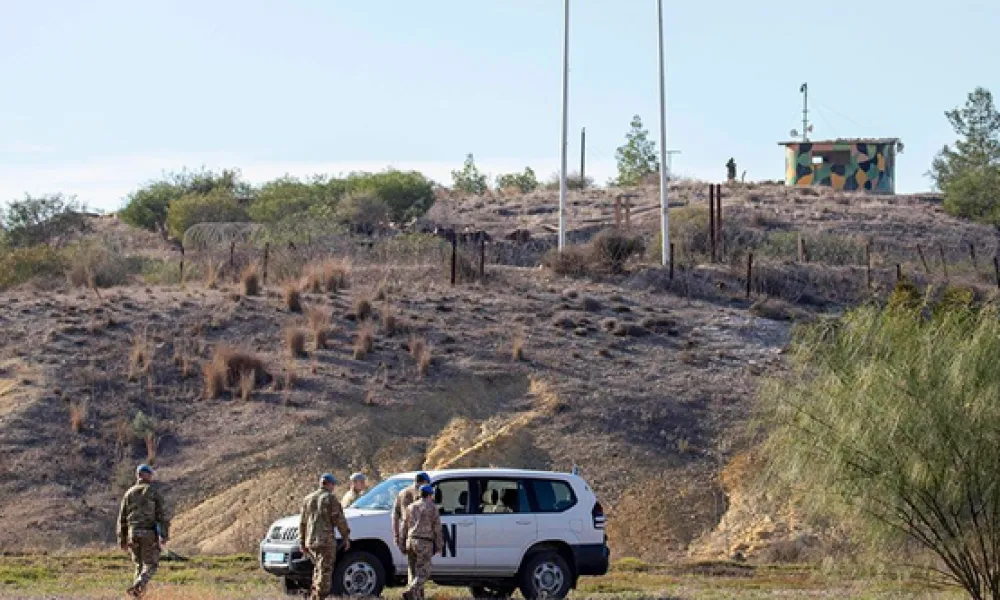
Despite being widely referred to as the "dead zone", the UN Buffer Zone is home to a range of human activities alongside its growing natural habitats.
According to Constantinou, the area includes villages, farmland, livestock farms, solar parks and facilities used by the United Nations Peacekeeping Force in Cyprus (UNFICYP). It also hosts bicommunal meeting spaces where Greek Cypriots and Turkish Cypriots, including technical committees and civil society organisations, regularly meet.
Research published in 2014 by Constantinou and academic Evi Eftychiou found that decades of restricted access enabled nature to reclaim large parts of the buffer zone, creating favourable conditions for wildlife and rare plant species.
Biodiversity surveys cited in the study recorded increases in populations of hares, the endemic Cyprus mouse, hooded crows, spur-winged lapwings, crested larks, lizards, hedgehogs, tortoises and the endangered Cyprus mouflon.
One of the most striking examples, Constantinou said, is the abandoned village of Variseia, which has become one of the island's most important habitats for the Cyprus mouflon. More than 300 animals have reportedly been recorded in and around the village.
He also pointed to the Klimos River in the buffer zone near Agios Dometios, where wetlands and reed beds have survived, in contrast to nearby urban areas where the river has been channelled and lined with concrete.
Ecological gains alongside environmental challenges
The research also highlights environmental risks linked to decades of abandonment.
Packs of feral dogs have emerged as dominant predators in some areas, creating new ecological dynamics while also posing risks to livestock, people and public health through diseases such as echinococcosis.
The area's flora has also flourished, with endemic species including mandrakes, wild tulips and orchids benefiting from the absence of intensive development.
Meanwhile, agriculture continues in parts of the buffer zone under permits issued by the United Nations. The study notes that mixed farming and grazing operations involving both Greek Cypriot and Turkish Cypriot communities continue in some areas, while the relatively low use of fertilisers and pesticides creates opportunities for organic farming.
Constantinou said long-standing cooperation between the two communities continues in locations including Potamia, Dali, Lympia, Louroujina and Pyla, although he cautioned that illegal activities, including animal smuggling, drug trafficking and arms smuggling, also occur within the buffer zone.
Return of residents must protect biodiversity
Looking ahead, Constantinou warned that an uncontrolled return of human activity could seriously damage the ecosystems that have developed over the past five decades.
He said even environmentally friendly projects, such as jointly managed solar parks, could harm habitats if not carefully designed.
Instead, he argued that ecological diplomacy should form part of future confidence-building measures, combining environmental protection with transitional justice for displaced communities.
Constantinou said former residents should eventually be allowed to return to villages inside the buffer zone through a carefully managed ecological planning process.
He noted that displaced residents from villages including Petrofani, Variseia, Agios Nikolaos and Agios Georgios Soleas have long called for resettlement, but the issue has yet to feature in confidence-building measures considered by either the United Nations or the two sides.
"If international experience teaches us anything," he said, "it is that successful ecological parks depend on involving local communities in protecting nature, rather than excluding people from it."
He added that the buffer zone's ecological significance could not only be preserved but strengthened through a balanced approach to resettlement.
"Otherwise," he said, "this unexpected and valuable ecological heritage risks being lost if the status quo changes in the future."
This version follows a UK news feature style, avoids loaded language in the narrative, and clearly attributes analysis and opinions to the interviewee.
Source: CNA