
The official death toll from the devastating earthquakes that struck Venezuela on 24 June has risen above 5,000, although authorities have stressed that the figure remains provisional as recovery operations continue.
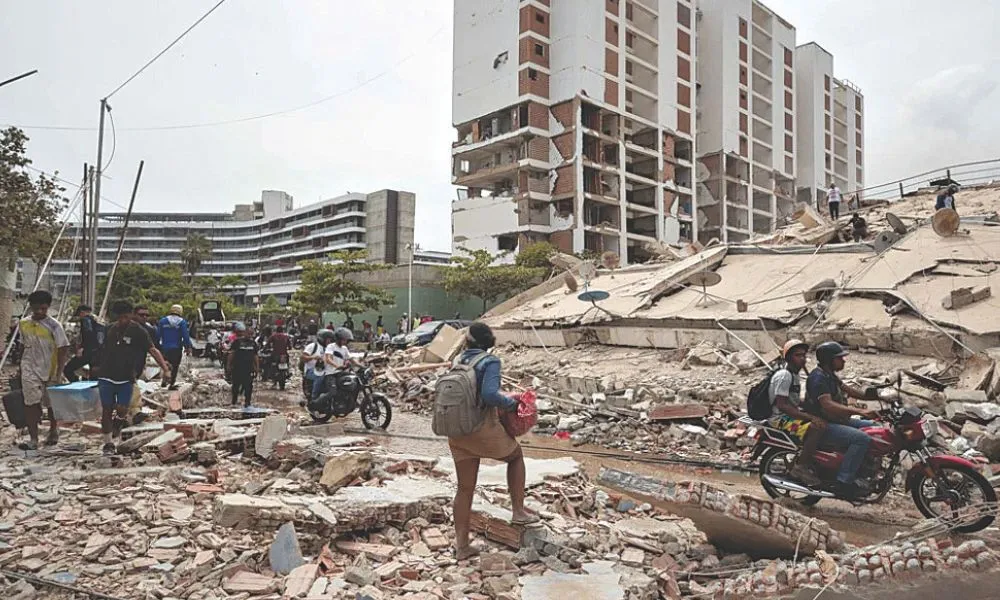
At least 5,069 people were killed after two powerful earthquakes measuring 7.2 and 7.5 in magnitude struck just 39 seconds apart, causing widespread destruction across northern Venezuela, particularly in La Guaira state. The updated figures were released on Friday by parliamentary president Jorge Rodríguez.
Injured
The number of injured remains unchanged at 16,740.
Authorities have not provided an estimate for the number of people still missing. Two days after the disaster, the United Nations suggested that as many as 50,000 people could be unaccounted for, but the government has declined to speculate.
Hundreds of buildings were damaged or completely destroyed, with La Guaira among the worst-hit areas.
Nearly 20,000 people have been left homeless, most of them sheltering in makeshift camps across La Guaira, a popular coastal destination near the capital, Caracas. Many are living in sports grounds, public squares and on pavements as emergency accommodation remains limited.
IMF funding to support reconstruction
As the country begins the long process of rebuilding, Venezuela has secured the release of $346 million in funding from the International Monetary Fund (IMF).
The funds had previously been frozen because the IMF did not recognise Nicolás Maduro as Venezuela's legitimate president following his removal in a US military operation in January.
Interim President Delcy Rodríguez said the money would provide support for families affected by the disaster, funding housing, infrastructure and essential public services.
The IMF and the World Bank announced in April that they had begun restoring relations with Venezuela after ties were suspended in 2019, several months after Maduro's removal.
Families continue desperate search for loved ones
In La Guaira, relatives of victims and volunteers continued searching through the rubble on Friday, using heavy machinery to lift collapsed walls in the hope of recovering those still trapped beneath the debris.
"There are many people down there, but nobody wants to touch the dead," Ildegár Mujica, a 60-year-old economist searching for his former wife beneath the ruins of a 12-storey apartment building, told AFP.
He criticised the authorities' handling of the recovery effort, claiming that bodies are not included in the official death toll unless relatives are present to identify them.
"There are visible bodies, but if there are no families to identify them, they are not taken into account," he said.
Earlier this month, interim President Rodríguez insisted that "no one will be buried in a mass grave".
Private recovery teams draw criticism
As official recovery efforts continue, some families have turned to privately hired recovery workers, known locally as "moles", who charge fees to retrieve bodies from the wreckage.
Joan Torumo, a 45-year-old volunteer from La Guaira, condemned the practice, blaming what he described as insufficient state support for recovering the dead.
"I know someone who was charged $1,300," he said, adding that the standard fee is around $300 for each body recovered.
According to Torumo, the arrangements are made discreetly. "When they find your loved one, they ask you for a black rubbish bag and bring them back inside it," he said.