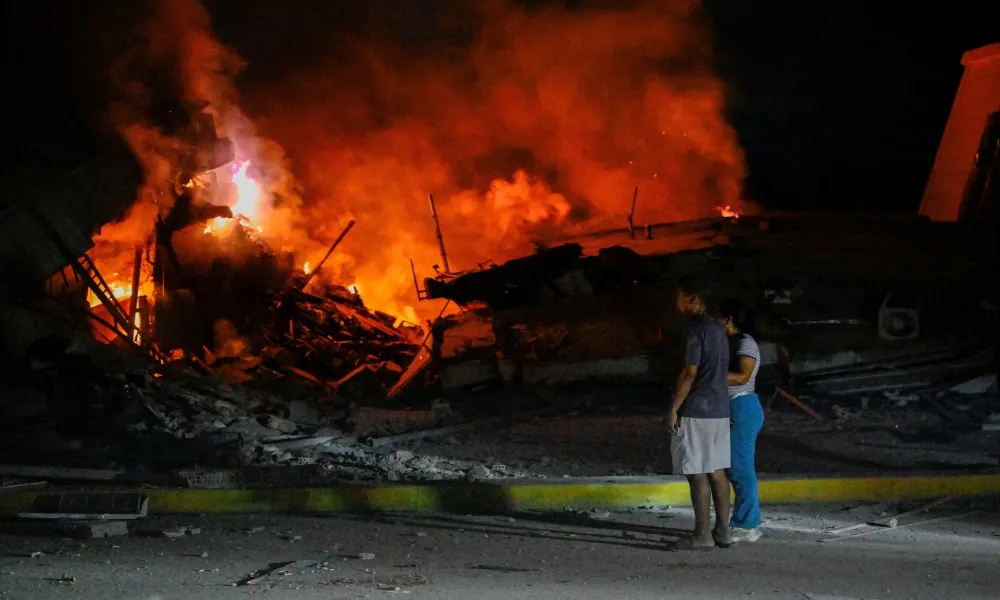
Families in Venezuela and across the country’s diaspora are turning to social media in a desperate search for missing relatives, two days after two powerful earthquakes left parts of the country devastated and many communities cut off.
Photos of children, parents, elderly relatives and entire families have flooded WhatsApp, Facebook and X, as people appeal for any information that could help locate loved ones. For many, online posts have become the only way to ask for help, share names and circulate images from areas where phone lines, roads and basic services have been severely affected.
The official death toll has risen to 235, with at least 4,300 people injured. Independent online platforms tracking missing people, however, suggest that as many as 40,000 people may still be unaccounted for, a figure far higher than those released by the authorities and one that reflects the scale of fear among families waiting for news.
Social media becomes a lifeline
The collapse of infrastructure, disruption to communications and the slow flow of official information have made social media a critical tool in the search for survivors. Families are uploading photographs, personal details and last known locations in the hope that someone may recognise a face, confirm a sighting or pass on information from hospitals, shelters or rescue teams.
Among those searching from abroad is 31-year-old Vanessa Marcano, who lives in Madrid. She is looking for her uncle and aunt, who live in La Guaira, one of the areas reported to have been hardest hit. Her uncle’s daughter and seven-year-old grandson, who had travelled from the United States, are also missing.
“It is a feeling of powerlessness and uncertainty. You try to stay calm and do what you can, but it is very easy to fall into despair,” she said.
In another account, Joycer Concalves said he had been speaking by phone with his partner and her daughter shortly before the earthquakes struck. It was the last time he heard their voices. Once the shaking stopped, he rushed to the apartment building where they lived, only to find it reduced to rubble, with residents and neighbours digging through debris by hand.
He later posted their photographs online with the word “missing” in the hope that someone might have seen them. “They are pulling people out alive from the building. That is why I still hope they are alive too,” he said.
UN urges access to information
The search has been complicated further by restrictions affecting access to some social media platforms. The UN Human Rights Mission in Venezuela called on the authorities to lift the curbs, stressing that in an emergency, timely access to reliable information can save lives.
Shortly after the UN intervention, users in Venezuela regained access to X, which has become one of the platforms used by families to share missing-person appeals and urgent updates from affected areas.
For rescue teams, the coming hours remain critical. In the hardest-hit neighbourhoods, relatives continue to gather near collapsed buildings, waiting for news while emergency crews, volunteers and residents search through the debris. Every recovered phone, every list posted online and every message from a hospital or shelter is being treated as a possible lead.
Anxiety spreads across the diaspora
The disaster has also left millions of Venezuelans abroad struggling to find information from a distance. For those unable to travel immediately, online missing-person lists and scattered messages from relatives have become a painful substitute for direct contact.
Elibel Tovar Lanas, 38, who lives in Chile, had been due to travel on Saturday to meet his 70-year-old father, who was in La Guaira for work. Since the night of the earthquakes, he has been unable to reach him.
“I feel helpless. I do not know if he is safe, if he has been injured or even if he is alive,” he said, adding that he has already registered his father on online missing-person lists.
From Madrid, Marcano described the same sense of despair shared by many Venezuelans abroad. “You keep hoping that someone will organise an aid campaign or an initiative you can join. But the truth is that from so far away, there is very little you can do,” she said.
Across Venezuela, the search continues in collapsed buildings, hospitals, shelters and online. Behind every photograph posted, every name added to a list and every message shared on social media is a family waiting for proof that someone they love is still alive.