
A US military C-17 transport aircraft reportedly departed Joint Base Andrews, stopped in Riga and later landed in Moscow, where a convoy bearing US diplomatic plates was subsequently seen travelling through the Russian capital.
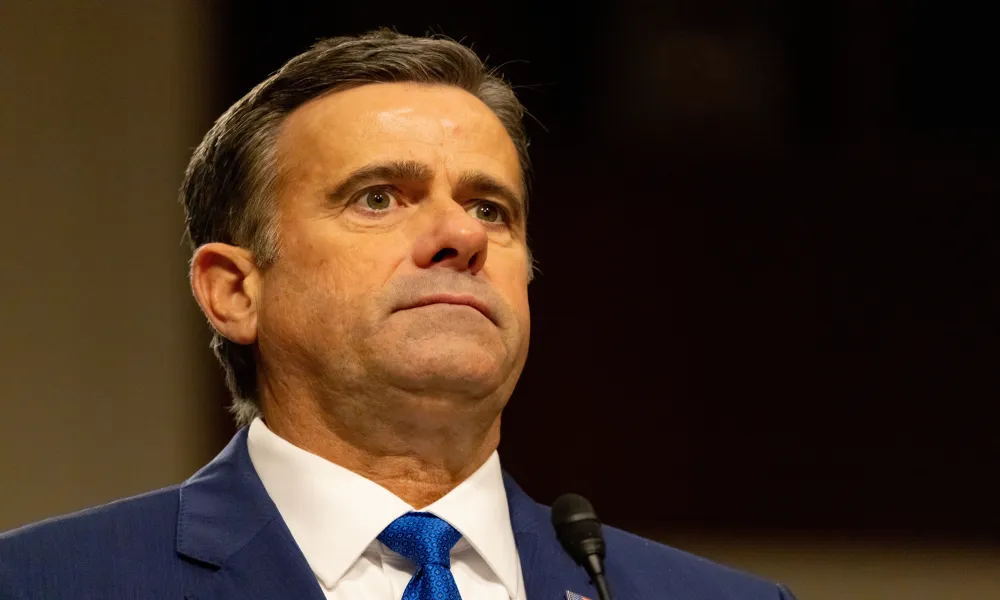
According to US officials cited by CBS News, CNN and Axios, the passenger on the aircraft was CIA Director John Ratcliffe.
Neither Washington nor Moscow has provided substantive details about the visit. The CIA and the White House declined to comment, while the Kremlin said no meeting with a US official had been scheduled. It also remains unclear whom Ratcliffe met and what issues were discussed.
The timing of the visit has drawn particular attention, coming amid stalled efforts to reach a settlement in the war in Ukraine and just one day after the announcement of a new round of US sanctions against Iran.
Iran at the centre of speculation
One leading theory is that Ratcliffe delivered a direct message to Moscow regarding its relationship with Tehran.
Russia and Iran have developed increasingly close military and economic ties in recent years. Tehran has supplied Russia with drones used in the war in Ukraine, while Kyiv has accused Moscow of providing technology and other assistance to Iran.
Russian officials reject allegations that they support Iranian operations against American targets and maintain that Moscow could play a role in reducing tensions.
For Washington, a key question is how far Vladimir Putin is prepared to go in supporting Iran and whether Russia could instead serve as a mediator.
Under this scenario, Ratcliffe may have sought both to gauge Moscow's intentions and to warn against deeper Russian involvement alongside Tehran.
Sensitive intelligence and red lines
A second theory is that the CIA chief delivered a message based on classified US intelligence.
The decision to send the CIA director, rather than a diplomat or political envoy, has fuelled speculation that discussions may have involved military planning, intelligence assessments or American "red lines".
The issue could relate to a potential escalation in Ukraine, Russian hybrid operations or Russia's position regarding the crisis involving Iran.
Observers have pointed to the precedent of November 2021, when then CIA Director William Burns travelled to Moscow and reportedly warned Russian officials about the consequences of an invasion of Ukraine.
While that does not mean Ratcliffe carried a similar ultimatum, it illustrates how Washington uses the CIA director for especially sensitive communications.
Ukraine and the diplomatic deadlock
The mission may also have formed part of a behind-the-scenes effort to revive negotiations over Ukraine.
The United States has maintained communication channels with Moscow despite major disagreements between Russia and Ukraine over the terms of any potential settlement.
Particular attention has focused on reports that the Trump administration asked Kyiv temporarily to avoid attacks on Moscow, St Petersburg and northern Russia because a senior US official would be present in the country.
The reported request suggests the trip was planned well in advance and was considered strategically important.
Even so, formal political negotiations with the Kremlin are usually conducted through diplomatic envoys, leading some analysts to believe Ratcliffe's discussions likely centred more on security and intelligence matters than on direct political bargaining.
Possible prisoner exchange
Another possibility is that the visit involved discussions on a new prisoner exchange between the United States and Russia.
The CIA has previously participated in such negotiations, and Ratcliffe was personally involved in talks that led to the release of Russian-American Ksenia Karelina in April 2025.
The arrival of a US military aircraft in Moscow immediately fuelled speculation because Vnukovo Airport has been used in the past for sensitive diplomatic missions and prisoner swaps.
However, analysts note that a prisoner exchange alone may not fully explain a personal visit by the CIA director.
Maintaining the CIA-SVR channel
A less dramatic but equally plausible explanation is that the trip was intended to preserve direct communication between the CIA and Russia's Foreign Intelligence Service (SVR).
Ratcliffe has previously held telephone conversations with SVR chief Sergei Naryshkin, with both sides seeking to maintain contacts on crisis management and security issues.
Such channels often remain active even during periods of severe political confrontation in order to avoid miscalculations and facilitate the exchange of messages that cannot easily be conveyed through traditional diplomatic routes.
The need for those contacts has become more acute as Washington and Moscow simultaneously confront the war in Ukraine and tensions surrounding Iran.
One visit, multiple possible messages
The available information does not allow firm conclusions about the true purpose of Ratcliffe's visit.
Most observers believe the agenda likely extended beyond a single issue. Ukraine remains the principal source of tension in US-Russian relations, prisoner exchanges are among the few areas where cooperation continues, and the crisis involving Iran has added a further layer of complexity.
As a result, the CIA director's trip appears more likely to have been a mission focused on the delivery of sensitive messages and intelligence discussions than a conventional diplomatic engagement.
For now, the silence from both Washington and Moscow may be the clearest indication that the substance of those conversations remains something both sides prefer to keep out of public view.