
The Syrian Democratic Forces (SDF), the Kurdish-led military alliance that spearheaded the campaign against Islamic State (ISIS), are set to dissolve as an independent force and integrate into the Syrian army under an agreement with Damascus.
SDF commander Mazloum Abdi announced the move on Tuesday at the presidential palace in Damascus following talks with Syria's de facto president Ahmed al-Sharaa, saying the organisation's mission had come to an end.
Integration into the Syrian state
"We announce today the end of the mission of the Syrian Democratic Forces and declare, with full responsibility, their dissolution as an independent military force," Abdi said.
The decision forms part of an agreement signed earlier this year aimed at fully integrating Kurdish institutions into Syria's new state apparatus.
According to Syrian state media, the agreement also provides for the dissolution of the Kurdish autonomous administration and its military and political structures, with all institutions to be incorporated into the Syrian state.
Abdi said the move follows the completion of the integration of SDF forces into the Syrian armed forces.
End of Kurdish autonomous rule
During Syria's civil war, Kurdish-led authorities established autonomous governance across large areas of northern and north-eastern Syria.
Since taking power in 2024 following the overthrow of Bashar al-Assad, Sharaa has repeatedly pledged to reunify Syria and dismantle all armed groups operating outside state control.
Analysts say the dissolution of the SDF marks the end of an era for Syria's Kurds, who for decades sought greater autonomy and, during the conflict, established their own governing structures.
Force that helped defeat ISIS
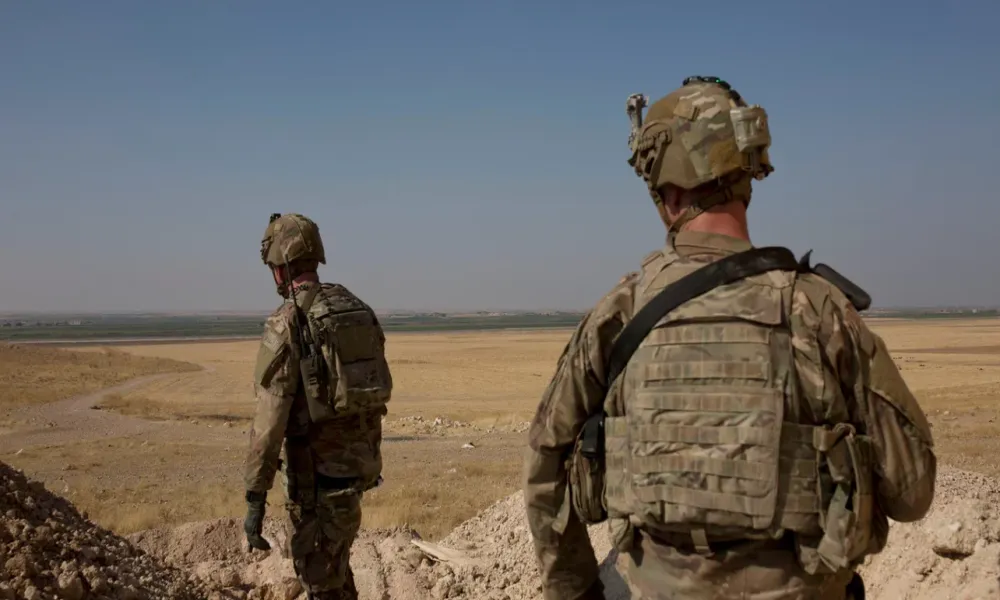
Founded in 2015 with US backing, the SDF served as the military arm of Syria's autonomous Kurdish administration and played a central role in the defeat of ISIS with support from the US-led international coalition.
At its peak, the force numbered up to 100,000 fighters, mainly Kurds and Arabs, and controlled vast oil-rich areas in northern and north-eastern Syria.
"Since the establishment of the SDF, our fighters carried a great responsibility during one of the most difficult periods in Syria's history," Abdi said.
He added that the force liberated numerous towns and communities first from the Assad government and later from ISIS.
US welcomes move
US ambassador to Turkey and President Donald Trump's special envoy for Syria, Tom Barrack, described the development as "absolutely historic", saying it represented genuine integration that would strengthen Syria's sovereignty.
The announcement follows a US decision earlier this week to remove Syria from its list of state sponsors of terrorism, a move viewed as important for the country's reconstruction and economic recovery.
Kurdish rights remain a key issue
While announcing the dissolution, Abdi stressed that Kurdish cultural and linguistic rights remain a priority.
"The right to education in the Kurdish language is among the most important rights sought by the Kurdish people for decades," he said.
According to analysts, around 2 million Kurds live in Syria, which has a population of approximately 20 million.
In January, Sharaa signed a decree recognising Kurdish rights and granting Kurdish status as a national language for the first time since Syrian independence in 1946.
ISIS threat persists
Although ISIS lost the territory it controlled in Syria in 2019 with the collapse of its self-declared caliphate, remnants of the jihadist group remain active.
Abdi said Syria had entered a new phase focused on "peace" and "participation", signalling what could become one of the most significant political and military realignments since the end of the country's civil war.