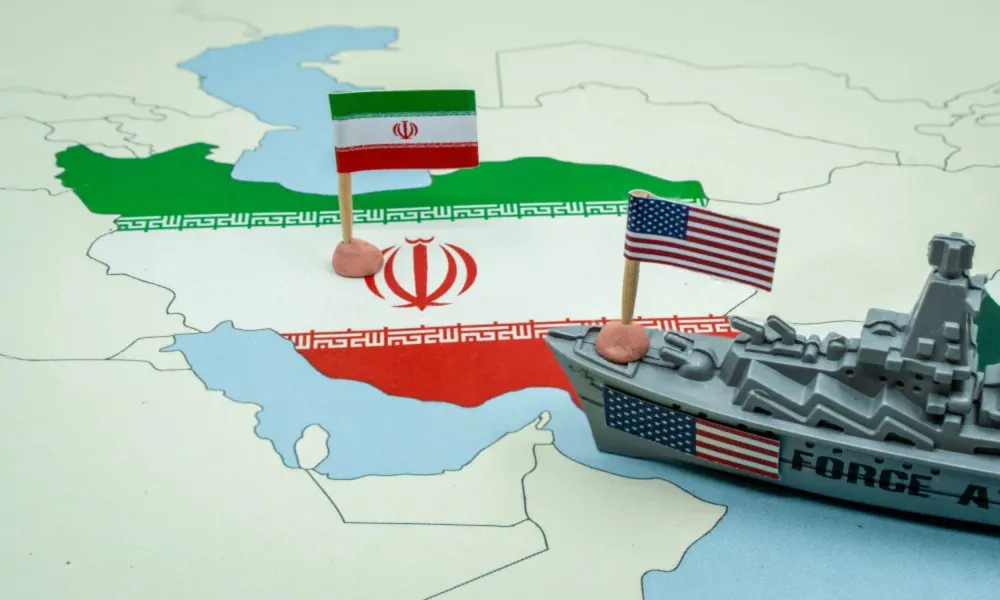

The conflict between the United States and Iran has entered a new phase of escalation after US forces launched strikes on Iranian territory and Tehran responded with missile and drone attacks against American military installations in Jordan.
The latest exchange comes as tensions remain centred on the Strait of Hormuz, while diplomatic efforts aimed at easing the crisis appear stalled.
US strikes on Larak Island
The US Central Command (CENTCOM) said American forces carried out their first strikes on Iranian territory in about a month on Sunday, targeting two missile launchers on Larak Island.
According to CENTCOM spokesperson Capt Tim Hawkins, the launchers belonged to Iran's Islamic Revolutionary Guard Corps (IRGC) and were allegedly being prepared for the launch of missiles equipped with naval mines toward the Strait of Hormuz.
The IRGC confirmed the attacks, reporting casualties and injuries and vowing retaliation.
Iranian missile and drone response
Hours later, the IRGC announced attacks against US military facilities in Jordan using ballistic missiles and drones.
According to an Iranian statement, the targets included technical facilities, maintenance infrastructure and aircraft stationed at two American bases in the country.
Tehran also warned that any further "hostile action" by the United States would trigger "even stronger retaliation".
Strait of Hormuz remains flashpoint
Despite a period of relative de-escalation in recent weeks, the Strait of Hormuz remains the main source of tension.
The strategic waterway, through which roughly one-fifth of global hydrocarbon trade passed before the conflict, remains effectively closed under measures imposed by Tehran.
Iranian forces have continued, at intervals, to target commercial vessels attempting to transit the strait without authorisation from Iranian authorities.
CENTCOM said it recently completed mine-clearing operations along international shipping routes in Hormuz and insisted US forces remain on alert to safeguard freedom of navigation.
Economic pressure increases
While military clashes continue at a lower intensity, Washington is increasingly shifting pressure onto the economic front.
The US administration has announced a new package of secondary sanctions targeting Iran's trading partners in sectors including:
- Shipping.
- Aviation.
- Technology.
- Digital assets.
- Gold.
Additional sanctions have also been imposed on dozens of individuals, companies and vessels accused of supporting Iran's oil revenues or military activities.
China also in focus
US pressure has increasingly focused on China, one of Iran's most important economic partners.
Beijing has already signalled that it intends to defend both its cooperation with Iran and its broader economic interests.
Diplomatic efforts stalled
At the same time, diplomatic efforts remain effectively frozen following the collapse of the Islamabad Memorandum of Understanding, which was signed in June and had been intended as a framework for ending the conflict.
Iran continues to insist that it will not return to the previous operating regime in the Strait of Hormuz, while the United States and its allies are demanding the reopening of the critical maritime route.
The impasse has heightened concerns about the possibility of further military escalation across the region.