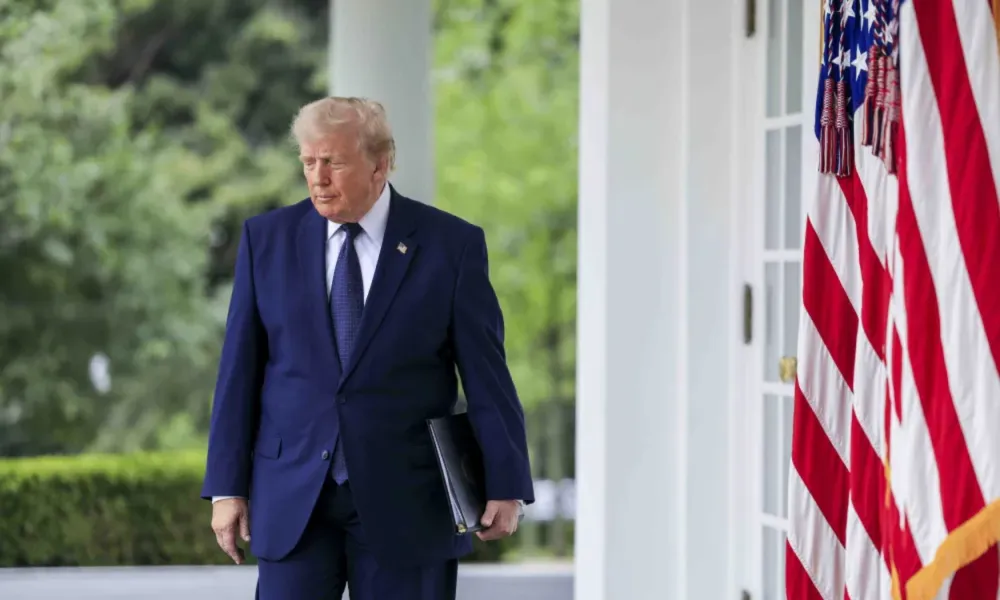

US President Donald Trump has urged countries in the “Shield of the Americas” alliance to impose sanctions on 24 organisations designated by the United States as foreign terrorist organisations, as part of efforts to strengthen regional cooperation against organised crime and “narco-terrorism”.
Speaking on Tuesday at a summit of alliance members on the sidelines of the UN General Assembly in New York, Trump called on countries across the Americas to formally recognise the organisations as common threats to regional stability.
“I call on every country in the Americas to formally designate the narco-terrorists as common threats to stability and to impose tough sanctions on the 24 foreign terrorist organisations designated by the United States,” Trump said.
Asset freezes and visa restrictions
Alliance members agreed to pursue what they described as a “first joint action” against “the scourge of narco-terrorism”, according to a statement released by the US State Department.
The proposed measures include freezing assets and imposing immigration and visa restrictions on members, associates and supporters of the targeted organisations.
The countries also expressed their intention to pursue criminal liability against those providing material support, including logistical assistance, to the groups.
MS-13 and Tren de Aragua among targets
The 24 organisations have already been sanctioned by Washington.
They include Mara Salvatrucha, or MS-13, originating in El Salvador, Venezuela’s Tren de Aragua and Mexican drug cartels.
Mexico is not a member of the alliance.
During his address to the UN General Assembly on Tuesday, Trump compared the criminal organisations to Islamic State.
“Before I came along, nobody sanctioned anybody. Everybody was forced to fend for themselves, but that is no longer the case,” he later told the summit.
Greater regional cooperation
The Shield of the Americas initiative was launched personally by Trump and announced at a summit in Florida.
Participating countries are expected to strengthen coordination and intelligence sharing, alongside greater police and judicial cooperation, to combat organised crime operating both within and across national borders.
The alliance includes the United States and several South American countries governed by right-wing administrations.
Source: ANA-MPA