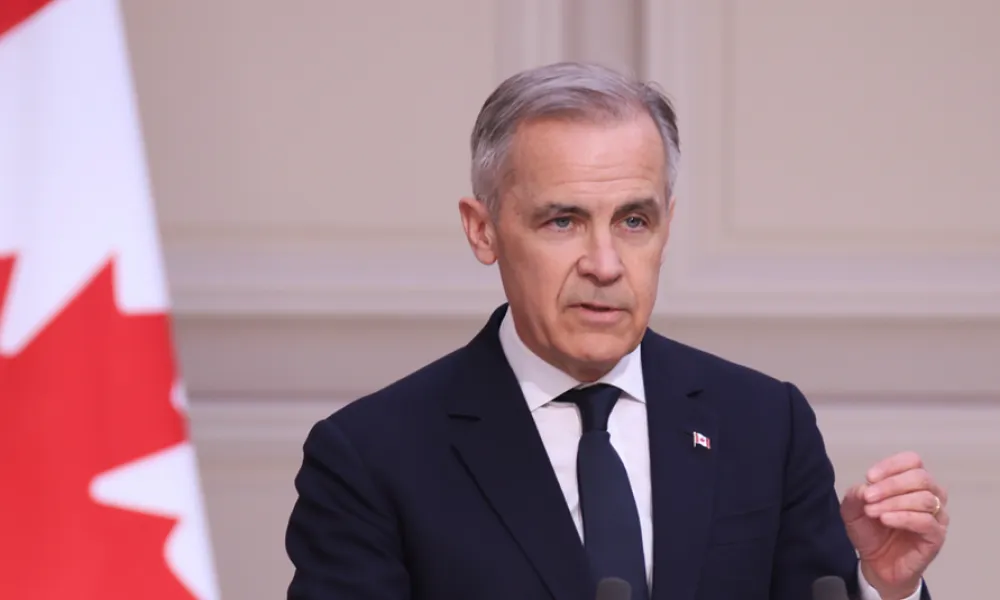

Prime Minister Mark Carney of Canada used a news conference at the United Nations General Assembly in New York on Tuesday to expand on his vision for how nations should navigate a world order he says has been ruptured by the United States and China. "This is, in many respects, a time that comes once or twice every century," Carney said, framing the moment as one that calls for neither passive defence of the existing order nor its wholesale dismantling.
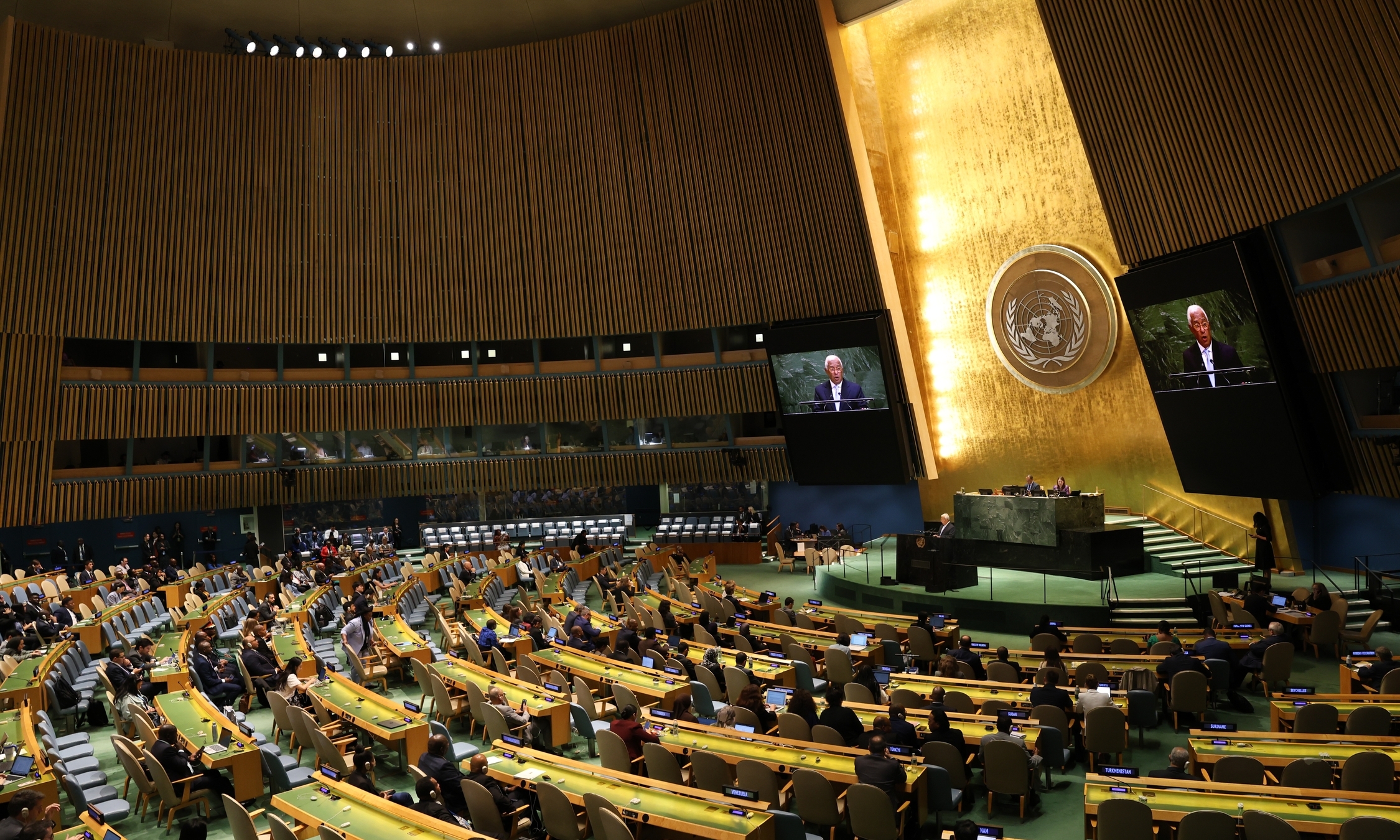
Carney described his alternative as "values-based realism," which he characterised as both principled and pragmatic. He had first raised the concept of "middle powers" banding together to protect their interests from the decline of the rules-based international order during a widely reported address to the World Economic Forum in Davos in January, though he offered few specifics at the time. Tuesday's remarks marked his most detailed attempt yet to sketch out what such cooperation would look like in practice.
A coalition, not a bloc
Carney had originally been due to join leaders from the European Union and six other nations on Monday to launch an initiative called Partners for Multilateralism, but air traffic control disruptions delayed his arrival. Speaking in French on Tuesday, he described the initiative as something distinct from a traditional alliance structure. "This is not a bloc or a bureaucracy," he said, describing instead a forum built around existing universal institutions, practical coalitions and capacities outside government, intended to build trust between nations.
He said the plan was designed around the recognition that full international consensus is no longer realistic, and that the coalitions it produces would be temporary and shift in membership depending on the problem at hand. "Groups formed around problems rather than geography or size," Carney said, adding that the approach was meant as an instrument of multilateralism rather than a replacement for it. As examples, he pointed to Canada's work with France and Britain on a two-state solution for Israel and Palestine, and to multilateral cooperation on ocean conservation, saying such groups would eventually bring their work back to bodies like the United Nations to be, in his words, strengthened, broadened and scaled.
Calibrated alliances with an eye on Washington
Carney was explicit that his model requires Canada and its traditional allies to work with countries whose values diverge from their own. "We need to pursue calibrated alliances, integrating deeply with those countries who share our values, remaining open-eyed with those who do not," he said. The remarks echoed a message he delivered earlier to the European Parliament, where he called for a pact between Canada and the EU to help secure his country's sovereignty and independence at a time of strained relations with Washington.
Carney is not scheduled to address the full UN General Assembly this year because of a scheduling conflict, but he is holding a series of bilateral meetings in New York over several days. Canadian government officials said he received more meeting requests than his schedule could accommodate, a sign, correspondents noted, of his rising profile on the world stage. Asked whether he might meet President Trump while in New York, Carney did not answer directly, saying only that with 160 leaders in the city, it was more valuable to meet those he does not ordinarily see.
Carney was also asked about Trump's address to the assembly earlier on Tuesday, in which the US president threatened to annihilate Iran. Speaking in French, Carney offered a blunt assessment: "There is a war underway, and he's speaking the language of war."
Source: The New York Times