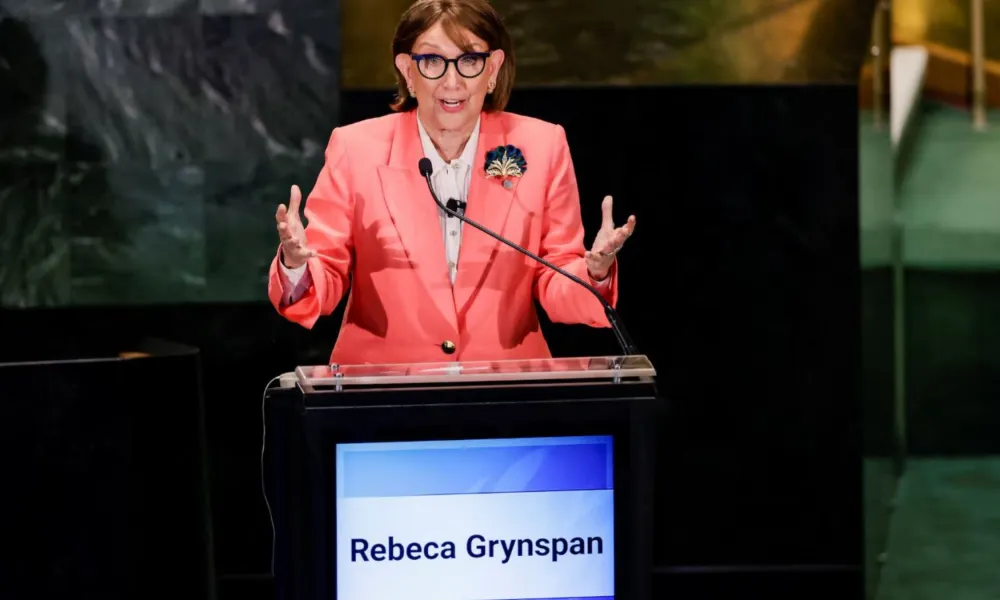

Rebeca Grynspan of Costa Rica retained first place in the fifth informal ballot of the United Nations Security Council to select the next UN Secretary-General, held on Wednesday, 7 October, under the Greek presidency.
However, declining support for her candidacy and an increase in negative votes indicate that consensus has yet to emerge among the Council’s 15 members.
According to unofficial results, Grynspan received nine positive and six negative votes, with no neutral votes.
In the previous ballot on 29 September, she had secured 10 positive, three negative and two neutral votes. Despite remaining the frontrunner, the increase in negative votes from three to six highlights the difficulties her candidacy continues to face.
In second place was Rafael Grossi of Argentina, head of the International Atomic Energy Agency, with six positive, seven negative and two neutral votes.
Grossi’s support fell from the eight positive votes he received in the fourth ballot, although he maintained second place in the latest ranking.
Carolyn Rodrigues-Birkett of Guyana recorded a significant decline, receiving five positive, nine negative and one neutral vote, compared with eight positive and six negative votes in the previous round.
Former Senegalese president Macky Sall received five positive and 10 negative votes, while Olara Otunnu of Uganda received three positive and 12 negative votes.
María Fernanda Espinosa of Ecuador received three positive, nine negative and three neutral votes.
Ivonne A-Baki, also from Ecuador, failed to secure a single positive vote, receiving 14 negative and one neutral vote.
Process under Greek presidency
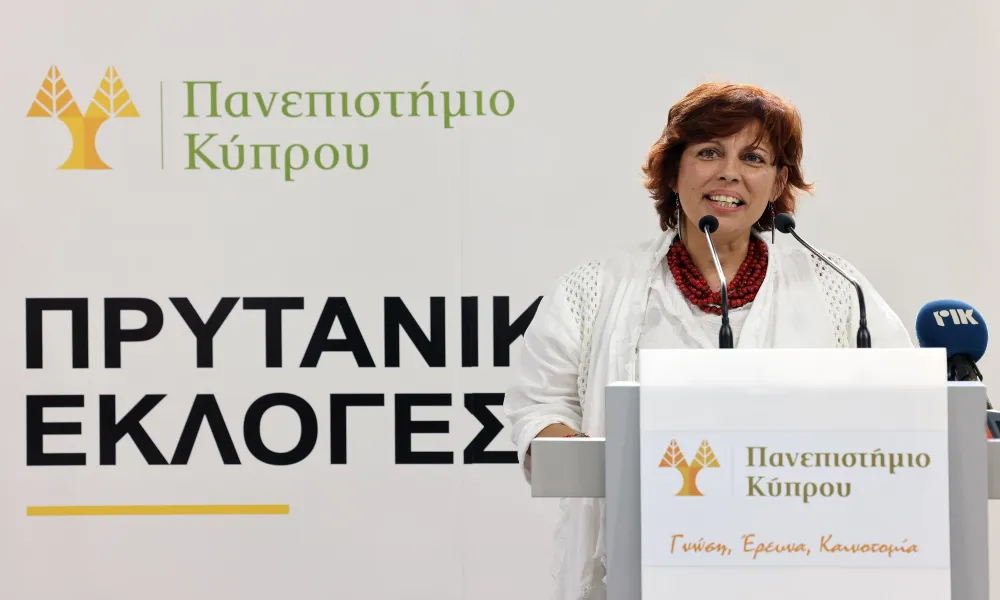
The fifth ballot took place during Greece’s presidency of the Security Council for October, with Greece’s Permanent Representative to the UN, Ambassador Aglaia Balta, serving as president of the Council.
The Greek diplomat confirmed the completion of the process, noting that “the fifth round of the informal ballots took place” and that each candidate would be informed of their result through the Permanent Mission of the country that submitted their candidacy.
In line with established practice, the Security Council does not officially publish the results. However, as with the previous rounds, the results were leaked following the completion of the process.
Coloured ballots could come next
The fifth ballot followed the same procedure as the previous four rounds, without distinguishing between votes cast by the five permanent members of the Security Council and those of the 10 elected members.
For each candidate, Council members are asked to choose one of three options: “encourage”, “discourage” or “no opinion”.
Attention is now turning to the possible introduction of different-coloured ballots, reportedly as early as next week.
These would make it possible to determine whether any candidate faces opposition from one or more of the five permanent members of the Security Council: the United States, Russia, China, France and the United Kingdom.
The distinction is crucial because a Security Council recommendation to the General Assembly requires at least nine positive votes and no veto from a permanent member.
The significant increase in negative votes for some of the leading candidates, combined with the continued absence of consensus, has heightened interest in the next stages of the process.
How the next UN chief is chosen
Under Article 97 of the UN Charter, the Secretary-General is appointed by the General Assembly following a recommendation from the Security Council.
The informal ballots are not binding. Their purpose is to indicate the balance of support among Council members and assess whether consensus can be built around a particular candidate.
This year’s selection process is progressing more slowly than the corresponding process in 2016, when the Security Council adopted Resolution 2311 on 6 October, recommending António Guterres for the position of UN Secretary-General.
Source: ANA-MPA