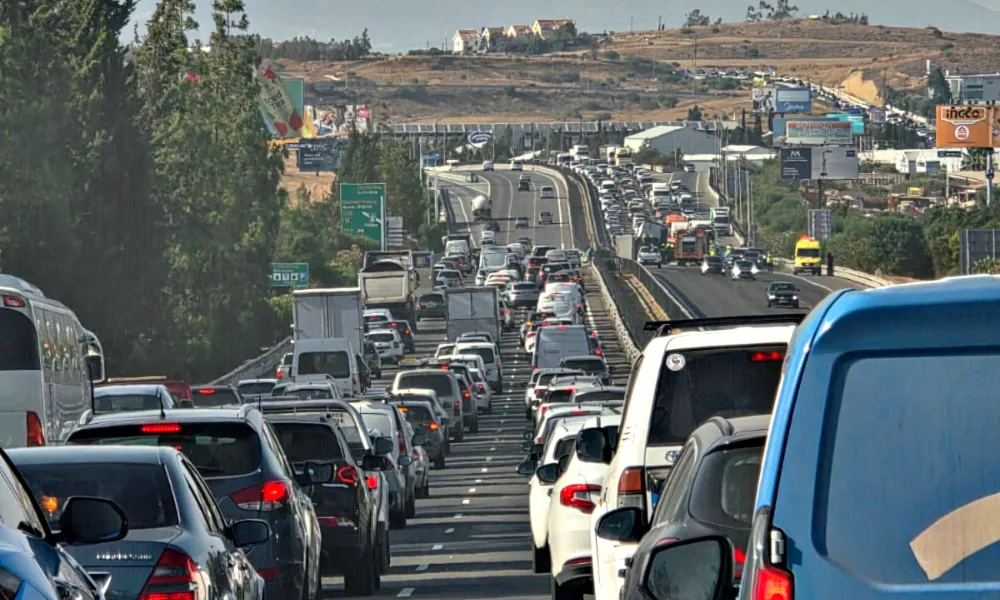

There are days when travelling from home to work and back feels more like a test of endurance than an ordinary part of everyday life. In Nicosia and Strovolos, road closures, one-way systems, diversions and construction sites have created conditions that test drivers’ patience every day. In Limassol, congestion is also a persistent problem, with the state acknowledging the need for measures to ease traffic.
The works are necessary. Cities need maintenance, roads need upgrading and networks need modernising. The problem is that today we are all paying the price of this transition in two currencies: money and time.
Fuel prices remain a significant burden on households, while traffic delays push consumption even higher. A journey that once took 20 minutes can now turn into a much longer daily ordeal. Fuel prices in Cyprus have risen to unprecedented levels and will most likely remain there for an unknown period of time.
We are facing record fuel prices without having a reliable alternative.
When driving becomes more expensive and travelling increasingly time-consuming, society needs a credible safety net. It needs public transport that functions as a genuine choice. Frequent, reliable and fast buses, with routes designed around the real needs of the people who live and work in our cities.
Now, more than ever, the discussion should be about how we make daily travel easier. How we reduce the time spent on the road. How we limit the burden on household budgets. How we give people the option of leaving their cars at home without feeling as though they are being punished for doing so.
Instead, public debate often shifts towards large, long-term projects such as a tram, or interventions aimed at increasing road capacity, such as reopening Makariou Avenue in central Nicosia.
Even if we accept that a tram or reopening Makariou are reasonable options, neither can substitute for a holistic and coherent urban mobility policy.
The objective cannot simply be to open more roads for more cars.
The objective must be for people to need their cars less.
Traffic congestion is not simply a roads problem. It is a quality-of-life problem.
And today, life in our cities is becoming more expensive, journeys are taking longer and everyday life is becoming more exhausting.
That has to change.