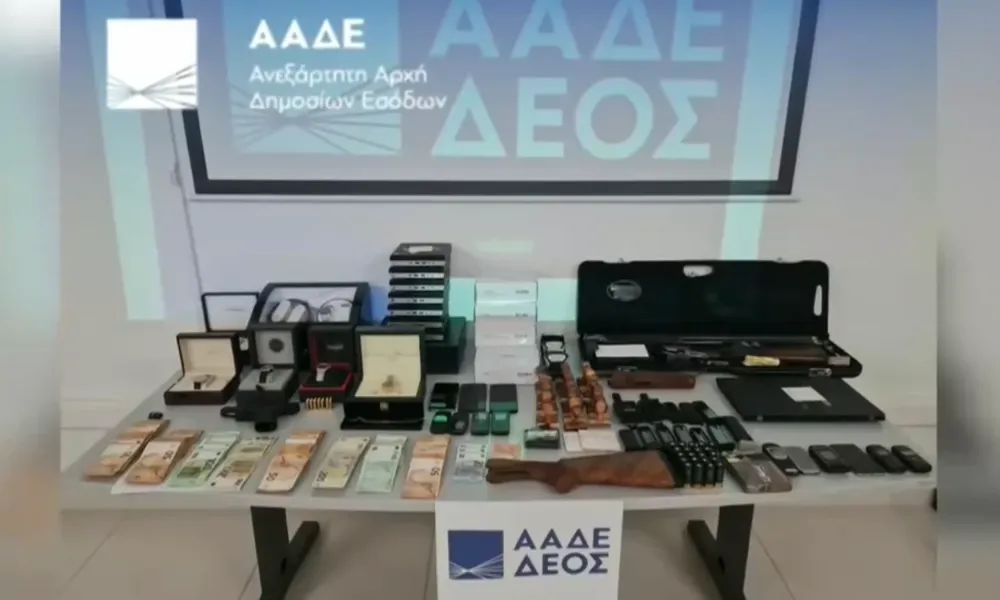

A major alleged tax fraud scheme operating in the hospitality and nightlife sectors across Thessaloniki, Halkidiki and Mykonos is emerging as one of Greece's largest financial crime investigations, with estimated losses to the state exceeding €206 million.
According to ERT, the case file includes 1,283 defendants, while 16 people have been arrested. Around 80 individuals are alleged to have played key roles as frontmen or straw owners for dozens of businesses.
917 companies examined
The investigation by the Independent Authority for Public Revenue (AADE) examined 917 companies suspected of accumulating substantial debts to the state and to the social insurance fund EFKA through the non-payment of VAT, taxes and social security contributions.
AADE governor Giorgos Pitsilis said arrests have already been made and investigations continue to identify additional suspects.
The corporate carousel scheme
According to investigators, restaurants, nightclubs and beach bars allegedly operated through a so-called "corporate carousel" model.
The alleged organisers rented properties through individuals or companies they controlled before creating successive shell companies and placing financially vulnerable individuals in management roles.
The businesses reportedly continued operating normally, issuing receipts and declaring employees to avoid administrative penalties. However, investigators claim taxes and social insurance contributions were not paid.
When liabilities accumulated, the companies were closed and replaced by new entities with different tax registration numbers but essentially identical operations.
The delivery driver tied to 13 companies
Investigators highlighted several cases involving individuals with very low declared incomes who appeared as owners or managers of businesses generating millions of euros in turnover.
Among them was a delivery driver earning only a few hundred euros a month who allegedly appeared as manager of 13 companies that accumulated debts exceeding €1 million.
In another case, a cashier with a declared annual income of approximately €4,000 reportedly appeared as a partner in 30 companies with combined debts of more than €6 million.
An even more striking example involved a kitchen worker allegedly linked to 14 companies that left behind debts of around €30 million.
Tax numbers of deceased individuals
The investigation also found evidence suggesting the network may have used not only straw owners but also tax identification numbers belonging to deceased people.
Checks carried out through the myDATA system reportedly revealed companies and tax records linked to deceased individuals continuing to show economic activity, issuing and receiving invoices even after the registered holders had died.
Recorded conversations
The case file also contains communications between individuals alleged to have played leading roles in one of the four main networks under investigation.
According to investigators, those implicated include a lawyer and an accountant who allegedly coordinated the recruitment of straw owners and the creation of new corporate structures.
Authorities say the recorded conversations illustrate how companies and managers were repeatedly rotated in an effort to prevent the real operators from accumulating tax and social insurance liabilities in their own names.