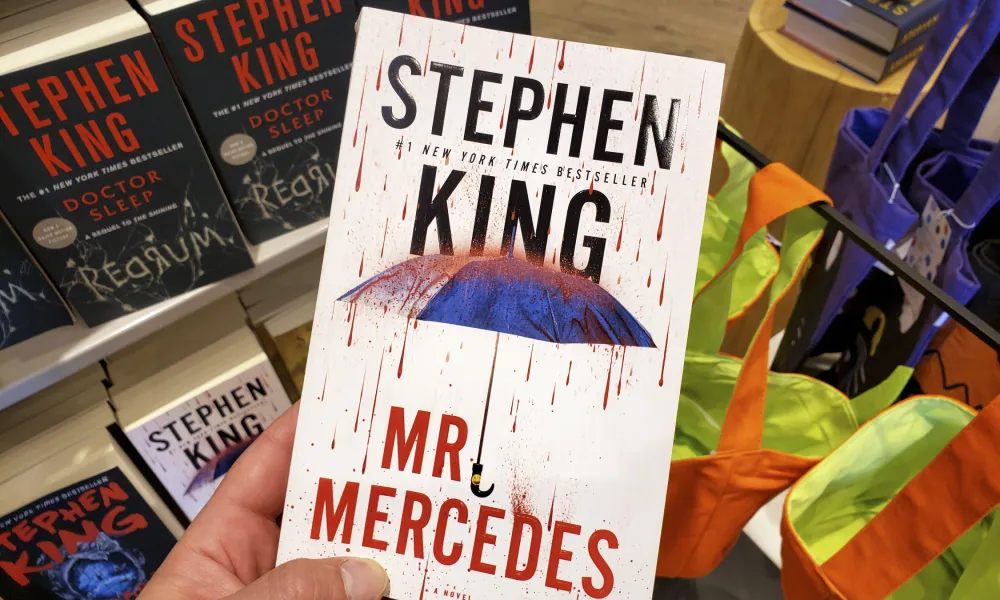

I bought Mr Mercedes almost as an afterthought. I'd always assumed Stephen King wasn't for me. Horror doesn't interest me much, and somewhere along the way I'd filed him under that heading without ever actually checking whether it was true. Mr Mercedes is a police procedural. A retired detective, a killer who got away and won't stop taunting him about it, and King writing the whole thing with far more patience and psychological interest than I expected from someone I'd written off as a horror writer.
That gap between what I assumed and what I'm actually reading has had me thinking about why crime fiction grabs people the way it does, so I went looking into it a bit. The research on this is more substantial than I expected. A few things kept coming up. Crime novels are usually built around a single question, who did this and why, and every scene exists to close the distance to the answer. That's part of why they're so hard to put down, there's a kind of engineered suspense to the structure itself. But a few of the psychologists writing on the genre make a bigger claim than that. They argue crime fiction works as a moral testing ground of sorts, somewhere readers can sit with guilt and motive and consequence at a safe distance and actually see them resolved, which real life rarely bothers to do for us. Reading Mr Mercedes, that feels right. Brady Hartsfield, the killer, isn't written as some cartoonish monster. He's disturbingly easy to follow, his logic makes a kind of sense even when what he's doing is awful, and that's more unsettling than any jump scare would be.
There's also older research on what fiction does to readers generally, not tied to any one genre, and it complicates the instinct to treat "literary" fiction as somehow doing more work on the brain than genre fiction does. A well-known study from 2013 found that reading literary fiction improved people's ability to guess what others were thinking or feeling, what psychologists call theory of mind. It got a lot of attention, and it's also been challenged since. Later work suggests the line between "literary" and "popular" fiction the original study leaned on doesn't hold up as well as everyone assumed at the time. What seems to matter more is simpler: whether the characters are complicated enough that you have to actually work to understand them, rather than being told outright what they think and feel. A crime novel can do that just as well as anything shelved as literary fiction. A later review pulling together more than a dozen studies found a small but real link between reading fiction and improved social understanding, and again, genre didn't seem to be doing much of the work either way.
I wasn't thinking about any of this when I bought the book, obviously. I just wanted something different to read. But it's a nice thing to stumble on afterwards, that the reason I can't put Mr Mercedes down and the reason researchers give for why crime fiction hooks people are basically the same reason. Not knowing what Hartsfield does next isn't just keeping me entertained, it's doing the actual work the book is built to do.
King's reputation is built on horror, fairly enough, that's where he started and it's still most of what people know him for. But Mr Mercedes is a good reminder that writers are usually better and stranger than the label stuck to their name, and that avoiding someone because of a genre you don't read is often just avoiding a book you'd have liked fine. I haven't finished it yet, so I won't say how it ends. But I'm already fairly sure I'll read the rest of the trilogy. And probably, eventually, the horror too.