
By Antonis Polydorou
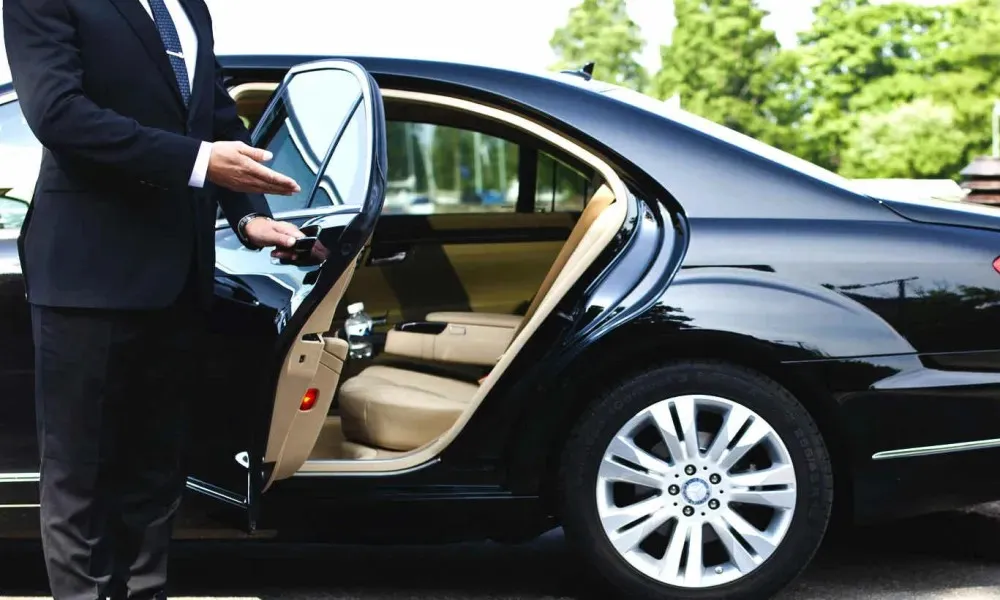
If the leak about the state's purchase of a new armoured limousine for presidential use revealed anything, it wasn't the extravagance, nor the excess of the purchase. It was the President's unreliability.
In his first statement, Nicos Christodoulides was unambiguous: he had no idea about the purchase of the new limousine. "I was informed this morning by the press of this intention to buy it. I didn't know anything about it," he said. He even framed his own ignorance as a matter of security: "No President should know about security matters," he explained, "how the relevant state services decide to proceed in order to safeguard certain issues." When it emerged that the decision had in fact come from the Council of Ministers, which he himself chairs, the narrative changed. But it convinced few. Because his first statement left no room for a different reading. What he had actually meant, according to his spokespeople, was that he didn't know the technical details and specifications of the vehicle. "It's not his job to know the specifications," explained Yiannis Antoniou, implying that, since the decision had passed through Cabinet, he obviously did know about it.
One could focus on whether a new limousine was even needed, or how such a sum can be justified for its purchase, given that the previous one had cost the state less than half that amount. Or on what it says about the President and his government that, despite knowing since that morning that the purchase had become part of the public conversation, he showed up completely unprepared to give a convincing answer, trying once again to avoid taking any responsibility by shifting it elsewhere. But all of this becomes secondary once you realise the incident revealed something far bigger. And that was the President's lack of credibility.
It was almost frightening to watch the head of state try, with such ease, to hide the truth simply because it damaged his image. Over something, no less, that could easily be checked and disproved, which is exactly what happened within a matter of hours. And to do it with such complete naturalness. Because if the President is willing to state things that contradict reality this easily, whether to avoid accountability or to serve a narrative, how can anyone be certain when he's telling the truth? Should we believe him, for instance, when he says he's ready for serious talks on the Cyprus problem aimed at a solution? Or that his economic policies are centred on the ordinary citizen? If, on such a simple and easily verifiable matter, the President chooses not to tell the truth, how can he then ask society to trust him on far more serious ones?
The limousine isn't an isolated incident. It fits into a broader pattern of political behaviour in which communications narrative frequently clashes with reality. Before the election, he had promised a Cabinet made up of the best technocrats, only to end up, three and a half years later, with a fully partisan Cabinet that includes, among others, the two deputy leaders of DIKO. After the election, when he had decided to cast himself as a mediator in the dispute between Israel and Iran, it was leaked that Iran had asked us to pass a message on to Israel, only for Iran to come out and deny this in the most official terms. At the very least exaggerated, if not hard to believe, was also the account of a meeting at the Presidential Palace with a Trump associate, during which, it was said, they discussed who, or whether, it would be a good idea for the President of the United States to pick, if elected, as Secretary of State. Throughout his political career, Nicos Christodoulides has shown himself ready to construct and operate within a parallel reality in order to serve the image he has built for himself. Promising things he later reversed, or highlighting facts that bore little resemblance to what actually happened. Reality was never an obstacle. On the contrary, as a rule, it was always reality that was made to fit the narrative, not the other way around.
But now we're talking about a President who gets caught lying with the greatest of ease. In a way that demolishes the relationship of trust between those in power and the citizen. And that touches the very foundations of democracy itself. Because democracy can withstand an expensive, even an unnecessary, limousine. What it cannot withstand is a President whom society no longer knows when to believe and when not to.