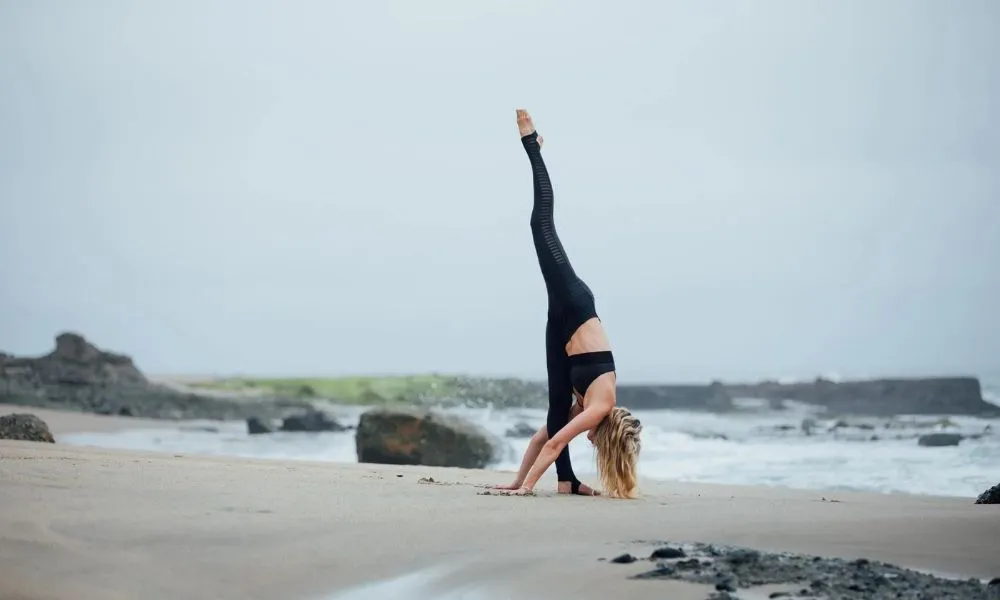

The ability to stand on one leg is often dismissed as a simple balance exercise. Researchers, however, say it is anything but. As highlighted in recent reporting by BBC, this deceptively modest movement may offer remarkable insights into physical health, brain function and even life expectancy, particularly after the age of 50.
A Skill We Gradually Lose With Age
Experts stress that balancing on one leg is not an ability we retain indefinitely. If practised regularly, it can have a substantial impact on long-term health. If neglected, its decline can signal broader physical deterioration.
From around the age of 30, muscle mass begins to decrease at a rate of up to 8% per decade, a process known as sarcopenia. By the age of 80, research suggests that up to half of adults may experience clinically significant muscle loss. Because balance depends on multiple muscle groups, this loss often becomes evident when trying to stand on one leg.
Those who regularly practise single-leg exercises are less likely to develop severe sarcopenia later in life, as the movement helps maintain strength in the legs and hips.
Why Doctors Pay Attention To Balance
“One-leg balance declines with age,” says Kenton Kaufman, director of the motion analysis laboratory at the Mayo Clinic. “People usually start noticing changes in their 50s or 60s, and the decline accelerates with each decade.”
For clinicians, this makes balance a useful health marker. Difficulty maintaining the position can reflect reduced muscle strength, slower reaction times and impaired coordination.
The Brain–Body Connection
Balancing on one leg is not just a test of muscle power. It requires the brain to integrate information from:
- Vision
- The vestibular system in the inner ear
- The somatosensory system, which senses body position and ground contact
“All of these systems degrade with age, but not at the same pace,” Kaufman explains.
According to rehabilitation specialist Tracy Espiritu McKay of the American Academy of Physical Medicine and Rehabilitation, this makes balance a window into brain health. It reflects how efficiently the brain processes sensory input, coordinates movement and supports everyday functioning.
Falls, Reaction Time And Independence
Age-related brain atrophy is common, but when it progresses too quickly, it can limit mobility and independence. Data from the Centers for Disease Control and Prevention show that unintentional falls are the leading cause of injury among adults over 65 in the United States.
Crucially, falls are often linked not to strength, but to reaction speed.
“If you trip on a crack in the pavement, whether you fall isn’t about power,” Kaufman notes. “It’s about whether your brain can move your foot quickly enough to recover.”
Regular one-leg balance training has been shown to reduce this risk.
What Balance Says About Longevity
Research has also linked balance ability to life expectancy.
A 2022 study found that middle-aged and older adults who could not stand on one leg for 10 seconds were 84% more likely to die from any cause within seven years. Another long-term study tracking nearly 3,000 people found that those who could balance for two seconds or less had triple the mortality risk compared with those who could maintain the position for at least 10 seconds.
Similar patterns appear in cognitive health. Even among people diagnosed with dementia, those who can still balance on one leg tend to experience slower cognitive decline.
Training Balance Can Change The Brain
The encouraging news is that balance is highly trainable.
Single-leg training strengthens the core, hips and legs, but also promotes brain plasticity. Studies show that these exercises can alter brain structure, particularly in regions responsible for sensory-motor integration and spatial awareness.
Balancing has also been linked to improved executive function. One study found that it enhanced working memory even in healthy young adults, suggesting benefits well beyond fall prevention.
Everyday Ways To Practise
Researchers recommend incorporating one-leg balance into daily routines, such as:
- Standing on one leg while washing dishes
- Balancing while brushing teeth
- Holding the position during short breaks at work
The goal is to minimise wobbling and hold the stance for as long as possible. Even 10 minutes a day can produce measurable benefits.
Light hip-strengthening exercises and resistance training can further improve balance, while activities such as yoga and tai chi, which frequently involve single-leg postures, have been linked to healthier ageing. One study cited by Kaufman found that tai chi reduced fall risk by nearly 20%.
A Small Habit With Outsized Benefits
What appears to be a simple posture is, in fact, a powerful tool for maintaining mobility, protecting brain health and supporting independence as we age. As experts note, if standing on one leg feels difficult, that is not a warning to stop, but a signal to start training.