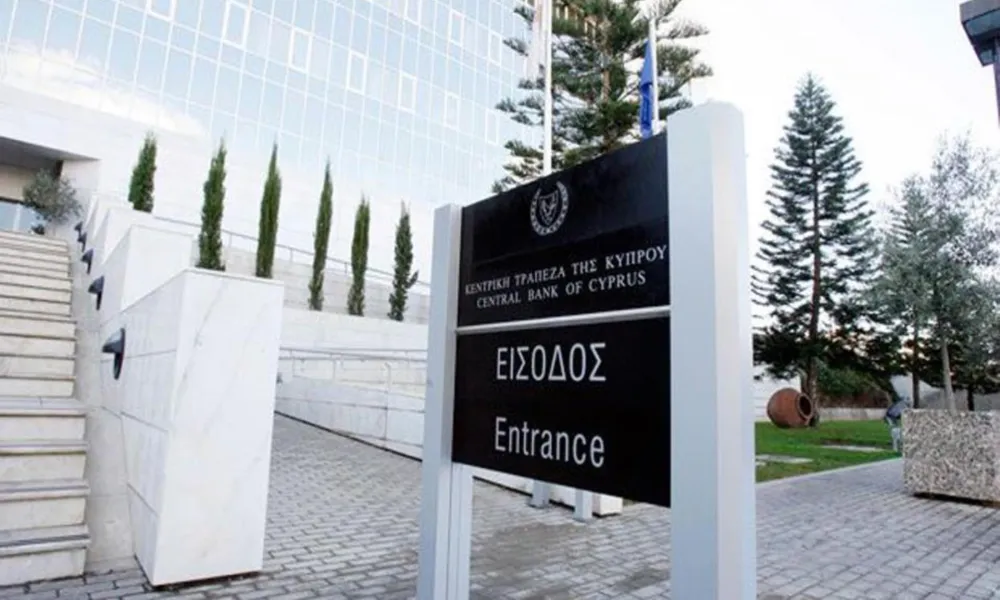
Τhe total volume of fraudulent payment transactions in the first half of 2025 increased by 30% to 16,000 transactions compared with the first half of 2024, while the total value of fraudulent payment transactions rose by 66% to almost €4 million for the same period, according to the Central Bank of Cyprus (CBC).
The CBC published their second statistical report on payment fraud on Monday, providing an overview of fraudulent payment transactions in Cyprus.
Fraudulent transactions include unauthorised payment transactions and payment transactions made as a result of a manipulation of the payer, the report explains.
According to the CBC, the total fraudulent payment transactions in Cyprus increased at a faster rate than that of the euro area as a whole, in both volume and value terms.
Indicatively, in the euro area the total number of fraudulent payment transactions remained relatively stable at a level of around 9 million from the end of the first half of 2024 to the end of the first half of 2025, while the total value recorded a modest increase of 6% reaching €1.7 billion for the same period.
However, CBC notes that fraudulent payment transactions in Cyprus still remain at acceptable levels in both absolute and relative terms.
According to the data, the majority of fraudulent payment transactions was related to card payments (92%), while fraudulent credit transfers (54%) and card fraud (45%) accounted for the majority of the value of fraudulent payment transactions, amounting to €1.9 million and €1.6 million. The value of the remaining payment services was significantly lower (less than €50,000).
Fraudulent credit transfers
In Cyprus, the highest average value of fraudulent payment transactions by payment service related to fraudulent credit transfers (average value: €5,472) for the first half of 2025, which was higher than the average value of a credit transfer in general (€4,496) in Cyprus for the same period. This can be attributed to the fact that fraudsters are targeting high value transactions, CBC notes. It is also notable that for Cyprus the average value fraudulent credit transfers was one of the highest in the euro area.
The types of fraud vary depending on the payment methods used. "Manipulation of the payer by the fraudster" is the main type of fraud for credit transfers accounting for 59% of the total volume of fraudulent credit transfers. At the same time, "unauthorised payment transactions" is the main type of fraud for card payments accounting for 97% of the total volume of fraudulent payments in Cyprus.
Moreover, fraudulent payments for cross-border transactions were much higher than for domestic ones for all payment services in the first half of 2025 for Cyprus.
It is noteworthy that card fraud was about 24 times more likely to occur in cross-border payments rather than in Cyprus. According to the CBC, this can be attributed to the varying regulations across different countries’ jurisdictions as well as the insufficient cross-border cooperation among payment service providers (PSPs) and other involved stakeholders to combat fraud.
Additionally, credit card payments appear to be more frequently affected by fraud than debit card payments.
The CBC stresses that "strong customer authentication rules have shown a positive effect in reducing the risk of fraud for card payments."
Card fraud predomininatly in online payments
Finally, it is noted that, while card payments were predominantly related to card payments at a physical point of sale (POS) rather than remotely, card fraud was almost exclusively related to online payments (97%) for Cyprus.
"Fraud can take many forms, and spotting the warning signs is key to prevention," the CBC notes, adding that human error often remains the weakest link.
"In today’s intricate financial landscape, collaboration is vital in the battle against fraud," it adds.
"PSPs must understand the emerging threats, the possible impacts and should keep investing in appropriate security and monitoring technologies while the Cyprus Financial Literacy and Education Committee, as well as the society in general cater for the empowerment of citizens with the necessary knowledge and skills, increasing awareness and improving the financial literacy", the CBC concludes.
Source: CNA