
The election of 27-year-old Sofia Christodoulou Makri to the leadership of EDEK on Saturday, 5 September, was well received by a large section of society. It was, in fact, the story of the day, carrying a double historical significance. For the first time, a woman was taking the helm of EDEK. The 27-year-old politician also became the youngest leader of a traditional party in Cypriot political history. Age and gender, however, do not guarantee a successful presidency.
On the contrary, Ms Makri now faces very significant challenges, and will need to show leadership, decisiveness and vision. She has inherited a party on the verge of splitting, with trust between the membership and the leadership badly shaken, a historic political force that fell out of Parliament after 56 years of continuous parliamentary presence, and one that now faces serious financial difficulties following the loss of state funding.
The favourite
There were no opinion polls ahead of EDEK's internal leadership election. Even so, the party's more clear-eyed members had grasped the new reality created by the ballot box on 24 May, and knew that the 27-year-old head of the party's youth wing, Sofia Christodoulou Makri, was the favourite. That earlier vote had sent a loud message to the party leadership: the candidates who won the most preference votes were, across the board, younger figures. Ms Makri, in fact, received the most preference votes of all.
Some post-election analyses of EDEK's performance had concluded that a major shift towards youth had taken place. The exhaustion of EDEK's members and voters, worn down by endless tensions and the constant infighting of senior officials, was what drove this dominant trend. The party establishment, for its part, did not favour change, and hid behind the candidacy of Koullis Mavronikolas, who suddenly decided to return to politics. The establishment lost the internal election, and EDEK changed face overnight.
The challenges ahead
The road ahead will be far from easy for EDEK's new leader. She must confront serious challenges within a very tight timeframe, having been elected to serve out the remainder of the term of Nicos Anastasiou, who resigned this past July. That term ends in December, when an Electoral Congress will be held and a new leadership elected.
That means that, within three months, she must lead the effort to put the party's finances in order, and resolve two highly contentious issues concerning expelled members and the Membership Register. At the same time, she will need to coordinate preparations for a Statutory Congress in October, to be followed by the Electoral Congress.
She will also need to persuade the party's collective bodies to fully respect the decisions of the Extraordinary Pancyprian Congress. It will be recalled that a fierce clash took place between the party's collective bodies and the five-member Congress and Membership Register Reform Committee, set up by decision of the Extraordinary Pancyprian Congress on 5 July. The collective bodies did not recognise the powers the Extraordinary Pancyprian Congress had granted to the five-member Committee to set the dates for the Statutory and Electoral Congresses. Even so, the new party leader's first political act was to convene the five-member Congress and Membership Register Reform Committee, with the aim of completing the procedures set in motion by the Pancyprian Congress. The five-member Committee consists of EDEK's sitting president, along with Nicos Nicolaides, Diomedes Diomedous, Michalis Koutalianos and Pavlos Michael.
Expulsions and the membership register
The party has been hollowed out at the level of senior officials, following all the expulsions and departures of recent years. This, in turn, reduced the party's electoral influence and led to its exclusion from Parliament. According to information obtained by Politis, the new leader is ready to open the party's doors to the return of everyone, without exception and without obstacles. In practice, this means that anyone who returns will be able to run for a leadership position at December's Electoral Congress. The same sources indicate that relevant announcements will follow soon.
Another major issue is the notorious membership register, whose validity has been challenged on numerous occasions. In previous years, the party saw bitter internal disputes, with some members taking the matter to court. In essence, there were suspicions, and several accusations were made publicly, of "secret" expulsions as well as irregular member registrations. According to Politis sources, the membership register is now in the hands of EDEK's new leader, and there is a strong determination to resolve the issue once and for all.
These two issues lie at the very heart of what might be called the party's "crisis of trust." If resolved satisfactorily, EDEK will begin to rebuild its credibility and attract both former and new voters. The party leader has already begun a dialogue with the grassroots, with at least four district gatherings scheduled for September.
A financial reckoning
The loss of the state funding granted to parliamentary parties has stripped EDEK of the financial means to employ party staff. Indeed, the party's finances show there is little room for manoeuvre, and tough decisions will need to be made within two months. The new leader is being forced into hard choices, and currently finds herself in a very difficult position. Salary cuts will be needed, and staff numbers may also have to be reduced.
A battle within EDEK
In recent days, Ms Makri was asked by journalists whether she intends to run for the party leadership again at December's Electoral Congress. EDEK's new leader was unwilling to show her hand, though it is considered almost certain that she will stand. The momentum she has built since the parliamentary elections, together with the result of the internal leadership vote, has shown that she faces no serious rival within the party.
The old order has collapsed, and only a handful of senior figures previously expelled from the party stand any real chance of election. One such case is former MP Costis Efstathiou, who carries a heavy political surname and may decide to return to the party, hoping to be elected leader. Herein lies the political risk facing the new leader, who is preparing to announce a full lifting of expulsions.
Ms Makri will also be forced to fight another political battle before December. A party source familiar with the balance of power within the collective bodies told Politis that the Sizopoulos camp currently holds the upper hand. It remains unclear whether these members are ready to cooperate with the new leader, or intend to act as an opposition and stand in the way of the changes now under way. A confrontation with the new leader, who recently received a popular mandate and has the majority of the membership behind her, could ultimately prove self-defeating for them.
The Christodoulides government
The most recent cabinet reshuffle caused discontent within EDEK, after Maria Panayiotou departed the Ministry of Agriculture, and President Christodoulides did not include an EDEK figure in the new cabinet lineup. Even so, no decision was taken for the party to withdraw from the governing coalition. Asked whether she was considering that option, the new leader replied that participation in government is a decision taken by Congress, and one that must be respected. Consequently, no such move is expected in the near term.
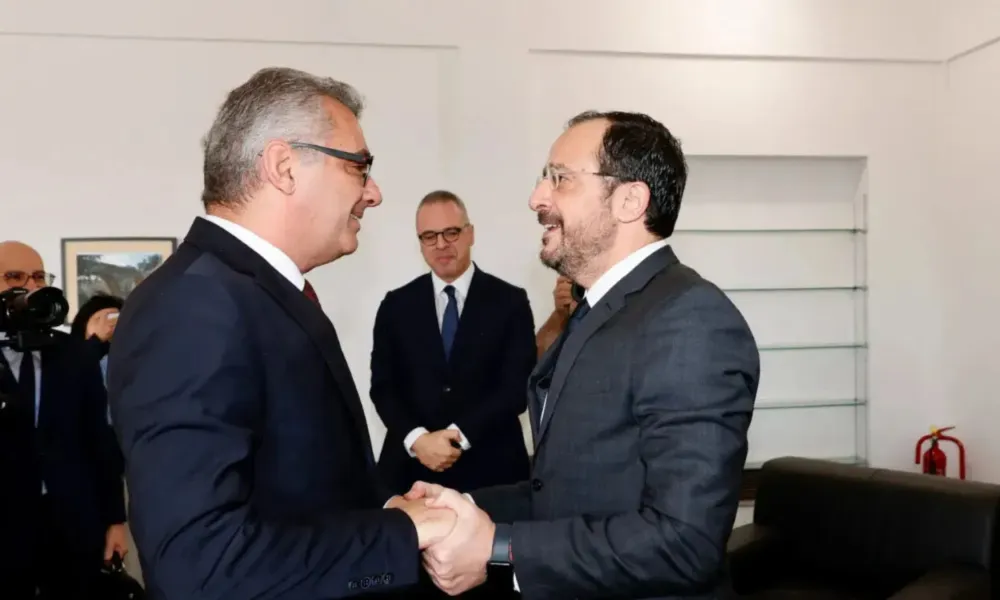
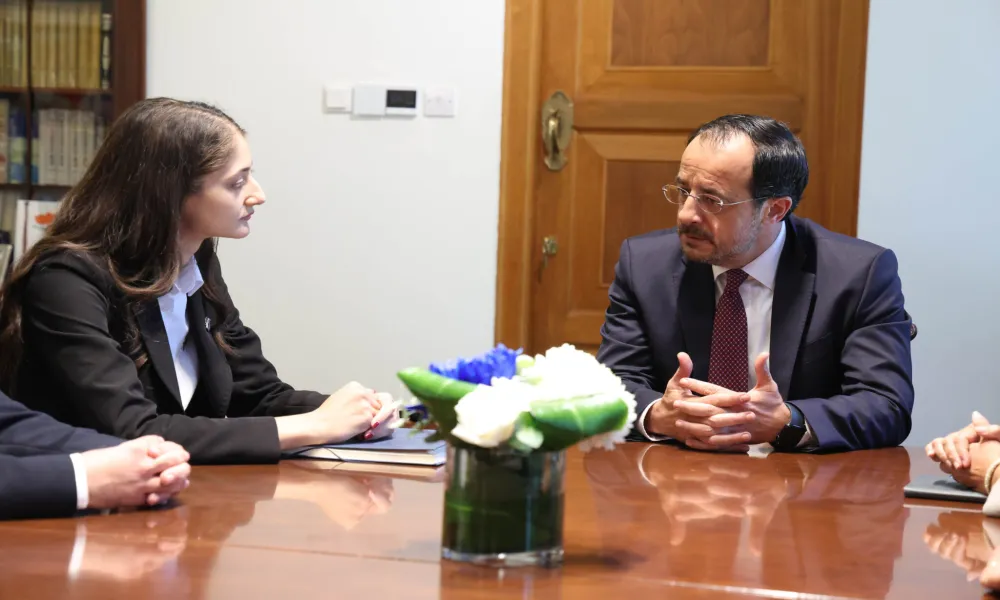
On Friday afternoon, Ms Makri held a first meeting with the President of the Republic, and the two appear to have agreed to hold regular meetings. Politis sources indicate, however, that Marinos Sizopoulos had proposed to Nicos Anastasiou that the party withdraw from government, but that Anastasiou judged such a decision, ahead of the parliamentary elections, to carry too great a risk.
The 2028 presidential election
EDEK's participation in government does not predetermine the party's stance at the 2028 presidential election. Different currents exist within the party. What will prove decisive, however, are the leadership's consultations with prospective candidates once the political landscape becomes clearer. Should Ms Makri run again for the leadership in December and be re-elected, she will have the final say as party leader.
There will certainly be dissenting voices, and some may attempt to impose their own line. Restoring party discipline will not be easy after so many years of internal division. It will become easier if the majority of members elected to the collective bodies at December's Electoral Congress share the same line as the party leader. Only then will EDEK be able to function in a coordinated and effective manner. Otherwise, it risks sliding back into the mire of introversion and discord.