The choice of the Democratic Rally (DISY) candidate for the 2028 presidential elections is of interest not only to Pindarou Street but also to the Presidential Palace. The Palace has every reason to watch which of Averof Neofytou and Giorgos Pamborides will end up facing Nikos Christodoulides. The President says he has yet to decide whether to seek a second term, yet he carries on with his campaign activity as usual, activity that has never stopped since the 2023 presidential elections. And since a number of Christodoulides supporters are DISY members who can vote on 28 November for the party’s nomination, the question of which of the two contenders the Presidential Palace sees as the easier opponent takes on particular interest.
Three dimensions
Beyond the internal stakes, namely who will represent DISY and what political direction the party will choose, the battle between the two contenders for the nomination has a second dimension. It rests on three factors. The first is the presidential stakes: how the Presidential Palace assesses the prospect of a contest against Averof Neofytou or Giorgos Pamborides.
Averof is trying to shift the debate from “why he lost in 2023” to “what he proposes for the Cyprus of 2028”.
The second is the strategy of DISY’s grassroots: which of the party’s voters still view Nikos Christodoulides favourably, and how they will act in the internal process. The third is DISY’s political autonomy: whether the party can choose a candidate on purely its own political and electoral criteria, uninfluenced by the Presidential Palace’s calculations. What is interesting, then, is that two different votes are taking place within the same contest. DISY members will be voting for their party’s candidate while also thinking about who would make the best President of the Republic for the country, and who would be the easier or tougher opponent for Christodoulides.
A dilemma
The contest between Averof Neofytou and Giorgos Pamborides also concerns the day after for the largest party of the Right. That includes its political identity, the effort to rally its base again and the balance of power that the presidential elections will shape. The question therefore arises: “Which of the two would Nikos Christodoulides rather face? Averof Neofytou, whom he has already beaten in 2023, or Giorgos Pamborides, who is trying to enter the presidential equation for the first time?”
Unfinished business from 2023
For Averof Neofytou, a new contest with Nikos Christodoulides would not be an unknown political adventure. The two faced each other in the 2023 presidential elections. That contest left wounds that have not healed to this day, as well as significant unfinished political business within DISY. The defeat of the then party leader and the election of Christodoulides created a new reality for the Right. Christodoulides had left the party fold to run for the presidency as an independent candidate, having been forced to resign from the Anastasiades government a year before the 2023 elections. The disagreements, differing approaches and political choices of that period remain points of friction among DISY supporters, from Pindarou Street to the village coffee shops.
Who would Nikos Christodoulides rather face: his old 2023 rival Averof Neofytou, or the electorally… unknown Giorgos Pamborides?
Averof Neofytou
For the Presidential Palace, Averof Neofytou is seen as an opponent with predictable political behaviour, whose strengths and weaknesses are already known. A new contest with Nikos Christodoulides would revive the divisions of 2023 and could make it harder for DISY to appear united. A previous defeat, however, is not necessarily a permanent political handicap. Mr Neofytou has a long political career, experience leading the party and knowledge of how its machinery works.
Pamborides is trying to present himself as a different proposition, one that also reaches voters who have drifted away.
If he manages to secure broad support within the party and to present a renewed political narrative, the next contest will take place under different conditions. So the question is not simply whether Nikos Christodoulides would prefer a familiar opponent. It is whether the Averof of 2028 will be the same opponent he faced in 2023, or a different contender with different alliances and a different strategy.
Averof in 2026
Averof Neofytou’s recent moves show that he is trying to return to the political stage with a different strategy from the one he followed in 2023. However, what seems to have changed is the way he is pursuing his political comeback rather than his overall political profile. On 28 September 2026, Mr Neofytou announced his intention to run for President of the Republic in 2028. On 21 October, he confirmed that he would seek a vote of confidence from DISY members, and on 26 October he formally submitted his candidacy for the party’s presidential nomination.
A party’s political reconstruction begins with setting its own direction and, above all, protecting its DNA.
This followed the well-known political “blackmail” that led the current party leader, Annita Demetriou, to withdraw her interest in 2028. In 2023, his candidacy was directly tied to his role as DISY leader. In 2028, he is trying to present himself as a political figure with his own agenda, seeking broader appeal across society. He appears unwilling to confine his comeback to an internal party process, and he is reaching out to political camps beyond DISY. His proposal on sanctions against Russia, which his party rejected, also finds favour with people outside DISY’s ranks.
Political communication
His choice to launch his candidacy against the backdrop of the stalled Vasilikos natural gas project is particularly significant. His statements carry messages on the cost of living and high energy prices, housing, the need for a more effective state and the Cyprus problem. He speaks of a new social contract and a different way of governing, and he presents himself as a unifying figure. He is trying to shift the debate from “why he lost in 2023” to “what he proposes for the Cyprus of 2028”. Averof Neofytou cannot operate today the way he did in 2023. He has to negotiate a new balance of power and win political legitimacy within the party all over again.
Giorgos Pamborides
Giorgos Pamborides, on the other hand, has not been tested in presidential or European elections. He therefore has no electoral result from which to draw safe conclusions about his appeal across the electorate as a whole. This may be an advantage, but it is also a source of uncertainty for the Presidential Palace’s planning, because a new opponent is not necessarily an easier one. For now, several questions remain an unknown “X”. Could Giorgos Pamborides attract voters beyond DISY’s traditional boundaries? Could he win back members who distanced themselves from the party? How would the voters who backed Christodoulides at the last presidential elections act? And would his candidacy produce a different political contest from that of 2023? Mr Pamborides is trying to present himself as a different proposition for DISY, anti-Averof only up to a point. He is addressing not only traditional party officials but also voters who have drifted away from the party. His ministerial term and public profile are parts of his record that could help him build a broader political image, one that appeals to voters who no longer want to be trapped in old party feuds.
Renewal and unity
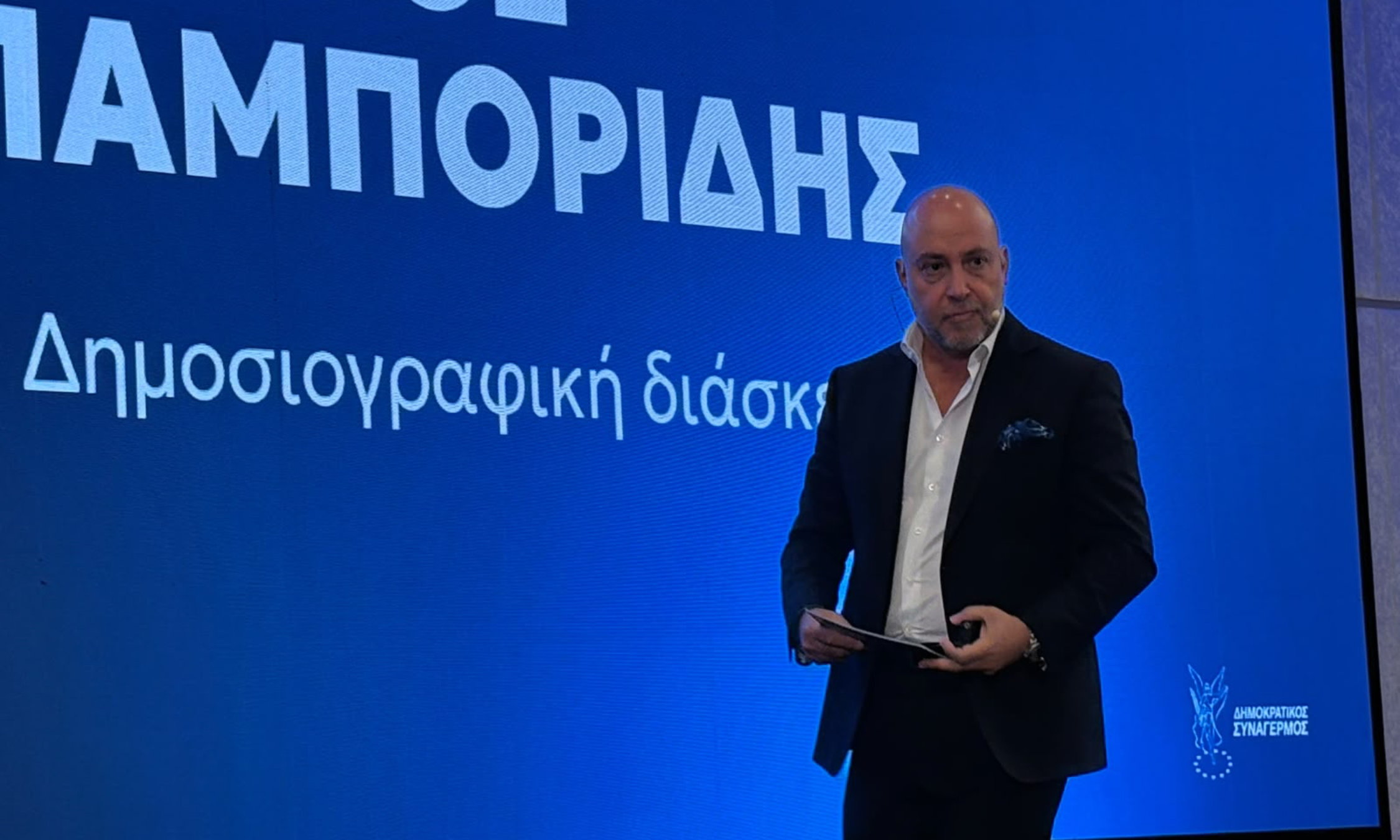
Giorgos Pamborides enters the battle for the nomination claiming the mantle of renewal and betting on unity. Starting from a different political position, he is trying to present himself as an alternative choice for DISY at a time when the party is searching for political direction and internal balance. He frames his decision to seek the nomination for the 2028 presidential elections as going beyond personal ambition, linking it to his effort to express the need to renew and redefine the party’s identity. Unlike Averof Neofytou, Giorgos Pamborides does not have a comparably long career at the top of the party hierarchy. He does, however, have government experience from his relatively recent term at the Ministry of Health (Mr Neofytou served as Minister of Communications and Works from 1999 to 2003), a brief parliamentary presence and a distinct political profile. His choice to put the substance of policy first, presenting a programme built on eleven pillars, shows his intention to move the debate away from personalities and internal party balances towards questions of governance. His insistence on unity is also significant. He argues that his candidacy can bring the party together, and he had even proposed a consensus solution in which both he and Averof Neofytou would withdraw to make way for a joint candidacy. Mr Pamborides is also trying to express the need for change without being identified solely with the internal challenge to Averof. His main aim is not to be the alternative to a political rival, but to convince members that he has the plan, the alliances and the political appeal to shape the party’s future.
DISY’s Christodoulides supporters
Beyond the personalities, there is an issue of particular importance for 2028: DISY’s pool of voters. The support Nikos Christodoulides won from traditional right-wing voters in the 2023 elections was a key factor in his victory. Keeping that relationship will be one of the challenges he faces in seeking re-election. This is where DISY’s internal process takes on added interest: how will the voters who backed Christodoulides in 2023, but still keep their party ties to DISY, act?
The shadow of 2023
The internal process may therefore turn into an indirect political reckoning over the events of 2023. Averof Neofytou and Giorgos Pamborides represent different political paths and have a different relationship with the party’s internal balances. The debate over responsibility for the last electoral defeat, the loss of voters and DISY’s relationship with the current President is likely to return to the fore. For Nikos Christodoulides himself, this is not a matter of indifference. A DISY that remains trapped in its internal feuds would present him with one set of political conditions. A DISY that manages to restore its unity and redefine its role would present quite another.
What is at stake for Pindarou
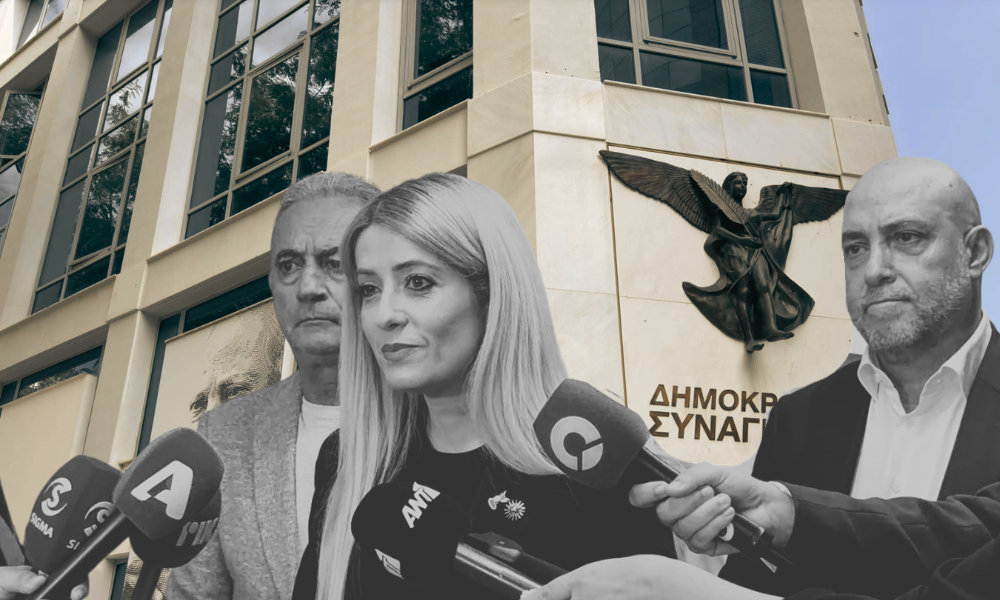
Ultimately, the most important question is not which opponent Nikos Christodoulides would prefer, but by what criteria DISY will choose its own candidate. If the internal debate is reduced to which of the two would be the easier opponent for the current President, the party risks losing the substance of the political process. The choice cannot be the product of the Presidential Palace’s calculations, nor be determined by who is seen as more or less threatening to those in power. DISY must answer far more fundamental questions. What political identity does it want? How will it restore public trust? How will it rally its party base again? What proposal for government will it put forward for the Cyprus of the next decade? 2028 will be decided not only by who stands against Nikos Christodoulides, but also by whether DISY has managed to become a coherent political force again, with a clear direction and a convincing bid for power. And by whether, the day after, a united and politically functional DISY still exists.
A political paradox
What the Presidential Palace fears most is a DISY that manages to overcome the deep wounds of 2023, rallies its base and makes a credible bid for power again. Above all, it fears a candidacy that attracts both traditional DISY supporters and disillusioned Christodoulides voters. On current evidence, Averof Neofytou appears to be the more convenient choice for Christodoulides. He is a familiar opponent, one the President has already beaten in 2023. Pamborides, by contrast, is a less predictable electoral variable, with no previous presidential defeat. However, Mr Neofytou has stronger traditional access to the party machinery and possibly to other parties as well. According to people close to him, this includes ALMA and Direct Democracy, as well as inroads into ELAM. In this way, the internal ballot risks becoming an indirect intervention in choosing the Presidential Palace’s opponent. And the political paradox is that Averof Neofytou or Giorgos Pamborides could win the nomination with the help of voters who do not want to see either of them as President, but want Christodoulides re-elected.
A trap for DISY
Finally, one trap for DISY would be to fall into the logic of choosing a candidate on the basis of the opponent rather than its own political prospects. In other words, it could become locked into the logic of confrontation with Nikos Christodoulides and choose the candidate best placed to take on the current President, sidelining political criteria. Such an approach risks turning the internal process into an exercise in electoral arithmetic, relegating the party’s political identity, its priorities and its vision for the country to second place. What matters right now is for DISY to decide what kind of party it wants to be the day after. Because a party’s political reconstruction does not begin with choosing the opponent it wants to beat, but with setting its own direction and, above all, protecting its DNA, its political genetic material.
*The title is inspired by the 1993 song "Ο νέος είναι ωραίος, ο παλιός είναι αλλιώς" (“The new one has the charm, the old one has his ways”) by Natalia Germanou, performed as a duet by Lambis Livieratos (the new one) and Thanos Kalliris (the old one).