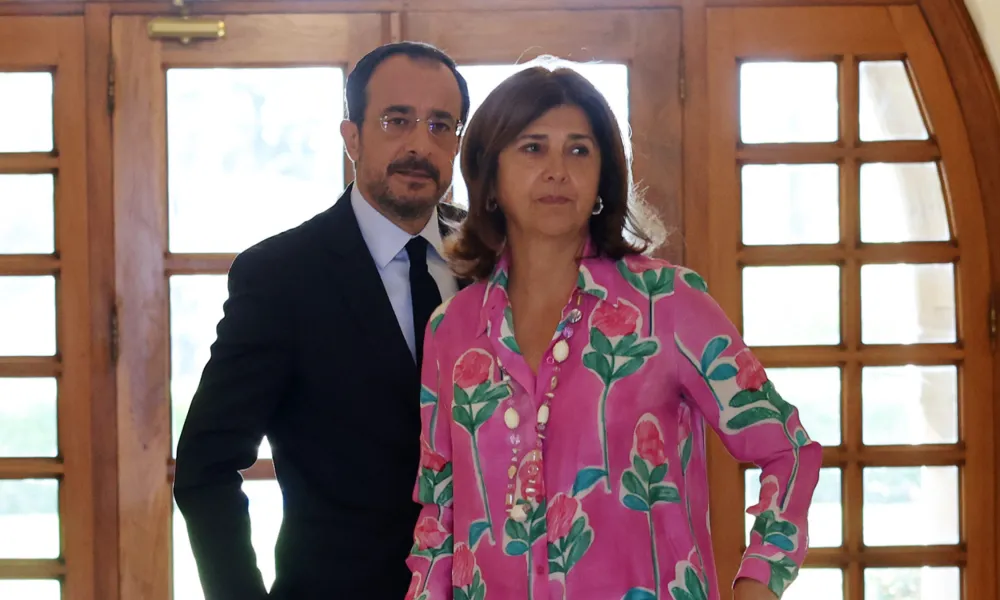



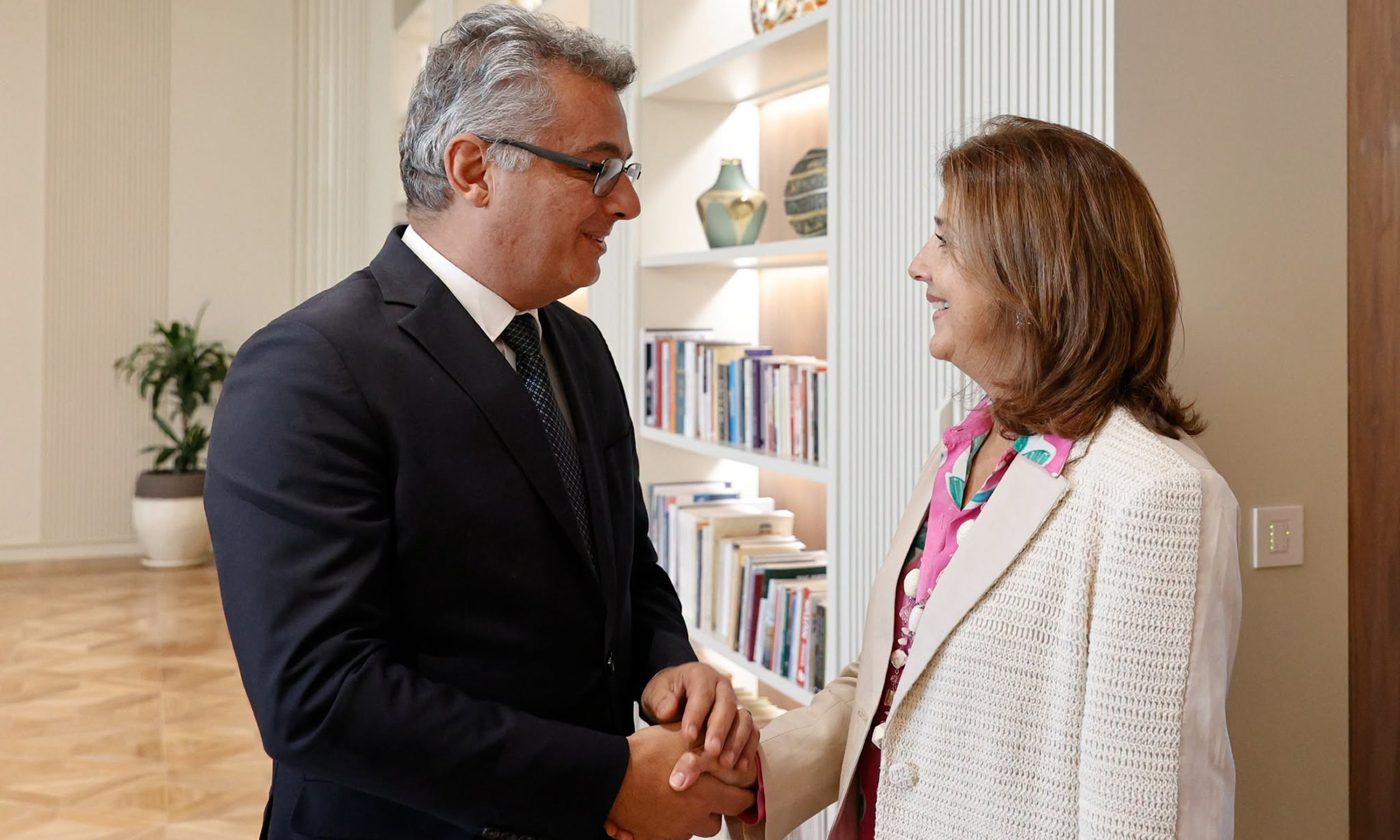
President Nikos Christodoulides received the UN Secretary-General's personal envoy on the Cyprus problem, María Ángela Holguín, at the Presidential Palace today.
After the meeting, Government Spokesman Konstantinos Letymbiotis told reporters that the meeting between the president and Holguín had concluded, describing it as a meeting held ahead of the UN Secretary-General's visit and the meetings he will hold in Cyprus tomorrow morning with the president and with Erhürman, as well as tomorrow evening's joint dinner and the joint meeting with the two leaders the day after.
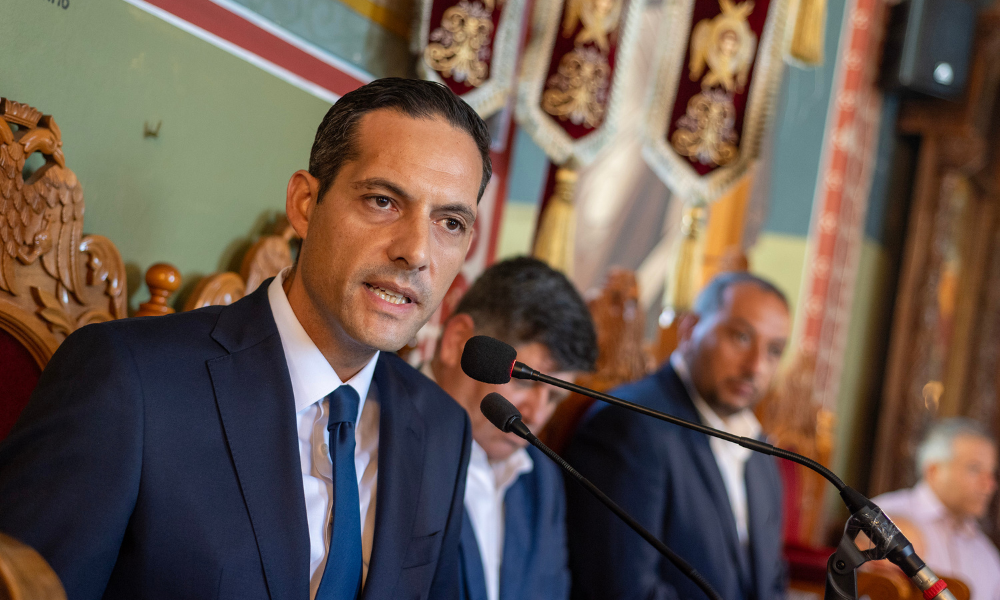
"A very significant visit, as we have said many times in recent days. A visit which we are aiming, and hoping, will be the beginning, the springboard that leads to the convening of a broader meeting," Letymbiotis said. He added that Holguín had briefed the president on a series of contacts she had held in the preceding period, as already set out in the programme she herself had circulated, and had since gone on to meet Erhürman.
Is there room for optimism?
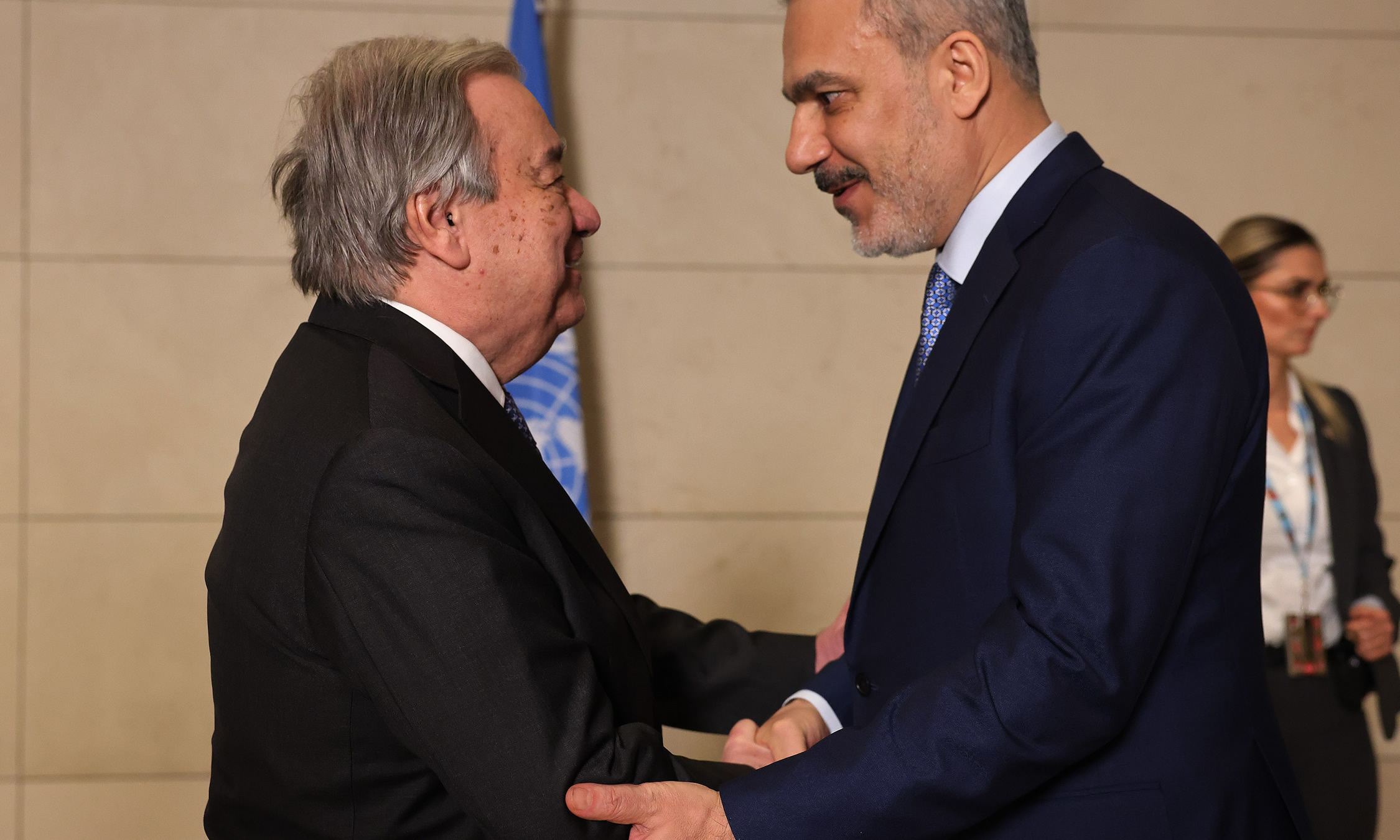
Asked whether what Holguín reported, particularly regarding her meeting with the Turkish foreign minister, allowed for any margin of optimism, Letymbiotis said: "We have said from the very first moment that we should take into account the fact that the UN Secretary-General has taken this initiative since March, following his own contacts, and that he personally is investing time, as well as the institutional weight of the role he holds, in this visit. Beyond that, we are realists and we are aware of the many challenges that exist, chiefly because of Turkish inflexibility." He said the president would have the opportunity to discuss with the Secretary-General himself tomorrow the stance Turkey is willing to show, and whether it genuinely has the will to realign with international law, noting that a telephone call had taken place the previous evening between Guterres and Turkish Foreign Minister Hakan Fidan.
"Common ground" means the Security Council resolutions
Asked whether there were any signs of common ground or convergence on any issues following Holguín's contacts, Letymbiotis said: "Common ground does exist, and this common ground is the resolutions of the UN Security Council and the agreed basis, which is set out clearly in all the resolutions of the UN Security Council." He added: "Beyond that, I repeat, without holding out more hope than Turkey's longstanding stance allows, in any case, the fact that the UN Secretary-General personally remains committed, and that he himself is making this visit at this particular juncture, together with the developments you see on the EU-Turkey track, I think this creates the conditions which, if there is even the smallest crack of hope, a window of opportunity, we will make use of it. We should wait for the Secretary-General himself, both tomorrow and the day after, at these very significant meetings, so that we can have a clearer picture of his own thinking on the next steps."
On Turkey's insistence on a two-state solution
Asked to comment on information suggesting the Turkish foreign minister had insisted on a two-state solution during his meeting with Holguín, Letymbiotis said: "I will not take a position on Mrs Holguín's behalf regarding what was discussed at her meeting with Mr Fidan. What I can tell you, as I have said before, is that the only solution being discussed by the United Nations, the only solution under discussion and being pursued, is of course the solution clearly set out by the resolutions of the UN Security Council. This is the solution the UN Secretary-General is promoting. This is the solution supported by the international community. This is the solution from which the mandates of both the UN Secretary-General and his personal envoy derive. This is the solution we too, as the Republic of Cyprus, are working toward. Therefore, no discussion can take place, nor can any intention or pursuit of a solution that departs from a bizonal, bicommunal federation with political equality, as recorded in the relevant Security Council resolutions, be considered a constructive stance."
On reports of an updated Crans-Montana framework
Asked to comment on reports that António Guterres intends to update the Crans-Montana framework, and whether Cyprus is ready for changes to that framework in a specific direction, Letymbiotis said: "We have said from the very first moment that our goal is the resumption of negotiations from the point where they were interrupted at Crans-Montana, while preserving the acquis of the previous negotiating process." He added that what matters most right now, tying back to the previous question, is whether Turkey, which since 2021 has maintained a declared position in favour of a two-state solution, has the genuine will to realign with what the Security Council resolutions set out. "We will hear tomorrow. I think we are all expecting to hear with interest the UN Secretary-General's thinking on how he himself sees his initiative maturing further, leading to a multilateral conference aimed at discussion on substance. This is the goal of the UN Secretary-General, and this is of course something we welcome, and how this multilateral process can lead to the resumption of negotiations from the point where they were interrupted at Crans-Montana."
No room for "constructive ambiguity"
Asked whether Cyprus is prepared to discuss constructive ambiguities within a settlement framework that some may interpret as a bizonal, bicommunal federation but whose actual characteristics fall far short of one, Letymbiotis said: "This is something we have answered many times. I cannot give greater weight to reports which Mrs Holguín herself has denied. Beyond that, however, we have said clearly, we have said categorically, particularly regarding the Cyprus problem, as the president of the Republic has himself said, that there can be no ambiguities, whether creative or otherwise, and under no circumstances can there be provisions pointing toward solutions outside the agreed framework." He said this is why Cyprus' red lines, its longstanding red lines safeguarding the Republic of Cyprus, namely the agreed framework as set out in the UN Security Council resolutions, together with harmonisation with the principles, values and law of the European Union, have been stated honestly and categorically at every meeting. "And this is not only our own position as the Republic of Cyprus. It is the position of the international community. It is the position of the European Union," he said.