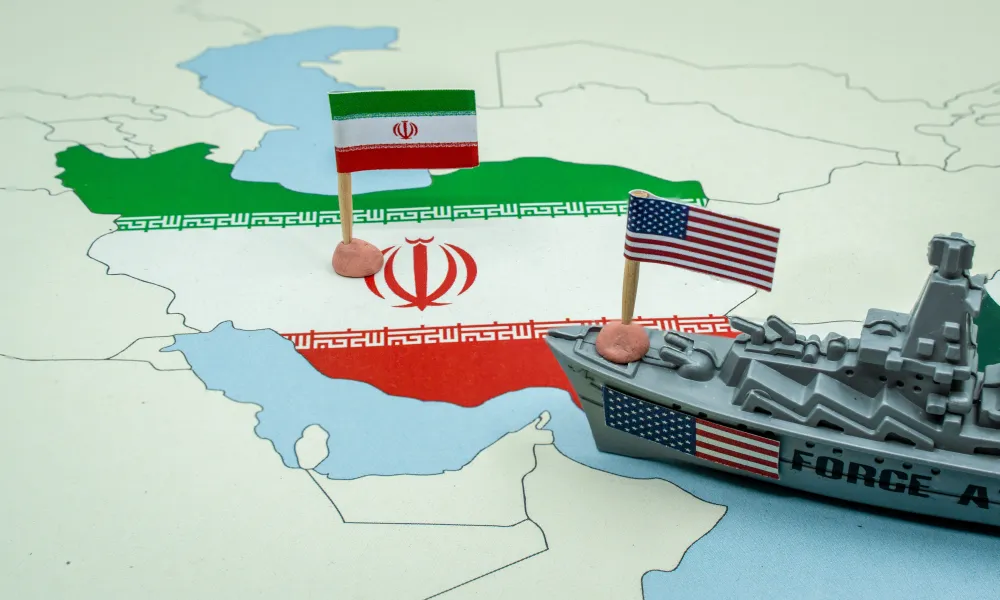

Iran has issued a fresh warning that it is prepared to target American interests across the region if it comes under renewed attack from the United States, a senior Iranian official said.
Mohsen Rezaei, secretary of Iran's Supreme National Security Council, made the remarks as Tehran awaits US President Donald Trump's response to conditions it conveyed to Washington through Qatar.
In an interview with Al Jazeera, Rezaei said Iran was seeking a diplomatic way out of the crisis while at the same time preparing for a “decisive war”.
He said Tehran considers a new US strike highly likely and has adjusted its military planning accordingly, shifting its focus to American warships and other targets ranging from the Persian Gulf to the Gulf of Oman and the Arabian Sea.
The Iranian official claimed that a multi-warhead anti-ship missile was recently tested near a US vessel or aircraft carrier.
He also warned that any future Iranian response would be forceful and would not be limited to US military bases, but could also include American commercial interests and companies operating in the region.
According to Rezaei, Tehran's conditions for ending the conflict include a halt to military operations on all fronts, the release of frozen Iranian assets and the lifting of the US naval blockade.
He said Iran is now awaiting the American president's response.
Earlier, Tehran received information that the United States, with the support of certain regional countries, was preparing to resume operations against Iran, Rezaei said.
The warning comes after the U.S. State Department and American embassies across the Middle East issued new security alerts on Saturday, urging U.S. citizens in the region to remain vigilant and advising those outside the region to carefully reconsider travel plans.
The advisories warned of the risk of a sudden escalation, flight cancellations and airspace closures.
On 2 March, shortly after the outbreak of the war, Washington urged its citizens to leave 14 Middle Eastern countries, including Israel, Jordan, Lebanon and Gulf states.
Source: CNA