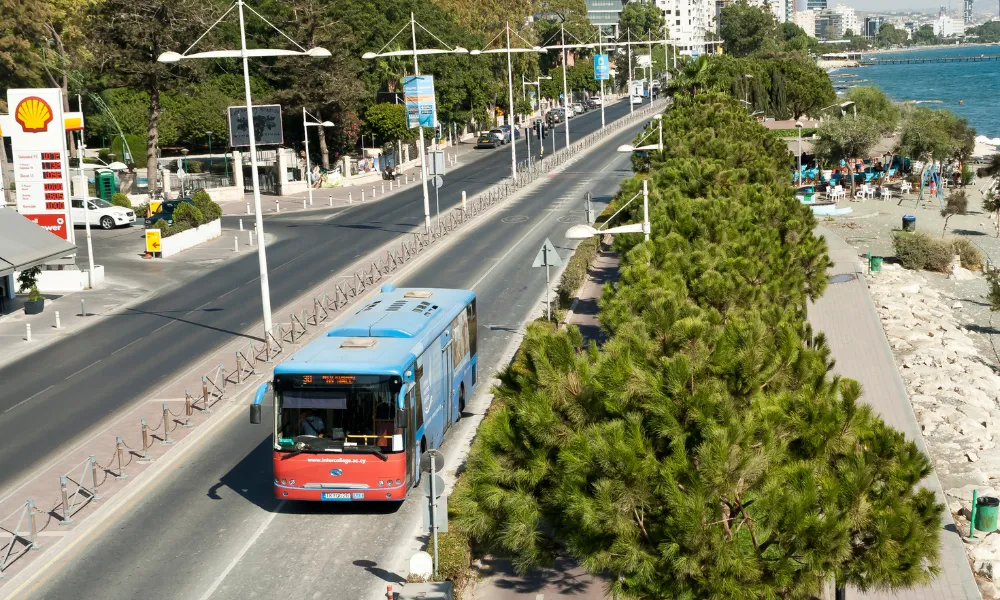

Cyprus can look deceptively simple on a map. The distances are short, the motorway network connects the main towns, and most journeys seem, at first glance, easy enough. But anyone trying to move around the island quickly discovers that getting from A to B depends heavily on how you plan to travel.
Public transport can be useful, especially in towns and between major cities, but it rarely offers the freedom many visitors expect. A car, on the other hand, opens up beaches, mountain villages and hidden corners of the island, but also introduces one of Cyprus’ most obvious quirks for foreign drivers: traffic moves on the left.
So before relying on Google Maps alone, it is worth understanding how transport in Cyprus really works, where buses can help, when a car becomes almost essential, and what to expect when you first approach a roundabout from the “other” side of the road.
Buses Can Help, but They Won’t Take You Everywhere
Cyprus does have public transport, and for many journeys it can be genuinely useful. Buses run within the main towns, link the biggest cities and serve some airport and tourist routes. For visitors staying in central areas, or for anyone who only needs to get from one major town to another, the bus can be a practical and affordable option.
The catch is that Cyprus is not a place where you can always walk to the nearest stop and expect a bus to appear within minutes. Timetables matter, and return journeys matter even more. A route that works perfectly in the morning may be less convenient in the evening, while Sundays, public holidays and rural destinations can make things more complicated.
That is where many visitors feel the limits. Getting from Nicosia to Limassol, or from Larnaca Airport into town, is one thing. Reaching a mountain village, a winery, a quiet beach or several places in the same day is another. The bus network can help you move between obvious points, but it is not built for spontaneous exploring.
Ticketing also requires a little attention. Some services offer travel cards, apps or multi-day options, while others may still require passengers to pay the driver directly. It is worth checking the operator’s website before setting off, especially for intercity routes or airport journeys.
The safest rule is simple: buses work best when your plans are simple. They are useful for city travel, airport transfers and some town-to-town routes. But once your itinerary becomes more ambitious, especially outside the main towns, Cyprus quickly becomes much easier with a car.
When Renting a Car Starts to Make Sense
For many visitors, renting a car is not about luxury. It is about access. Cyprus has plenty of places that are technically close on the map but awkward to reach without your own wheels. A beach may be 25 minutes away by car but take much longer by bus. A village lunch, a monastery visit or a stop in the mountains can become difficult if you have to build the whole day around a timetable.
This is why many travellers eventually choose to drive, even if they did not plan to at first. A car makes it easier to move at your own pace, change plans, visit more than one place in a day and stay out later without worrying about the last bus. It also opens up parts of the island that public transport only touches lightly, from Troodos villages and wine routes to quieter coastal spots.
The difference is especially clear outside the main towns. In Nicosia, Limassol, Larnaca or Paphos, buses and taxis can cover many basic needs. But once the trip becomes more exploratory, the car becomes the more realistic option. It turns Cyprus from a series of fixed routes into a place you can actually wander through.
That freedom does come with one important warning: Cyprus drives on the left. For visitors from the UK, Ireland or Malta, that may feel familiar. For many others, it is the first thing they notice after picking up the keys. The roads are generally manageable, and the motorways between the main cities are straightforward, but the first hour behind the wheel deserves patience. Roundabouts, junctions and right turns are where old driving habits can return quickly.
The Oddities of Driving in Cyprus
Driving in Cyprus is not difficult, but it has its own personality. The motorways between the main towns are generally easy to use, with clear routes linking Nicosia, Limassol, Larnaca, Paphos and the Famagusta area. Once you leave those main roads, though, the experience can change quickly.
Village streets may narrow without much warning, especially in older communities where the roads were not designed for modern traffic. In the mountains, bends can be sharp, visibility can change from one turn to the next, and a journey that looks short on the map may take longer than expected. It is worth treating the mountain roads as part of the trip rather than something to rush through.
In towns, the oddities are different. Parking can look informal, scooters and delivery bikes move quickly through traffic, and local drivers may be more impatient than visitors expect. None of this makes Cyprus especially hard to drive in, but it does mean that defensive driving helps. Leave space, expect someone to stop suddenly, and do not assume that every driver will signal early or choose the lane you expect.
The difference between what people do and what is actually allowed also matters. A badly parked car may be common, but that does not make it legal. The same applies to stopping “just for a minute”, using a phone at the wheel, or squeezing into a space that blocks a pavement. Visitors are better off following the rules, even when local habits seem more relaxed.
Road Rules Worth Knowing
Most road rules in Cyprus will feel familiar to European visitors, but a few are worth checking before driving. Seat belts are compulsory for drivers and passengers, mobile phone use is not allowed unless the device is hands-free, and speed limits are clearly marked on main roads and motorways. In towns and residential areas, drivers should also expect pedestrian crossings, school zones and sudden changes in traffic flow.
Alcohol limits are another area where visitors should not take risks. Cyprus is not the place to guess whether one more drink is acceptable before driving back from dinner. Taxis and ride-hailing options may be limited in some areas, especially late at night, so it is better to plan the return journey before the evening begins.
Children also need the correct seat or restraint, depending on their age and size. Families renting a car should request child seats in advance rather than assuming they will be available on arrival, particularly during busy holiday periods.
Parking deserves its own warning. In town centres and tourist areas, legal spaces can fill quickly, and it may be tempting to copy what other drivers are doing. But pavements, corners, disabled bays, bus stops and double yellow lines are not safe bets. A relaxed-looking street can still produce a fine.
Bus or Car: What Should You Choose?
The best option depends on the kind of trip you want. For a simple city stay, airport transfer or journey between major towns, buses can do the job. They are cheaper than renting a car, avoid the stress of parking and can be enough if your hotel or apartment is close to a useful route.
A car starts to matter when the trip becomes more flexible. If you want to visit several beaches, explore villages, go into the mountains, stop for lunch somewhere unplanned or stay out late, driving will usually make the experience easier. It gives you the freedom to build the day around your plans, rather than around a timetable.
For many visitors, the best approach is a mix of both. Use buses or taxis for simple urban journeys and rent a car for the days when you want to explore properly. That can keep costs down while still giving access to the parts of Cyprus that are harder to reach by public transport.
The simple rule is this: if your trip is built around towns, buses may be enough. If it is built around beaches, villages and detours, a car will probably make Cyprus feel much bigger, and much easier to enjoy.
A Few Practical Tips Before Setting Off
Before travelling by bus, check both directions of the journey. It is easy to find a route that gets you somewhere in the morning, then discover that the return service is limited, inconvenient or much earlier than expected. This matters especially on Sundays, public holidays and trips outside the main towns.
For driving, do not rely only on distance. A village or beach may look close on the map, but mountain roads, narrow streets or summer traffic can make the journey slower than expected. In coastal areas, parking can also take time during peak season, so it is better not to plan every stop too tightly.
Cash is still useful. Some buses, small car parks, village kiosks or older establishments may not always work the way visitors expect from larger European cities. Having a few euros available can save unnecessary stress.
Finally, think about the day as a whole. Cyprus is easy to cross, but not always easy to improvise without planning. A good route, a realistic return plan and a little patience can make the difference between a smooth day out and a frustrating one.
The Bottom Line
Getting around Cyprus is rarely complicated, but it is worth being realistic. Buses can be a good option for straightforward journeys, especially if you are staying in town or travelling between the main cities. The problem starts when the day becomes less predictable.
That is where a car changes the experience. It gives you the freedom to leave early, stop somewhere unexpected, stay longer at the beach or take the slower road through a village without worrying about the last bus back. For many visitors, that flexibility is what makes the island easier to enjoy.
The best approach is not one-size-fits-all. Use public transport where it makes sense, rent a car when the itinerary needs room to breathe, and give yourself a little extra time either way. Cyprus may be small, but the way you choose to move around it can shape the whole trip.