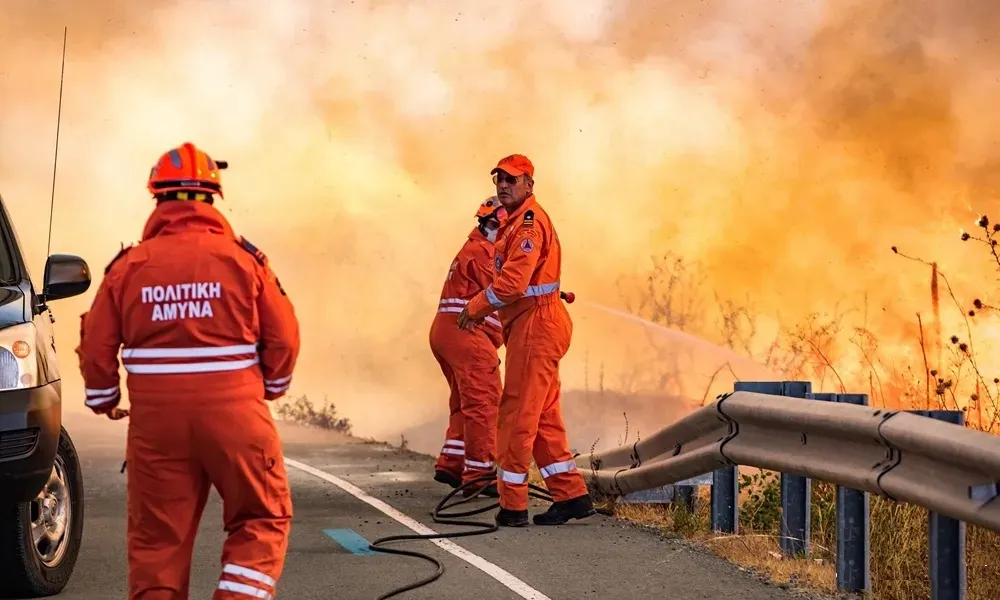
The Cyprus Civil Defence is restructuring its operational framework to establish crisis communication as a core strategic pillar, following concerns that misinformation significantly disrupts emergency responses. Law enforcement and civil protection agencies face growing challenges from unverified online claims during major incidents, such as false allegations regarding response vehicles or unauthorised volunteer groups entering active danger zones. To address these vulnerabilities, the department hosted a specialized civil protection workshop titled Effective Information Management in Crisis Situations, featuring strategic guidance from the French Ministry of the Interior.
The frequency and severity of natural and man-made disasters continue to escalate due to the accelerating impacts of climate change. Wildfires, flash floods, earthquakes, extreme weather anomalies, public health emergencies, and shifting geopolitical realities create a complex operational environment for emergency services. The Cyating Deputy Commissioner of Cyprus Civil Defence, Theodoros Lemoniatis, emphasized that clear, reliable, and prompt communication remains a life-saving necessity, whereas operational delays, ambiguity, or targeted misinformation can severely aggravate an active crisis.
Strategic insights from French crisis management
The structural challenge of optimizing public communication led to a comprehensive overhaul within the Directorate-General for Civil Security and Crisis Management of the French Ministry of the Interior several years ago. The Head of the Communications Office, Commander Septi Hadimalla, explained that the proliferation of emergencies, paired with the demand from media outlets for immediate updates, prompted France to elevate communication to a primary operational pillar.
Addressing the workshop, the French official urged the Cyprus Civil Defence to maintain direct, exclusive lines of communication with members of the press. He warned against allowing unverified third parties to control the narrative, noting that outside commentators lack the formal competence, technical training, and institutional responsibility held by official civil protection officers.
The French communications office actively coordinates with 250 journalists from major international and domestic media corporations, utilizing dedicated social media networks to provide real-time updates during major emergencies. The department employs six specialized press officers who possess a dual understanding of state priorities, firefighting mechanics, and civilian anxieties. These individuals are fully qualified firefighters who continue to undertake active field missions, ensuring that the flow of public information remains grounded in practical operational reality.
The complexity of modern emergency communication
The academic perspective highlighted the historical and evolving connection between journalism and emergency response. The Scientific Director of the Civil Protection Sector at the CERIDES Center of Excellence, Dr Christos Dimopoulos, noted that media professionals have long been vital to preserving historical memory during major catastrophes, referencing primary source reporting from the devastating 1956 Paphos earthquake.
The contemporary information landscape presents a highly intricate framework that demands active media integration across the entire disaster management cycle. Key challenges include the unprecedented scale and velocity of digital communication, information saturation, and the expansion of informal social networks. Journalists now have immediate access to alternative commentary outside of official government briefings, while public audiences routinely witness emergencies unfolding via live broadcasts. International standards established by the United Nations reiterate that journalists do not function as instruments of the state, but rather aid public safety efforts while maintaining their independent professional role.
The Spokesperson for the Cyprus Civil Defence, Panayiotis Liasides, concluded that effective risk communication represents one of the most critical components of modern civil protection. He stated that from the initial detection of an emergency to the final recovery phase, the quality, speed, and reliability of public updates directly dictate citizen safety, overall operational efficiency, and institutional trust.