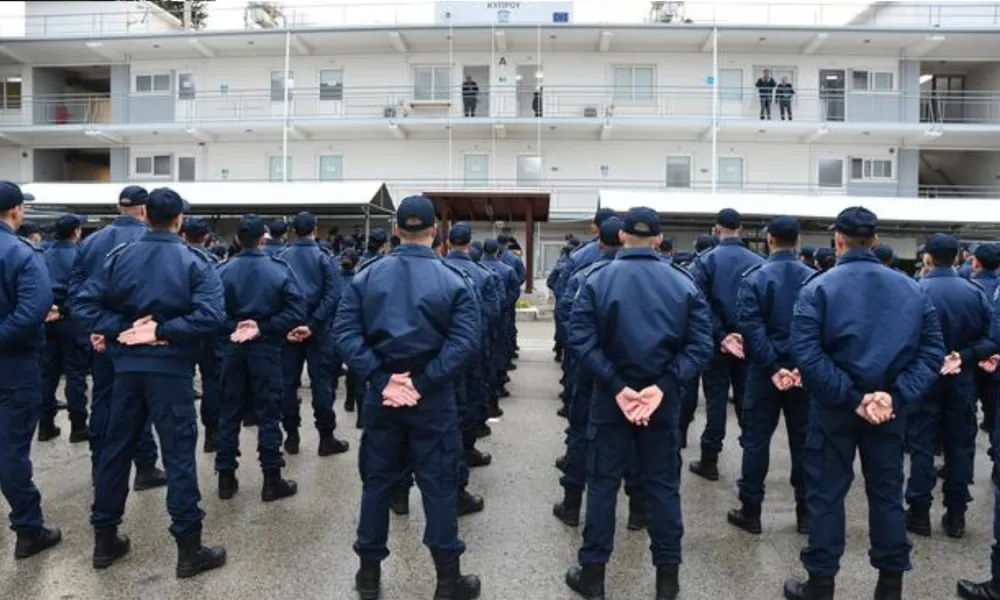

The House of Representatives is proceeding with an own-initiative examination of the activities of the Internal Audit Service of the Police, following the registration of the matter by the deputy chairman of the Parliamentary Committee on Legal Affairs, Nicos Georgiou. At the centre of the discussion will be the reasons why the Service's activity reports are not submitted to Parliament every year for the information of MPs, as the legislation expressly provides.
Coming under Parliament's microscope is the autonomous special Internal Audit Service of the Police, which upon its establishment in 2018 was dubbed the body of the "untouchables". The members of the service report administratively directly to the Chief of Police, while they are supervised by the Attorney General. Their mission is the prevention, investigation and combating of corruption within the police.
The trigger for Parliament's own-initiative examination is the failure to inform MPs of the Service's activities, as provided for by the relevant legislation.
Missing reports since 2018
As the deputy chairman of the Legal Affairs Committee and DISY MP Nicos Georgiou told Politis yesterday, under the legislation an activity report should be submitted to Parliament every year to inform MPs of the work of the "untouchables". "Following a search of Parliament's archive, it was not possible to locate the relevant reports from 2018 to date. To be completely honest, I do not even recall ever receiving such a classified document," Mr Georgiou said. As he revealed, the matter will be registered for discussion at the Legal Affairs Committee, so that the necessary explanations can be given and it can be established whether the relevant legislation is being applied.
At the same time, Mr Georgiou said he is preparing a legislative proposal to amend provisions of the existing legislation which are either inapplicable or present serious weaknesses. "Legislation cannot remain a dead letter, nor can accountability mechanisms function only on paper," he added.
What the law provides
Article 15 of the Law on the Establishment and Operation of the Internal Audit Service of the Police provides the following: (1) The Director of the Service submits to the Minister and the Chief of Police, no later than 31 January of each year, a report on the exercise of the Service's mission and competences as provided for in the Law, with his observations and recommendations regarding the assessment of risks from corruption, without reference to specific cases. (2) The Chief of Police, after studying the Service's Activity Report, submits any observations to the Minister as soon as possible and no later than 30 days. The Minister, after requesting the necessary clarifications, submits the report together with his observations to the Parliamentary Committee on Legal Affairs by the end of the first quarter of each year, in the form of a "Classified Document", for information purposes.
Letter with questions
In parallel, in the context of parliamentary oversight, Mr Georgiou sent the Minister of Justice, Costas Fytiris, eight questions regarding the operation of the police "untouchables" body, requesting that Parliament be informed. The letter was sent on 29 June and includes the following questions:
- How many people currently make up the Internal Audit Service and what is its organic staffing?
- Does the service have the necessary equipment, technological means and investigative tools for the effective exercise of its duties?
- In what ways are members of the Police informed of the existence, role and competences of the service, as well as of the possibility of submitting complaints regarding incidents of corruption?
- How many complaints have been examined by the Internal Audit Service from the start of its operation to date?
- How many police officers were suspended following the investigation of cases by the service, and in how many cases was the suspension lifted after the examination of the complaints was completed?
- How many police officers were referred to criminal courts as a result of the service's investigations?
- How many police officers were brought before disciplinary bodies and what were the outcomes?
- What measures does the ministry intend to take to further strengthen the staffing, operational activity and effectiveness of the Service?