


The government has approved additional funding of €2 million so that all young people who have expressed interest in becoming active in the primary sector can become beneficiaries of the new scheme, President of the Republic Nikos Christodoulides announced.
Speaking on Saturday evening at the 10th Festival of Agricultural Culture organised by CAPO in Protaras, the President also said that more than €20 million had already been paid to address the consequences of foot-and-mouth disease. At the same time, €4.6 million had been secured to address the effects of drought, while a new €1 million scheme had been approved to meet the increased needs of the primary sector.
Strong interest
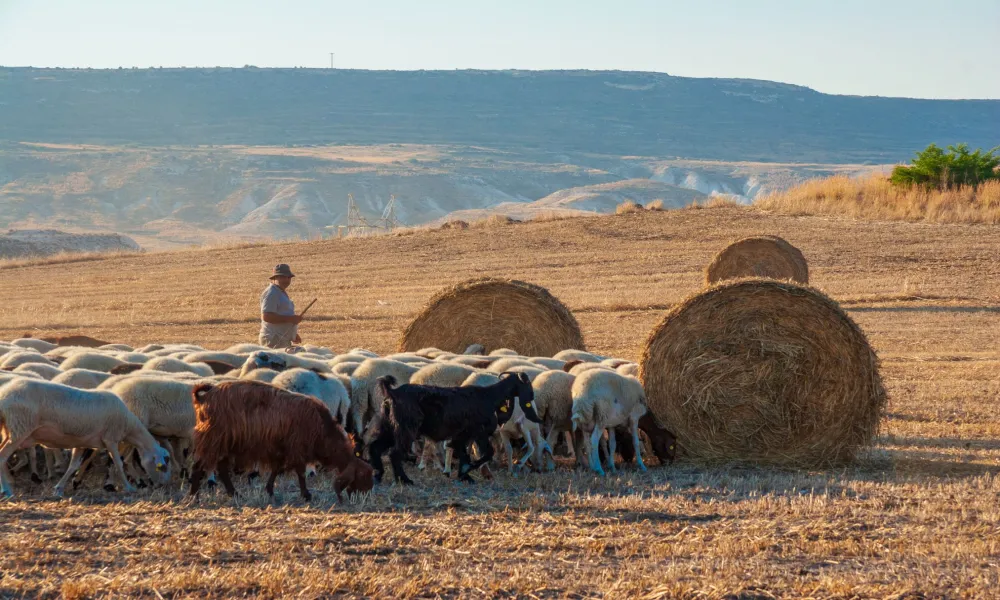
Christodoulides said there was strong and growing interest, particularly among the younger generation, in becoming active in the primary sector, assuring them that the state would support the effort.
“I know that the funds under the new scheme have been exhausted; another €2 million is needed for everyone to benefit. These €2 million are being approved by our Government so that all young people who have expressed interest can become beneficiaries,” he said.
According to the President, the primary sector is facing many challenges, including the effects of climate change, the need for a green transition and the protection of natural resources, as well as the requirements for safe and quality food.
“Our responsibility is to turn these challenges—and we can do it—into opportunities for a more modern, competitive and sustainable primary sector,” he stressed.
Funding
Referring to the Common Agricultural Policy, he described it as the most important tool available to the state for strengthening the sector. He said that although the agricultural sector in Cyprus currently represents a small percentage of GDP, its importance far exceeds its economic contribution.
“We must work on the basis of a clear plan and strategy so that we can strengthen the sector even further,” he said, adding that the Common Agricultural Policy Strategic Plan plays a decisive role, with funding of €454 million.
The President also referred to the ongoing discussions in the European Union on the Common Agricultural Policy, noting that consultations on the new programming period officially begin on 8 October. He stressed that the Government’s aim was for the agreement reached to meet the needs of the agricultural community.
Grants
As regards CAPO, he said that during its 22 years of operation it had been responsible for making direct payments to farmers, such as area-based and sectoral financial aid for specific production sectors, as well as aid provided under the measures of the Common Market Organisations.
He noted that the Organisation had evolved and modernised its operations and now functioned far more effectively, in full respect of the European and national regulatory framework. He also stressed that there was zero tolerance on these issues.
Christodoulides recalled that since its establishment CAPO had paid total grants exceeding €2.5 billion to farmers, while this year, he said, the highest absorption rates among all EU member states were being recorded.
He further stressed that state intervention was not limited to financial support received from the EU, but that the state had to be present when extraordinary circumstances tested the production and income of people working in the primary sector.
Impact of ongoing wars
As a characteristic example, he cited the recent foot-and-mouth disease crisis, for which more than €20 million had so far been paid to address its consequences. At the same time, he said, work was under way for the safe reactivation of the affected livestock units.
He also noted that additional funding of €4.6 million had been secured to support farmers in addressing the effects of last year’s drought.
Referring to the pressure placed on the primary sector by geopolitical developments, the war in Ukraine and the situation in the Middle East, he said these had significantly increased production costs. Higher fuel, fertiliser and other essential agricultural input prices had led the Government to implement a €2.5 million scheme immediately, while a new €1 million scheme had recently been approved because of additional needs.
The President said the Government’s direction was a more competitive and resilient primary sector, with water security, the protection and sustainable use of natural resources, adaptation to climate change and better services for producers and citizens.
Presenting the revised Strategy for the primary sector, he said it covered 11 areas, including modern technological applications, attracting young people to the profession, agricultural education, creating better conditions for a fair and stable income, and producing and marketing high-quality products.
Source: CNA