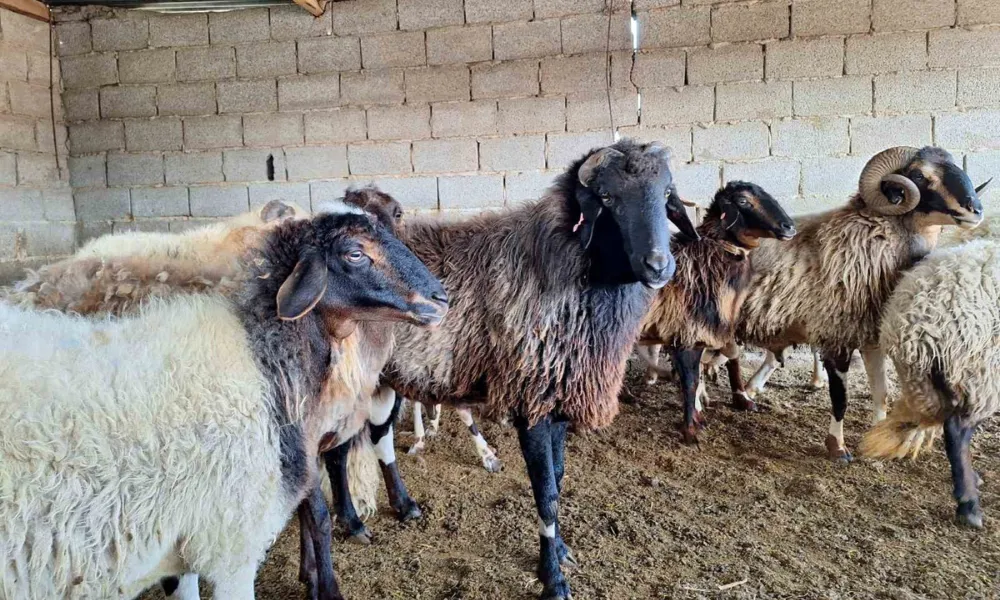
Burial sites have been dug at a livestock farm in Pachna, Limassol, ahead of the culling of all animals on the premises on Friday, as part of measures to contain the foot-and-mouth disease outbreak. The operation is proceeding under police escort, with authorities expressing cautious optimism that the disease may have been contained to a single focus in the Limassol district.
Agriculture Minister Maria Panayiotou confirmed after Thursday's Council of Ministers meeting that culling operations are proceeding as announced, and said she had received no reports of attempts to obstruct the process. "I have not been informed of any reaction, based on the information I have," she said. Veterinary Services inspections in Limassol are continuing with police accompaniment.
President of the Veterinary Association and member of the epidemiological team Dr Dimitris Epaminondas confirmed to CNA that burial sites at the farm of Father Christos were opened on Thursday and that all animals on the farm will be culled on Friday. He expressed satisfaction at the cooperation of the farm's owner. "This is what we asked for from the beginning, this cooperation, so that we can close the culling chapter and move on to sampling to see where we stand," he said.
Epaminondas added that no other positive cases have been identified in the surrounding area and that farms near the affected unit appear to have tested negative. "Since Famagusta and Paphos are still clear and if this was the only focus in Limassol, we hope we will continue to be clear, which means we have also controlled the disease," he said.
Penalties raised sharply under Animal Health Law
The Council of Ministers also approved a proposal by the Agriculture Ministry to substantially increase the penalties provided under the Animal Health Law. Conviction for failure to comply with the law's provisions will now carry a maximum prison sentence of five years or a fine of up to €250,000, up from a maximum of six months imprisonment or a fine of €3,323. For the movement of animals or animal products from areas not under effective control of the Republic of Cyprus, the maximum penalty rises to ten years imprisonment or a fine of up to €250,000, from the previous maximum of twelve months or €8,309. Administrative fines that the Director of Veterinary Services may impose where there is reasonable cause to believe a person is in breach of EU or national legislation increase from €5,000 to €100,000.
Halloumi production and the broader outbreak
Panayiotou said the government remains in continuous dialogue with all stakeholders on the halloumi question through the Halloumi Monitoring Committee, with three core objectives: maintaining halloumi as Cyprus's primary agri-food export product, safeguarding its Protected Designation of Origin status, and ensuring the viability of all those involved in its production. She noted that the government has been tracking quantities of sheep and goat milk since October 2024 and now has a clear picture of available supply. The reduction in the quota set by the relevant decree, she said, was a temporary measure made necessary by a significant drop in milk quantities.
Source: CNA