Sudan, the Democratic Republic of Congo and Colombia are the world’s most neglected displacement crises, according to the latest annual ranking by the Norwegian Refugee Council.
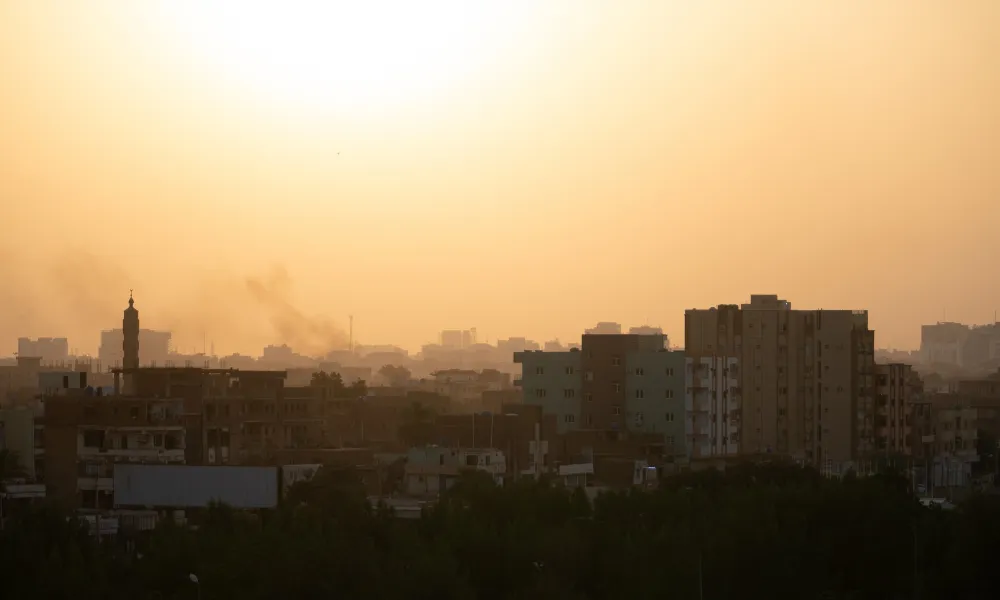
The humanitarian organisation said Sudan ranked first in its 2025 list, warning that the scale of displacement and hunger in the country has continued to deepen with limited international attention.
According to the NRC, more than nine million people are internally displaced in Sudan, while around four million Sudanese have fled to neighbouring countries. Nearly 19.5 million people in the country are facing hunger.
Sudan has been engulfed by war since 2023, when fighting broke out between forces loyal to the head of the Sudanese army and the paramilitary Rapid Support Forces. The conflict has caused one of the world’s largest displacement crises.
“It is incomprehensible how a displacement crisis of the scale seen in Syria and Ukraine at their height can continue to worsen almost unnoticed,” NRC Secretary General Jan Egeland said.
The NRC’s ranking assesses neglected displacement crises using indicators including humanitarian funding gaps, media coverage, political attention and, for this year’s report, the scale of displacement.
The Democratic Republic of Congo appears on the list for the tenth consecutive year. The NRC said only 27.4% of the funding needed for humanitarian operations in the country was secured in 2025, leaving 21 million people without support.
Colombia ranked third, followed by Yemen, Afghanistan, Honduras, Ecuador, Cameroon, Nigeria and Mozambique.
Egeland said wealthier countries had become increasingly inward-looking, with military spending and domestic security concerns taking priority over humanitarian response.
He warned that neglecting crises beyond Europe would carry wider consequences.
“We forget that there will be pandemics, migration flows and enormous loss of life if we do not invest in hope on other continents,” he said. “Africa is on the other side of the Mediterranean, where we go on holiday. If the continent collapses, we will also feel the consequences.”
Source: CNA