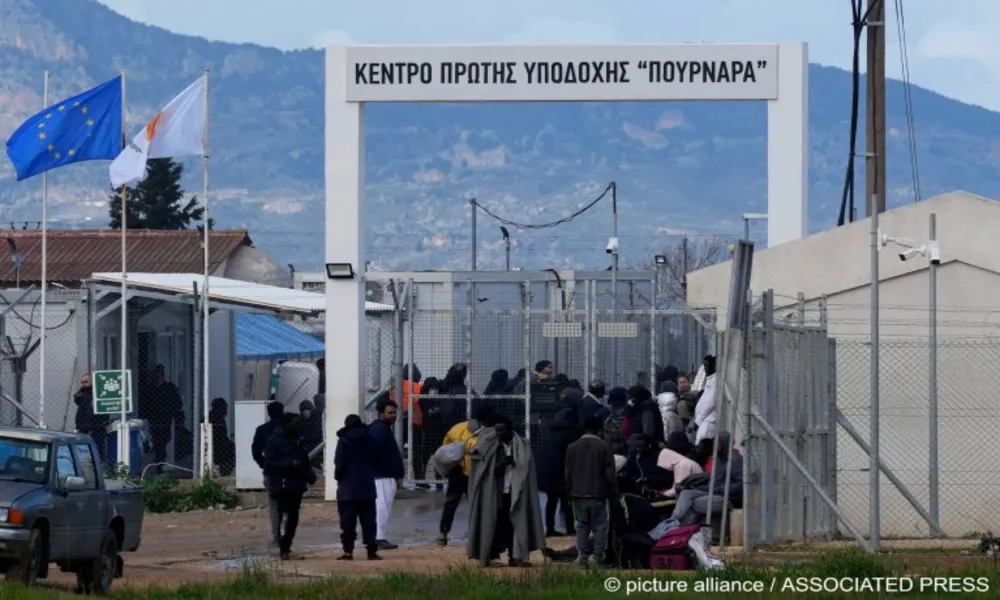



Cyprus recorded the second-highest rate of asylum applications among EU+ countries in the first half of 2026, according to the European Union Agency for Asylum’s mid-year review.
EU+ comprises the 27 EU member states, Norway and Switzerland.
Cyprus recorded 1,732 applications per million inhabitants, compared with an EU+ average of 710. Only Greece recorded a higher rate, at 2,254 applications per million inhabitants.
Cyprus is also among the countries with a high proportion of beneficiaries of temporary protection, hosting 27 beneficiaries per 1,000 inhabitants at the end of June 2026.
The EUAA notes that both asylum applications and other forms of protection should be taken into account when comparing the pressure faced by individual European countries.
EU+ asylum applications fall 17%
EU+ countries received approximately 332,000 applications for international protection between January and June 2026.
This represented a 17% decline compared with the same period of 2025 and the lowest number recorded for the first half of a year since 2021.
The EUAA’s Latest Asylum Trends: Mid-Year Review 2026 attributes the overall decline mainly to fewer applications from nationals of Venezuela, Syria, Colombia, Ukraine and Türkiye.
Applications increased, however, among nationals of Sudan, Bangladesh, Haiti and Somalia.
Afghan nationals submitted the largest number of applications, at approximately 39,000, although this represented a 7% annual decrease.
They were followed by Venezuelans with 33,000 applications and Bangladeshis with 20,000.
Applications from Syrian nationals fell particularly sharply to around 11,000, a decline of 57% compared with the first half of 2025.
France receives most applications
In absolute terms, France was the leading destination, receiving around 69,000 applications, equivalent to 21% of the EU+ total.
It was followed by:
- Italy: 66,000
- Spain: approximately 55,000
- Germany: 54,000
Together, the four countries accounted for around three quarters of all applications, while Greece received approximately another 23,000.
Recognition rate at 31%
According to EUAA data, 31% of first-instance decisions issued during the first half of 2026 resulted in refugee status or subsidiary protection being granted.
The overall recognition rate remained low and broadly similar to levels recorded in 2025.
Almost 45,000 first-instance decisions concerning Syrian nationals were issued, with a recognition rate of 19%. This compared with 28% in 2025 and 90% in 2024.
Recognition rates were also low for nationals of Bangladesh and Venezuela, at 3% each, while the rate for Egyptian nationals was 2%.
By contrast, the recognition rate reached 73% for Afghan nationals and 65% for Sudanese nationals.
Pending applications fall but older cases increase
At the end of June 2026, approximately 770,000 cases were awaiting a first-instance decision across EU+ countries, 8% fewer than a year earlier.
However, the reduction mainly concerned more recent applications.
Around 565,000 applications, or 73% of the total, had been pending for more than six months, compared with 68% a year earlier.
When cases at the appeal or review stage are also included, the EUAA estimates that the overall number of pending cases stood at 1.18 million.
New Pact on Migration and Asylum
The review also covers developments in European migration policy following the start of implementation of the new Pact on Migration and Asylum on 12 June 2026.
Among its provisions are faster examination procedures for certain categories of asylum applications, including those submitted by nationals of countries designated as safe or with low recognition rates at EU level.
The EUAA stresses, however, that the figures in its mid-year review primarily reflect the situation before implementation of the Pact and therefore cannot be treated as evidence of its impact.
Cooperation with third countries
Cooperation with third countries remained a central component of the EU’s migration strategy during the first half of 2026.
This includes measures aimed at strengthening border management, tackling migrant smuggling, improving returns and readmission, protecting refugees and developing legal migration pathways.
These measures form part of the European Strategy for the Management of Asylum and Migration, adopted in January 2026.
Source: CNA