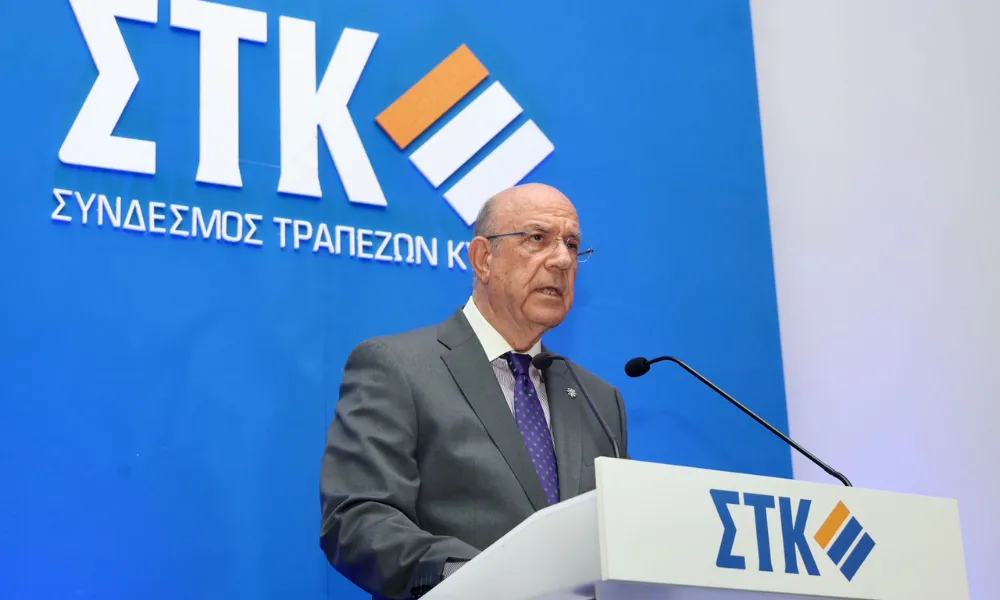

Cyprus Finance Minister Makis Keraunos on Tuesday criticised parliament over its handling of foreclosure legislation, warning that recently approved bills could pose legal and financial risks.
Speaking at the annual general meeting of the Cyprus Banks Association, Keravnos said lawmakers had passed proposals despite reservations raised by the Finance Ministry, the Central Bank and the Legal Service.
He said the measures could contain unconstitutional elements and create institutional complications, prompting President Nikos Christodoulides to refer them back to parliament and challenge them before the Supreme Court.
Keravnos added that the European Central Bank (ECB) has also been consulted and has expressed “serious concerns”.
“The European Central Bank raises strong concerns about an expansion of financial risks that could evolve into fiscal risks, as well as a worsening of borrower issues rather than their resolution,” he said.
The minister said the government has already put forward a framework to address non-performing loans, aimed at safeguarding financial stability while protecting borrowers. Measures include strengthened debt restructuring tools, enhanced protection mechanisms and expanded powers for the Financial Ombudsman.
Despite a significant reduction in bad loans on banks’ balance sheets, Keravnos said the problem remains elevated in the real economy, affecting overall economic activity.
He stressed the need for a stable and credible legal framework that allows for effective management of arrears without undermining financial balance.
Strong banking sector
Beyond the foreclosure issue, Keravnos pointed to strong recent economic performance, noting that Cyprus recorded one of the highest growth rates in the euro zone, with the economy expanding by 3.8% in 2025 and positive prospects for 2026.
He also highlighted a decline in public debt, expected to fall to about 50% of gross domestic product by the end of the year, alongside near full employment.
The minister described the banking sector as robust, with high capital adequacy ratios and solid profitability.
Keravnos reiterated the importance of responsible fiscal policy and close cooperation with banks to maintain stability and support growth, warning that interventions that could disrupt the existing framework, such as those on foreclosures, must be approached with caution.