


World Youth Skills Day falls on 15 July, and this year the UN wants an answer to a blunt question. Are young people actually being equipped for the work they're walking into? This year's theme, "Skills for a Shared Future," reflects how far that question has shifted. UNESCO and the International Labour Organization, who coordinate the day alongside the UN Youth Office, frame it around a labour market being reshaped simultaneously by artificial intelligence, the green transition and rising social complexity, arguing that technical training alone is no longer enough. Young people, the day's organisers say, need a balanced mix of technical, digital, AI, green and social-emotional skills, combined with the human qualities that automation cannot replicate. In his message marking the day, UN Secretary-General António Guterres said the moment calls for "a new set of skills: from digital literacy to artificial intelligence, communication and critical thinking."
The ILO's most recent Global Employment Trends for Youth put global youth unemployment at 13% in 2023, a 15-year low, but the recovery has been uneven, with rates in the Arab States and parts of Asia still running above pre-pandemic levels. UNESCO estimates that roughly 70% of the world's young people, around 450 million, remain economically disengaged not because jobs do not exist, but because they lack the specific skills employers are looking for. This year's UNESCO-UNEVOC webinar, held in Bonn, gathered governments, educators, employers and young people to debate what it would actually take to close that gap, alongside a global survey inviting people aged 15 to 29 to name their own priorities.
Where Cyprus stands
Cyprus enters this year's observance with genuinely improving numbers. According to Eurostat, the share of young people on the island who are neither studying nor working, the so-called NEET rate, fell to 10.6% in 2026, down from 18.5% a decade earlier and now close to the EU average of 11%. Youth unemployment in Cyprus stood at 12.5% in the first quarter of 2026, well below the EU-wide youth unemployment rate of around 15%. The trend lines are moving in the right direction, though the island's youth unemployment rate remains more than double its overall jobless rate, a gap that mirrors the pattern across most of the EU and is precisely the kind of structural mismatch World Youth Skills Day is designed to draw attention to.
A local example of the shift
One place that shift is visible in practice is Junior Achievement Cyprus, the island's main entrepreneurship education body. Speaking to Politis to the Point in February, when Cyprus hosted the Junior Achievement Europe Board of Executives conference in Limassol and JA Cyprus CEO Antigoni Komodiki was elected chair of the European board, Komodiki described entrepreneurship education as one of the few tools capable of pulling young people toward initiative rather than passive consumption.
"Creating a business that creates value for someone else, not just for ourselves, is central to what we do," she said, framing the organisation's three priorities for its European term as educational quality, teacher support and a stronger regional network, alongside newly opened walk-in centres in Famagusta and Paphos and continued work with the Ministry of Education toward making entrepreneurship education compulsory.
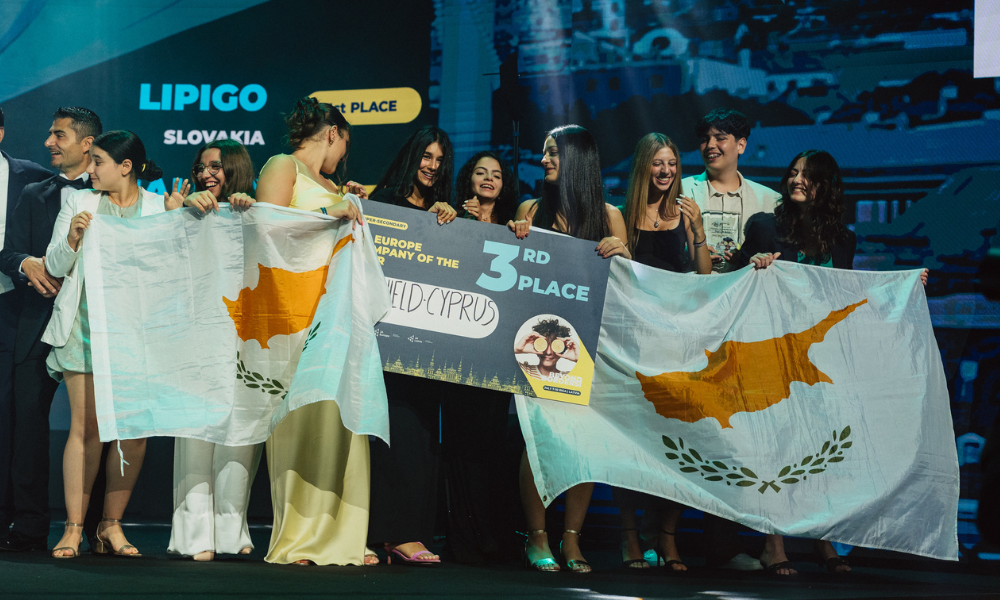
Just over a week ago, that pipeline produced two tangible results. At Gen-E 2026 in Riga, Europe's largest youth entrepreneurship festival, Cypriot student venture LIVIA, an AI-driven agritech platform built by university student Christos Charalambous, won the European Innovation of the Year award, while HerShield, a discreet drink-safety product created by nine students from St Mary's School in Limassol, placed third in JA Europe's Company of the Year competition. Both qualified after winning Junior Achievement Cyprus's national final in April, chosen from 89 student companies and around 550 participants aged 15 to 18.
Skills programmes built years in advance are what put Cypriot names on a European stage the same week the UN is asking what a shared future of youth skills should look like.