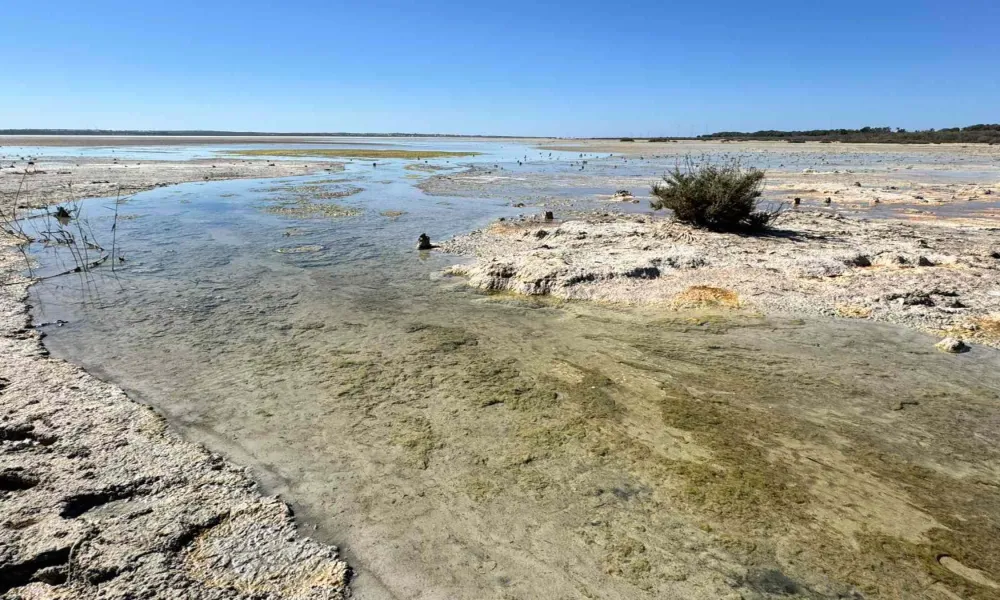

Dust and sand storms affect around 330 million people worldwide, with the United Nations Environment Programme (UNEP) warning that their impact is expected to grow as climate change, drought and poor land management accelerate desertification in vulnerable regions.
The storms, which can turn daylight into darkness and disrupt communities across vast geographical areas, are affecting populations from sub-Saharan Africa to northern China and Australia. According to UNEP, a combination of rising temperatures, prolonged droughts and environmental degradation is creating conditions that favour more frequent and more severe storms.
UN campaign raises awareness
In 2023, the United Nations designated 12 July as the International Day of Combating Sand and Dust Storms.
The initiative aims to raise awareness of the risks posed by these events and encourage international cooperation to address their causes and impacts.
“We do not have to accept a future where communities in arid and semi-arid environments are constantly battered by dust storms,” said Doreen Robinson, Head of the Biodiversity and Land Branch at UNEP.
“By restoring dry landscapes and meaningfully reducing greenhouse gas emissions, we can reduce the likelihood of massive storms and improve the lives of tens of millions of people.”
What causes dust and sand storms?
Dust and sand storms occur when strong winds pass over bare or dry land, lifting large quantities of sand and dust into the atmosphere.
Once airborne, these particles can travel hundreds or even thousands of kilometres from their point of origin.
The main sources of mineral dust are located in North Africa, the Arabian Peninsula, Central Asia and China. Australia, the Americas and southern Africa also contribute smaller but significant amounts.
Climate change and land degradation
According to UNEP, human activities such as deforestation, overgrazing and excessive water use are contributing to the spread of desertification and increasing the likelihood of dust storms.
Climate change further intensifies the problem through more frequent droughts and higher temperatures.
In some parts of the world, desert dust levels have doubled since the 20th century, increasing the risk of severe dust and sand storms.
Impact on economies and agriculture
The storms can cause significant economic damage by affecting agriculture, infrastructure and industry.
In northern China alone, dust storms caused economic losses approaching $1 billion over a three-year period.
Dust can also damage crops, kill livestock, contaminate machinery and disrupt air transport operations.
Health risks
Dust storms pose serious health risks because airborne particles can be inhaled into the respiratory system.
UNEP estimates that around 40% of aerosols in the lower atmosphere consist of windblown dust particles.
When trapped in the nose, mouth and upper respiratory tract, the particles may contribute to illnesses including asthma and pneumonia.
Finer particles can enter the bloodstream and affect multiple organs throughout the body.
A 2014 assessment estimated that exposure to dust particles contributed to approximately 400,000 premature deaths worldwide.
Links to infectious diseases
Dust particles can also act as carriers of infectious diseases.
Researchers have linked meningococcal meningitis, a bacterial infection affecting the brain and nervous system, to dusty environmental conditions in parts of sub-Saharan Africa's so-called "meningitis belt".
Without treatment, the disease can be fatal in up to 50% of cases.
Measures to reduce the risks
Experts say dust and sand storms cannot be controlled directly, but measures can be taken to reduce the environmental conditions that contribute to their formation.
Authorities can restore degraded land, improve water management, protect fragile soils and increase vegetation cover through the planting of native trees and shrubs.
These actions help retain moisture in the soil and reduce the amount of dust available for transport by strong winds.
Governments can also support sustainable agricultural practices that reduce land clearance and overgrazing, allowing degraded land to recover.
Importance of reducing emissions
UNEP says progress in reducing greenhouse gas emissions is also essential because of the link between climate change, drought and desertification.
Global temperatures are already around 1.1°C above pre-industrial levels, and further warming is expected to increase drought conditions that favour the development of dust and sand storms.
At the same time, investment in early warning systems can help vulnerable communities prepare for approaching storms, reducing both loss of life and economic damage.
UN Decade on Ecosystem Restoration
UNEP, the Food and Agriculture Organization of the United Nations and partner organisations are leading the UN Decade on Ecosystem Restoration 2021-2030.
The initiative covers terrestrial, coastal and marine ecosystems and aims to mobilise political support, scientific expertise and financial resources to scale up restoration efforts worldwide.
According to the UN, restoring degraded ecosystems is one of the key tools available to reduce the environmental drivers behind dust and sand storms.
Source: CNA