
UN Secretary-General Antonio Guterres says the situation in Cyprus’ buffer zone remains fragile, highlighting concerns over Pyla, military activity along the ceasefire lines, Varosha and threats to peacekeepers, according to his latest report on UNFICYP.
He welcomed “recent positive engagement by the leaders with regard to the political process,” adding that “the regularity in which the leaders have met during the reporting period is also encouraging".
However, he said “no progress has been made” in response to his “repeated calls for the sides to de-escalate the growing military modernization along the respective ceasefire lines and to reverse their actions in and around the buffer zone”.
He urged both sides “to cease their military construction violations,” warning that these actions “in effect seek to permanently alter the military status quo of the buffer zone”.
The Secretary-General criticised the “policy of deliberately blurring the distinction between military and civilians by concealing military positions within civilian structures,” calling it “a serious concern”. Actions seeking “to advance military positions or otherwise alter facts on the ground” are “equally concerning,” he added, stressing that “invoking the imbalance of forces on the island cannot justify violations.”
He reiterated calls for both sides “to explore mechanisms for direct military contact” and encouraged them “to actively pursue avenues for dialogue with the facilitation of UNFICYP”.
“In their efforts to promote closer cooperation between the communities, local and international actors continue to be confronted with challenges and obstacles linked to the status of the north and concerns relating to ‘recognition’. While the United Nations policy is unchanged and decisions of the Security Council on the matter are strictly upheld, I reiterate that concerns about recognition should not in themselves constitute an obstacle to increased cooperation,” he said.
Pyla and buffer zone pressures
“The situation on the Pyla/Pile plateau remains of deep concern,” the Secretary-General said, reiterating “the need for all parties to respect and abide by the United Nations’ impartial delineation of the buffer zone – the only delineation recognised by the Security Council”.
The report said the period was “marked by renewed contestation over the buffer zone, particularly regarding access and land use within it,” urging both sides “to fully utilize existing liaison mechanisms with UNFICYP”.
To Cyprus Republic: investigate threat to UN personnel
“Threats towards UNFICYP peacekeepers are unacceptable,” the Secretary-General said, calling on the Republic of Cyprus to investigate an incident involving armed hunters that jeopardised peacekeepers’ safety. He also urged follow-up on accountability measures linked to “the actions of the alien and immigration unit towards UN personnel during the 2024 pushbacks of asylum seekers into the buffer zone.”
Varosha concerns
On Varosha, he reiterated concern over “the situation in the fenced-off area” and “the lack of response to the Security Council’s call for a reversal of the actions taken since the announcement of the partial reopening of the fenced-off town in October 2020”. He recalled Security Council resolutions 550 and 789, adding that “the position of the United Nations on this matter remains unchanged.”
He also “deplores” restrictions on UNFICYP’s freedom of movement “in Varosha, in Strovilia and elsewhere,” stressing that the mission’s mandate “is not limited to the buffer zone but extends to the entire island”.
Missing persons and bicommunal work
The Committee on Missing Persons, with bicommunal teams “supported by the United Nations,” continues efforts “to recover, identify and return the remains of persons who went missing” during 1963-64 and 1974.
During the period, eight teams carried out excavations across the island and identified seven individuals. Since 2006, the committee has “exhumed or received the remains of 1,718 persons on both sides of the island”. Of 2,002 people on the official list, 1,076 have been identified. Fourteen identifications were made during the period, and “the remains of two missing persons were returned to their families for dignified burials”.
On 16 February 2026, the Cyprus Peace Council awarded the committee the 2025 Cyprus Peace Prize “in recognition of the Committee’s outstanding work on the investigation of the fate of missing persons in Cyprus”.
Turkish forces activity in buffer zone
UNFICYP continued to manage authorised civilian activity while curbing unauthorised access in the buffer zone “to prevent possible security tensions,” while expanding outreach with 154 meetings with farmers and community leaders.
Farming in Avlona remained a flashpoint. Turkish Forces “moved forward in the buffer zone” in several instances over Greek Cypriot farmers cultivating near the ceasefire line. They also challenged the buffer zone delineation when UNFICYP requested Turkish Cypriot farmers to leave unauthorised areas.
UNFICYP has developed an internal plan to address “misinformation and misperceptions” linked to recurring farming tensions.
Unauthorised hunting remained a concern, with incidents involving firearms continuing “with high frequency”. By 31 May, 33 incidents had been recorded, including shots fired near UN personnel. On 15 February, three Greek Cypriot individuals “displayed intimidating behaviour and fired shots above peacekeepers, endangering their safety.” Efforts to ensure accountability “have not been successful thus far”.
Military violations and surveillance
UNFICYP recorded 166 military violations by 31 May, including 46 by the National Guard and 120 by Turkish Forces, a slight increase from the previous period but “significantly lower than 2023 and 2024”. Military construction accounted for nearly half the violations.
The report highlighted the continued installation of surveillance systems. The National Guard operates 30 devices on 34 towers, while Turkish Forces have 71 devices on 64 towers. These systems “remain a major concern for UNFICYP” due to their contribution to “the long-term militarization along the buffer zone” and their “potential destabilizing effect”.
There was no progress on de-escalation steps outlined in Security Council resolution 2815. Installations within the buffer zone were described as “of particular concern,” with both sides undermining its neutral status.
The Republic of Cyprus has not reversed a policy requiring civilian buildings near the southern ceasefire line to incorporate military positions, which “dangerously blur the distinction between civilian and military facilities”.
Developments in Pyla and beyond
The Secretary-General and his personal envoy continued contacts with Turkish Cypriot leader Tufan Erhürman and Greek Cypriot leader Nikos Christodoulides in January and June 2026.
The buffer zone remained particularly “fragile” in Pyla, where Turkish Cypriot ‘police’ imposed access restrictions and briefly detained a Greek Cypriot individual. Tensions peaked on 15 April, when Turkish Forces deployed a convoy of 15 armoured personnel carriers on the northern ceasefire line and overmanned a nearby observation post with around 20 soldiers. The situation was later described as “calm but delicate.”
UNFICYP operations and resources
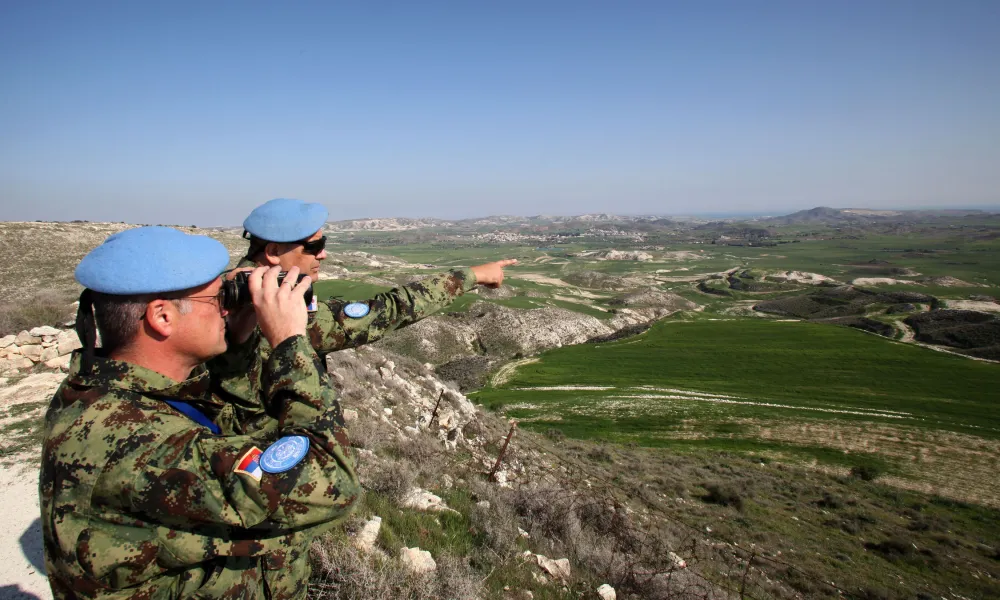
UNFICYP maintained patrols, monitored ceasefire lines and worked to uphold the integrity of the buffer zone. Resource constraints led to reduced patrols, a hiring freeze, limits on aviation and reduced training.
The report warned that reduced air capacity affects surveillance, noting rotary-wing aviation remains “critical for early detection, situational awareness, and verification of violations”.
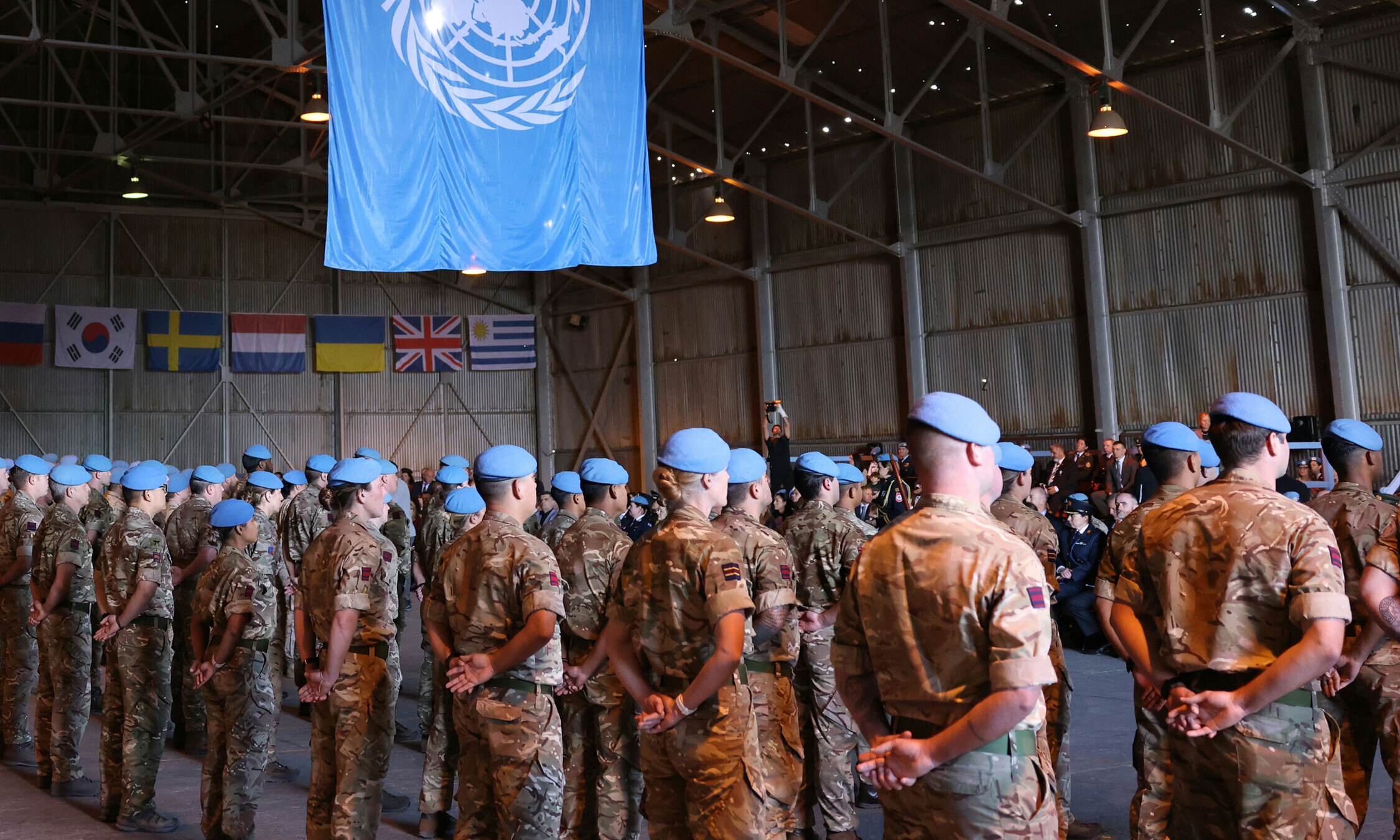
In conclusion, the Secretary-General said it is “essential” that UN bodies provide “adequate and predictable resources” and praised UNFICYP personnel for their “steadfast commitment” to the mandate and “the cause of peace on the island.”
Source: CNA