
The UN Environment Programme (UNEP) forecasts that demand for so-called “critical energy transition minerals” will double by 2040, including copper, lithium, cobalt, nickel and rare earth elements.
According to a report published on the UNEP website, these minerals are key components of many renewable energy technologies and are considered vital to the clean energy revolution on which the future of the climate depends.
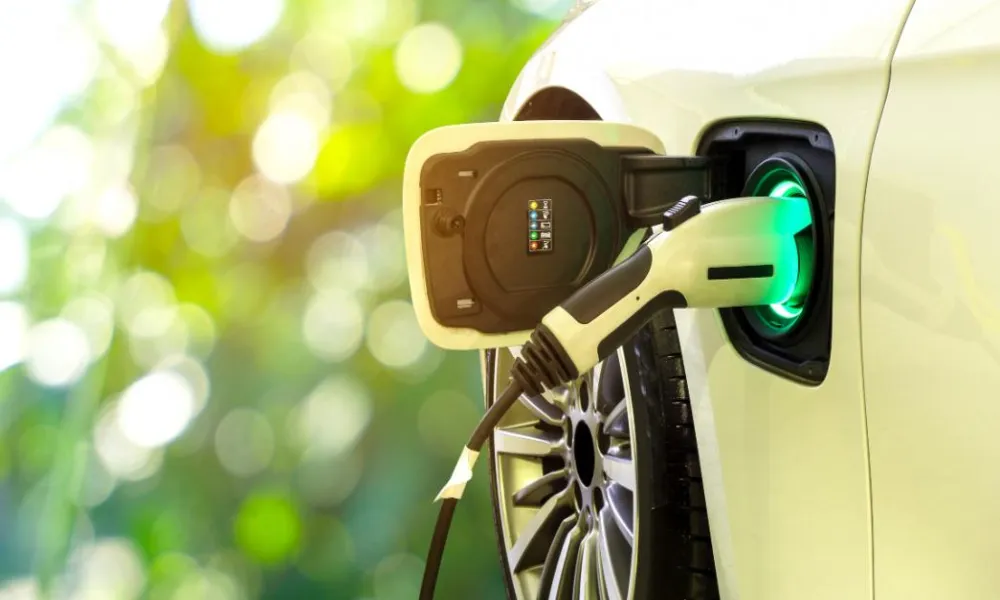
Without lithium, nickel and cobalt, batteries for electric vehicles and grid-scale energy storage cannot be produced. Rare earth elements are used to manufacture wind turbines, while copper cables form the “nervous system” of energy-producing infrastructure. Electric vehicles require up to four times more copper than conventional vehicles with internal combustion engines.
“Critical energy transition minerals are one of the building blocks of a low-carbon economy,” said Elisa Tonda, head of resources and markets at UNEP.
Demand for these minerals, also driven by data centres and consumer electronics, is expected to double by 2040. If humanity achieves net-zero emissions by 2050, however, demand could increase sixfold.
Bridging this gap will require more responsible mining, stronger environmental and social safeguards, fairer distribution of benefits, more efficient use of materials and greater circularity in economies, Tonda said.
“It is essential that we meet this growing demand with solutions that protect the environment, respect people and support local communities,” she said.
Electric vehicles
Critical energy transition minerals such as copper are essential to the shift towards clean energy. An electric vehicle requires up to four times more copper than a conventional vehicle powered by an internal combustion engine.
Growing demand, limited supply and environmental costs are challenges across all critical energy transition minerals, but they are particularly apparent in the case of copper.
The UN forecasts that demand for copper will increase by more than 40% by 2040. However, supplies of mined copper are failing to keep pace. A study by S&P Global found that mined copper production is expected to peak around 2030 before levelling off or declining.
On the other hand, “copper is fully and infinitely recyclable”, said Inka Fisas, chief executive of Spanish copper recycling company La Farga.
“It can be refined and recycled again and again without losing its properties. That is why we have a duty to keep it in use,” she said.
La Farga has been collecting and recycling copper for more than two centuries, working with what is known as “urban mining”.
“One of the world’s largest copper resources is all around us,” Fisas said, explaining that every product collected represents an opportunity to recover copper, support innovation and give the valuable material a new life.
An estimated two-thirds of the copper produced over the past 100 years is still in use, in the form of wires or pipes. If properly recycled, it could be reused in any product requiring electricity.
La Farga processes around 200,000 tonnes of copper a year at its facilities in Spain and the United States, producing recycled copper rods that are supplied to the rail, automotive and electricity sectors.
Copper can be recycled repeatedly without losing any of its properties, making it an important component of the circular economy.
Responsible mining
Recycling, however, will not be enough to meet growing demand.
McKinsey & Company forecasts that total global copper supply, including all recyclable copper, will reach only 30.1 million tonnes by 2031, while demand could surge to 36.6 million tonnes over the same period.
This means that without increased production of mined copper, the world could face a shortfall of 6.5 million tonnes within the next five years.
In 2018, the Initiative for Responsible Mining Assurance (IRMA), a UNEP partner, began promoting responsible mining by offering an assessment and assurance programme that evaluates large-scale mines against social and environmental “best practice” standards.
“Mining is an industry with the incredible advantage of providing materials that we all need every day, yet it is uniquely destructive in the way it obtains them. These impacts can last for centuries,” said Aimée Boulanger, executive director of IRMA.
Copper mines in Peru
The Quellaveco copper mine in Peru works with local farmers on projects designed to ensure that the mine benefits the local community rather than causing harm.
Its management team also works to minimise water loss at the mine, a critical consideration in the arid region, which is home to some of the world’s richest copper reserves.
“We operate in a water-scarce region and we have to be responsible,” said Juan Cahuana, the mine’s process manager.
How policy can bridge the gap
Maintaining access to critical energy transition minerals such as copper is in everyone’s interests, but achieving this is not always straightforward. It requires market incentives that encourage both circularity and responsible use of limited resources.
That is the aim of the European Union’s Circular Economy Act, which is expected to be approved by the end of 2026. The legislation would establish a single market for secondary raw materials, with the aim of boosting both the demand for and supply of high-quality recycled materials within the EU.
It also aims to double Europe’s circularity rate — the proportion of strategic raw materials that are recycled or reused — to 24% by 2030.
Although electronic waste is a major potential source of critical energy transition minerals, less than half of Europe’s e-waste is currently collected for recycling. Even when it is collected, extracting valuable minerals from old devices is not always straightforward.
European legislation requires manufacturers to make electronic components easier to remove, reducing the contamination of steel alloys with copper.
According to UNEP experts, greater circularity requires mining and processing companies to recover more minerals from their operations and support the use of recycled minerals. Manufacturers must design products that last longer and are easier to repair.
It also requires governments to ensure that regulations, incentives and standards are in place to promote reuse, remanufacturing and recycling, while consumers should use products for as long as possible and recycle them rather than throwing them away.
With the right policies, UNEP says, critical energy transition minerals such as copper could create new jobs, open the door to new industries, generate public revenue and enable countries to make better use of their resources.
Source: CNA