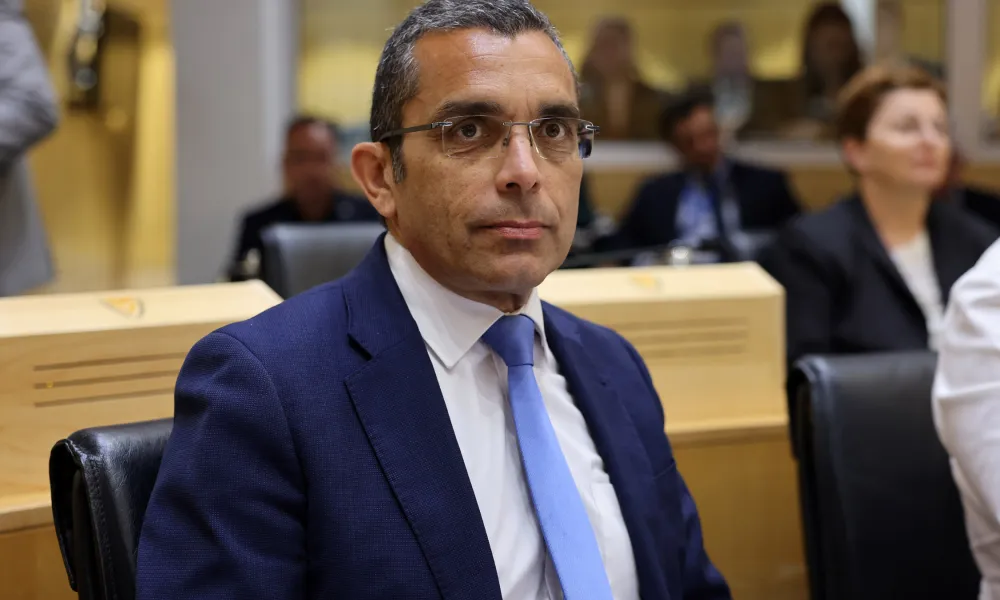

Diko MP and deputy chairman of the House Finance Committee, Chrysis Pantelidis, said there is no way to contain fuel prices under current international conditions, arguing that tax cuts and targeted support for citizens remain the state's main available tools to limit the impact. Speaking on Politis Radio, Pantelidis noted that the House had already voted to extend reduced taxation on motor fuel until 30 November, following a government proposal.
Households under growing pressure
Pantelidis acknowledged that successive price increases are placing mounting pressure on households, saying that a growing share of society is struggling on a daily basis to cover even basic needs. He attributed the latest rise in prices to the escalation of armed conflicts, particularly developments surrounding Iran, and said he hoped any de-escalation in the Middle East could halt the continuing rise in oil prices, which he described as the root cause of the broader price pressures.
Tax cuts and targeted measures
According to Pantelidis, the state of the Cypriot economy allows the government to support society, and especially those most in need, "with measure and prudence." Beyond reduced fuel taxation, he pointed to special electricity tariffs for vulnerable consumers and additional social measures being pursued through the House. He argued in favour of using available fiscal capacity to support citizens, stressing that this should be done carefully and with clear targeting.
From fuel to electricity
The effects of high energy costs are not confined to transport. Cyprus's continued reliance on conventional fuels for electricity generation means the cost of oil is also critical to electricity prices. In this context, Pantelidis argued that the Great Sea Interconnector (GSI) could strengthen energy security and reduce dependence on conventional generation. He noted that even during the summer months, electricity generation using heavy fuel oil remains necessary, since renewable sources alone cannot guarantee grid stability. He added that connecting to the European electricity grid would also allow Cyprus to export surplus renewable output and participate in a larger electricity market, which he said could help lower prices on the domestic market.
Criticism of Keravnos over GSI remarks
The discussion extended to the dispute that has emerged over the GSI project, with Pantelidis referring to concerns raised over its cost. He said critics of the interconnector do not necessarily question its usefulness or necessity but are raising reservations about its financial dimension.
Asked specifically about the position of Finance Minister Makis Keravnos, Pantelidis said the minister's own remarks on the necessity of the interconnector align with the views of the President of the Republic, who he said has described the project as being of strategic importance. He also recalled the president's position that, once the NAVTEX notices for the seabed surveys proceed, the Republic of Cyprus will meet its obligation to pay €25 million to the contractor.
Pantelidis was strongly critical of Keravnos over comments the minister made describing certain political positions as "ridiculous" and reflecting an "obsession," calling the remarks "frankly unacceptable" and "particularly offensive and dismissive" towards Diko leader Nikolas Papadopoulos. He clarified that Papadopoulos had not called for the finance minister's resignation, but had instead questioned how such divergent positions on the project could coexist within government. Pantelidis concluded by calling on the President of the Republic to clarify whether he agrees with the finance minister's remarks about the Diko leader.