
Iran said today it has not requested the resumption of talks with the United States to end the war, and stressed it continues to control the Strait of Hormuz, Iranian foreign ministry spokesman Esmail Baghaei said, after US President Donald Trump suspended a new campaign of strikes on Iranian targets following recommendations from the heads of the US armed forces.
After 13 nights of intensive US bombing, which prompted Iran to target US bases in the Gulf region in response, Trump ordered a pause in the attacks over the weekend. Tehran, for its part, said it is halting its own attacks for as long as the US does not strike it. "Since our strategy is essentially based on retaliation, we have also suspended our operations," Iranian army spokesman Mohammad Akraminia said.
Why the US paused
The US president's decision to suspend the new bombing campaign, aimed at breaking Iran's control over the Strait of Hormuz, came after recommendations from senior US military officials, who judged that the campaign had achieved what it could, according to a US official and multiple American media reports.
The US official told Reuters that General Dan Caine, chairman of the US Joint Chiefs of Staff, had voiced concern about depleting the air defence munitions protecting US bases in the Gulf region. Axios separately reported that Admiral Brad Cooper, head of US Central Command, had also recommended suspending strikes around the Strait of Hormuz, explaining that the previous two weeks of air attacks had significantly reduced Iran's ability to strike ships along the waterway. Cooper reportedly noted that targets had nearly run out, estimating that a possible next step for the US would be to resume broad military operations to hit the remaining 20% of targets originally identified but not struck during Operation Epic Fury. Similar reports appeared over the weekend in other US outlets, including the New York Times and CNN.
US ambassador to the United Nations Mike Waltz said on Sunday that Trump had suspended the strikes to leave room for negotiations.
"The Strait remains closed"
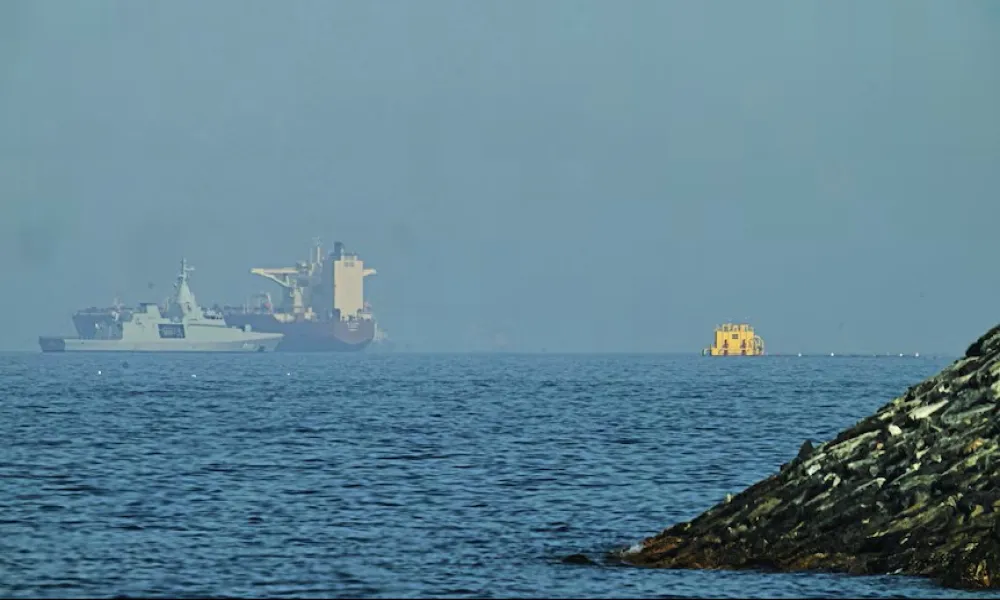
However, Iranian foreign ministry spokesman Esmail Baghaei said today that Tehran has not requested the resumption of negotiations with the US, stressing that the Strait of Hormuz "remains closed."
Several Iranian state media outlets, citing an unnamed "informed source," reported that Iran today forced six vessels attempting to cross the strait without its permission to turn back. One of the ships, the source said, suffered "an accident." The source said the only route for shipping through the Strait of Hormuz is the one designated by Iran, adding that other routes are dangerous and have no way through, according to Iranian state media.
Tehran says vessels may only cross the strait via a route close to the Iranian coast, which it controls and intends to charge fees for using.
Talks with Oman, not Washington
Iran intends to formalise its control over the strait through an agreement with Oman, which controls the opposite shore. A delegation of senior Omani officials was in Tehran over the weekend to discuss the strait's future.
Baghaei said the US was not involved in these talks. "These talks have nothing to do with the US. This is a bilateral matter between Iran and Oman, and they are continuing," he said.
The foreign ministers of Qatar, the United Arab Emirates and Saudi Arabia held a phone call on the matter with Oman's Foreign Minister Badr Albusaidi, according to state media reports in those countries today.
Source: AMNA