
Iran and Oman are still working out the details of an agreement on the Strait of Hormuz, a senior Iranian source told Reuters on Wednesday, a day after a spokesperson for Iran's Revolutionary Guards said the two countries had already agreed on how to share the waterway and its revenues.
"An agreement with Oman over the Strait of Hormuz has not been finalised," the senior Iranian source said, adding that talks on the details of an accord were continuing. It remained unclear at what stage of the negotiations the Revolutionary Guards' claim of an agreement was reached.
Guards claim deal, set conditions
Islamic Revolutionary Guard Corps spokesperson Hossein Mohebbi told Iranian state media that Iran and Oman had spent about a month negotiating and had reached terms acceptable to both sides on their respective shares of the strait's waters and revenues. He said the strait would not reopen unless Washington met Tehran's conditions under an interim ceasefire agreement struck in June before it collapsed, including an end to the US blockade on Iranian ports, compensation, and the removal of sanctions. Mohebbi also accused the United States of trying to obstruct the Iran-Oman negotiations, blaming Washington for delaying an agreement.
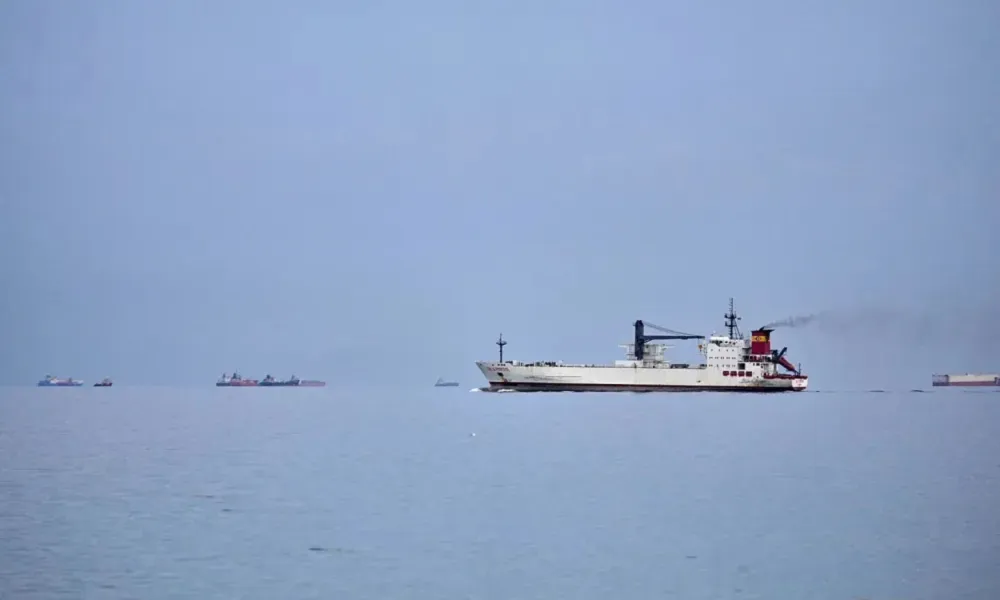
Iran and Oman have held on-and-off talks for weeks over control of the strait, which carried a fifth of global oil and liquefied natural gas shipments before the war began in February. Most shipping through the channel has since ground to a halt, pushing global energy prices higher, as Tehran and Washington have each tried to assert control through separate blockades. Following talks on Tuesday, Omani Foreign Minister Badr Albusaidi said he was hopeful a temporary corridor and practical arrangements for safe navigation could be announced soon. US President Donald Trump has separately warned Oman against cooperating with Iran, threatening in a Fox News interview on 17 August to bomb the country if it "got in the way."
Blacklist and sanctions pressure
Although active hostilities between the US and Iran have largely subsided in recent weeks, diplomatic efforts toward a peace deal remain stalled, and continuing attacks on ships mean passage through the strait is still considered dangerous. On Sunday, Iran blacklisted 45 ships in an apparent bid to stop the ship-to-ship transfers Gulf energy producers have used to evade its blockade, and some companies are reportedly planning to avoid the listed vessels.
Washington has meanwhile threatened to punish any country continuing to do business with Iran, though it has said it will not impose penalties immediately; the sanctions notably exclude Chinese financial institutions suspected of facilitating Iranian oil exports. Iran has denounced the US pressure campaign as "gross lawlessness," expressing confidence that most countries will not join it. Oil prices fell for a third straight day, down more than 1.5%, amid renewed signs of efforts toward a mediated end to the war, which began on 28 February with US and Israeli strikes on Iran.
Secretary of State Marco Rubio has told allied foreign ministers that the US does not expect to launch new strikes on Iran for now, focusing instead on other forms of pressure, Axios reported on Tuesday. US public approval of the war has fallen to its lowest point since the conflict began, and Trump's own approval rating is likewise at a record low ahead of November's midterm elections, according to Reuters/Ipsos polling.
Thousands have died in the conflict, most of them in Iran and Lebanon, and while the US and Israel have degraded much of Iran's conventional military capacity, the true state of its nuclear programme, which both countries aim to dismantle, remains unknown. Iranian army spokesman Brigadier General Mohammad Akrami-Nia said this week that combat units had received new equipment and that fighting two technologically advanced militaries had given Iranian forces significant battlefield experience, according to comments carried by Iran's Mehr News agency.
Source: Reuters