
By Theano Kalavana
Over the past few weeks, we have been following a series of different stories: the black van, the armoured presidential limousine, appointments to the government and semi-governmental organisations, the appointment of Nikos Tornaritis and, at the most important level, the Christodoulides-Erhurman meetings on the Cyprus issue.
These are not identical cases, nor can they be equated. There is, however, one common question running through them all: how consistent is the gap between what is proclaimed and what ultimately happens?
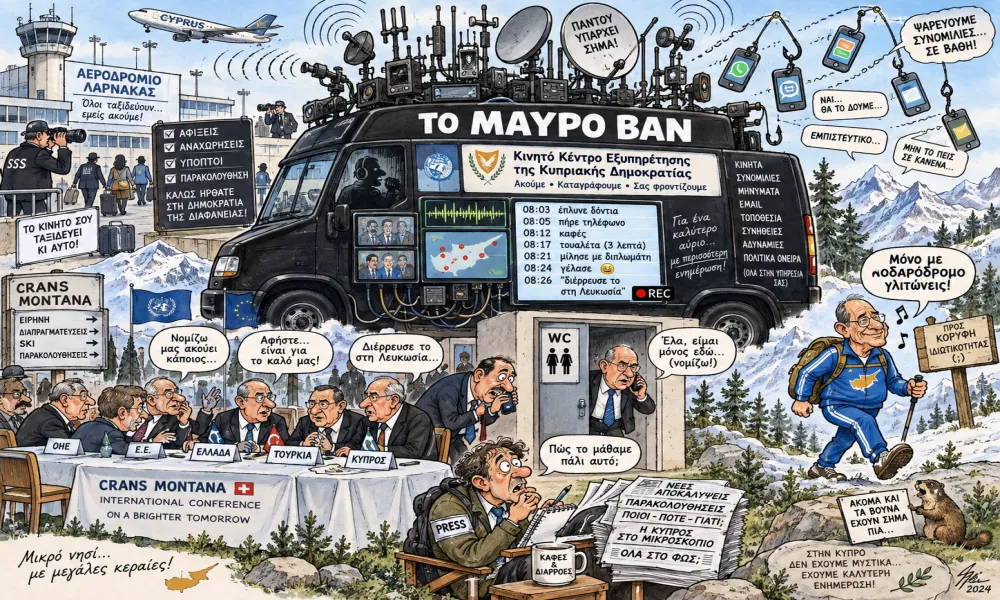
Let us begin with the black van.
A case that for years has been associated with questions about surveillance, espionage technologies and the activities of companies linked to Tal Dilian. The Anti-Corruption Authority announced the closure of its investigation, taking the view that the issues it intended to examine had already been investigated.
Subsequently, however, it emerged that the complaint concerning a possible conflict of interest involving Deputy Attorney-General Savvas Angelides had not been investigated by the criminal investigator.
How is it possible for such a serious investigation to be closed on the understanding that everything had been examined, only for it later to become apparent that critical aspects had been left out?
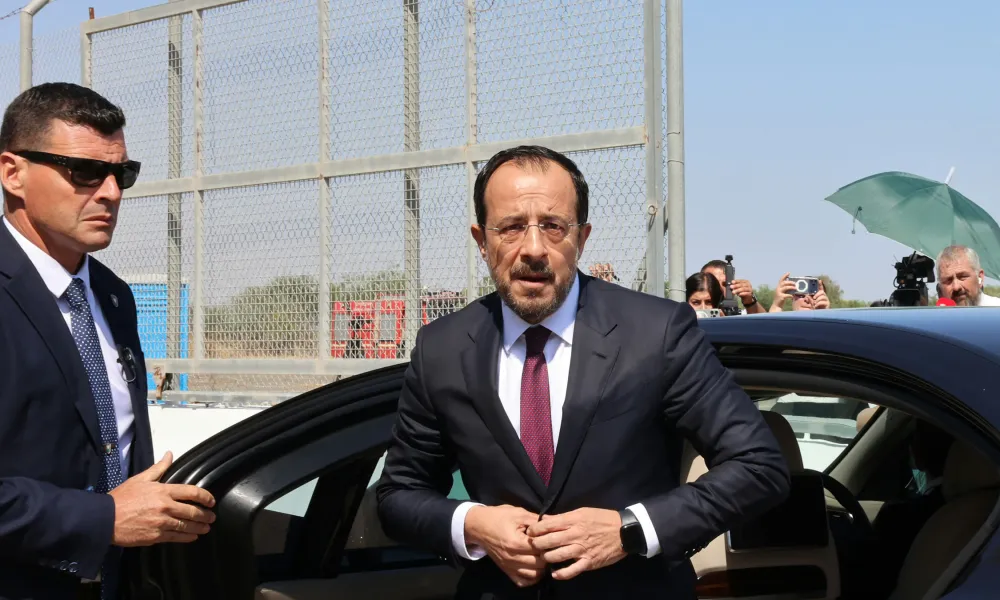
This was followed by the approval of €595,000 for the purchase of a new armoured vehicle for the Presidency.
There may well be a documented need for such a vehicle. The political issue, however, is not that.
When questioned, the President stated that he learned of the intended purchase through the media and had not previously been aware of it.
The difficulty is that the proposal had already been approved by the Council of Ministers, over which he himself presides.
Shortly afterwards, the government clarified that the President knew about the purchase but not the technical details.
No one expects a President to know the specifications of bulletproof glass.
What people do expect is that he knows the decisions taken by his own Cabinet.
When “I did not know” becomes “I knew, but not the details”, the issue becomes one of credibility.
Then there are the appointments.
From the outset, Nikos Christodoulides sought to present his political identity as something that transcended the traditional party system.
The Advisory Council for semi-governmental organisations was presented as a tool for moving away from party patronage, while only a few weeks ago he was declaring that “the party appointments feast is over”.
Yet shortly before the reshuffle, discussion centred on DIKO's strengthened presence in government and semi-governmental organisations, as well as the continued role of EDEK.
The reshuffle that followed largely confirmed that picture.
The appointment of Nikos Tornaritis as special political envoy for the Cyprus issue in countries across Asia and Africa fits within the same logic.
The government points to his political experience and network of contacts.
The President was quick to insist that the appointment serves no electoral purpose.
The question, however, remains.
A President who presented himself as anti-establishment ends up governing through the very same party mechanisms he promised to transcend.
What does “anti-establishment” ultimately mean when the same political circles continue to provide the main pool of officials, associates and political balances?
And, of course, there is the Cyprus issue.
The meetings between Christodoulides and Erhurman continue, with the United Nations referring to discussions on Confidence-Building Measures, methodology and substance.
The President speaks of new ideas.
But the country needs something more than positive comments after every meeting.
It needs a clear objective, a defined process and specific next steps.
We need to know where convergences exist, where disagreements remain and exactly how the process is moving forward.
From the black van and the limousine to appointments and the Cyprus issue, the common thread is one thing:
The distance between what is said and what actually happens.
The confidence that when an institution says something has been investigated, it really has been investigated.
That when a President says “I did not know”, there will not later be a correction or clarification.
That when we hear that “the party appointments feast is over”, we will not then be searching for which party received which position.
And that when there is talk of progress on the Cyprus issue, that progress will be reflected in tangible steps and not only in optimistic statements.
Democracy does not require infallible politicians.
It requires consistency between words and actions, transparency in decision-making and accountability when mistakes are made.
Because the real test is not whether you change the vocabulary or the faces.
It is whether you change the practices.